
When I plan a large slab concrete project, the first question that always comes to mind is time. A 300 m³ slab is not a small task. Every hour of delay means higher labor costs, tighter schedules, and more pressure on the entire construction team. That is why many contractors start looking at a 4.5 m³ self loading concrete mixer machine. I will share how long it really takes to finish 300 m³ of slab concrete, and why this machine often becomes the smart choice for site work.
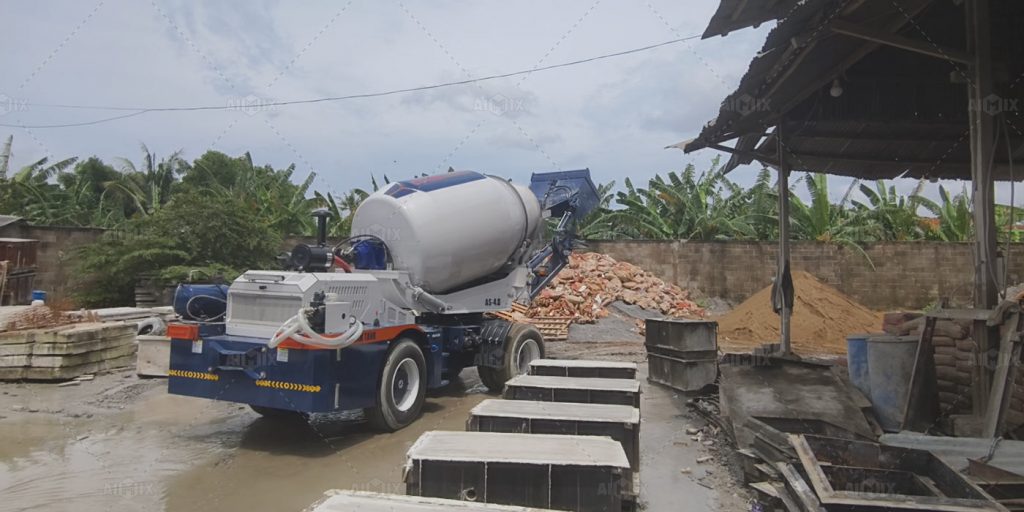
Understanding the Real Output of a 4.5 m³ Self Loading Concrete Mixer
Before talking about time, I always focus on productivity. This helps set realistic expectations and prevents costly miscalculations.
Our self load concrete mixer for sale produces 4.5 m³ per batch. In real site conditions, a complete working cycle usually finishes about 4 batches per hour. Therefore, the hourly output equals:
4.5 m³ per batch × 4 = 18 m³ per hour
This number matters. It gives me a clear production baseline. With this rate, I can quickly estimate how long a medium or large slab will take.
Calculating the Time Needed to Complete 300 m³ of Slab Concrete
Once the production rate becomes clear, the time calculation becomes straightforward. This step helps me control the project timeline and prepare manpower and formwork in advance.
The formula is simple:
300 m³ ÷ 18 m³ per hour = 16.7 hours
In real construction, I normally round this to about 17 hours of effective working time. However, I also consider short stops for cleaning, refueling, and operator shifts. Therefore, in most real-world jobs, a 300 m³ slab can be completed within 2 working days using one 4.5 m³ self loading concrete mixer truck.
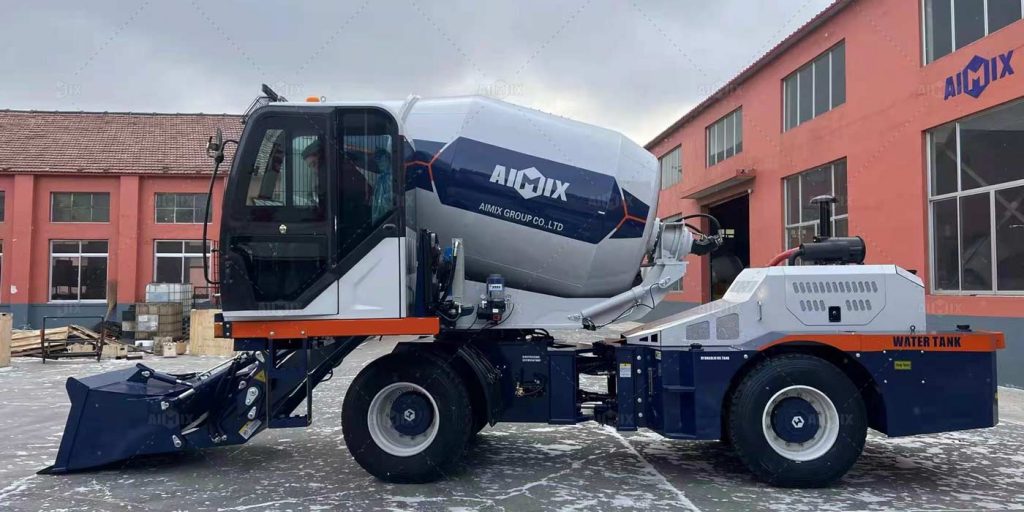
Why Actual Jobsite Conditions Can Change the Completion Time
Although the math looks simple, real construction sites always introduce new variables. Understanding these factors helps me avoid delays and maintain steady pouring progress.
Weather Conditions and Temperature
Hot weather speeds up concrete setting time. In contrast, rain slows down finishing work. Because of this, I usually plan early morning or late afternoon pouring in tropical or hot regions. As a result, the working rhythm stays stable and the surface quality improves.
Batching Efficiency and Material Supply
Continuous material supply plays a critical role. When aggregates, cement, and water arrive on time, the mixer works without interruption. On the other hand, when trucks queue too long at the loading area, productivity drops. Therefore, good logistics planning directly reduces the overall project duration.
Pouring Method and Crew Coordination
I also pay attention to how the slab gets poured. Pumping concrete speeds up placement for large slabs. At the same time, enough workers must handle leveling and vibrating. When each team knows their role, the pouring process flows smoothly and avoids cold joints.
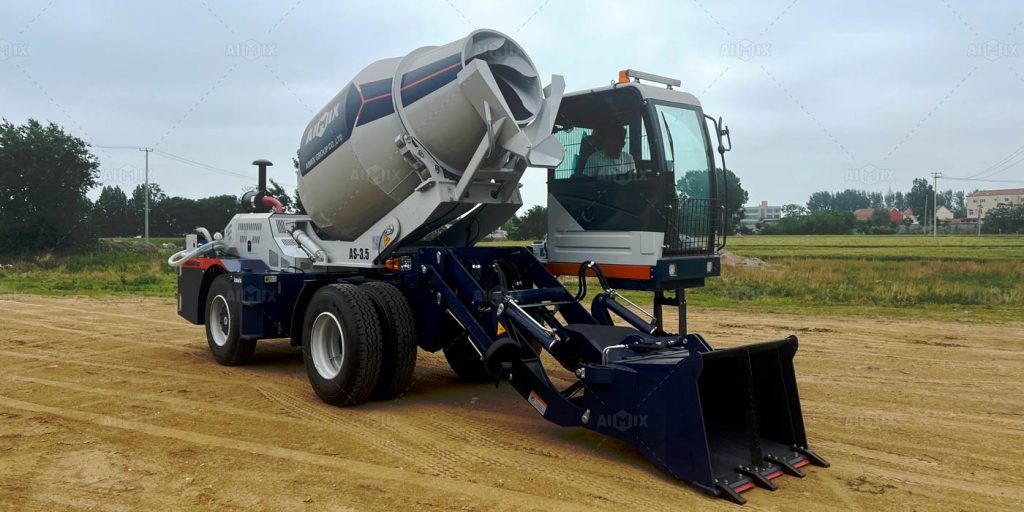
Is One 4.5 m³ Mixer Enough or Should I Use Two?
After understanding single-machine performance, I often evaluate whether adding another mixer makes sense. This decision depends on project urgency and labor strategy.
If I use one 4.5 m³ self loading concrete mixer, I need around 17 hours of pure mixing and pouring time. If I deploy two machines, the total time drops to about 8 to 9 hours. Therefore, for urgent commercial floors, warehouses, and industrial yards, two units often make the project finish in one long working day.
From a Contractor’s View: Why This Machine Changes Slab Construction
From my experience on construction sites, this type of machine changes how slab work gets organized. First, it eliminates the need for external ready-mix suppliers. Second, it reduces dependence on delivery trucks that often arrive late. Third, it allows me to control concrete quality directly on site.
Because the mixer loads, weighs, mixes, and transports concrete by itself, the whole workflow becomes simpler. As a result, I can take more projects without worrying about unstable supply chains.
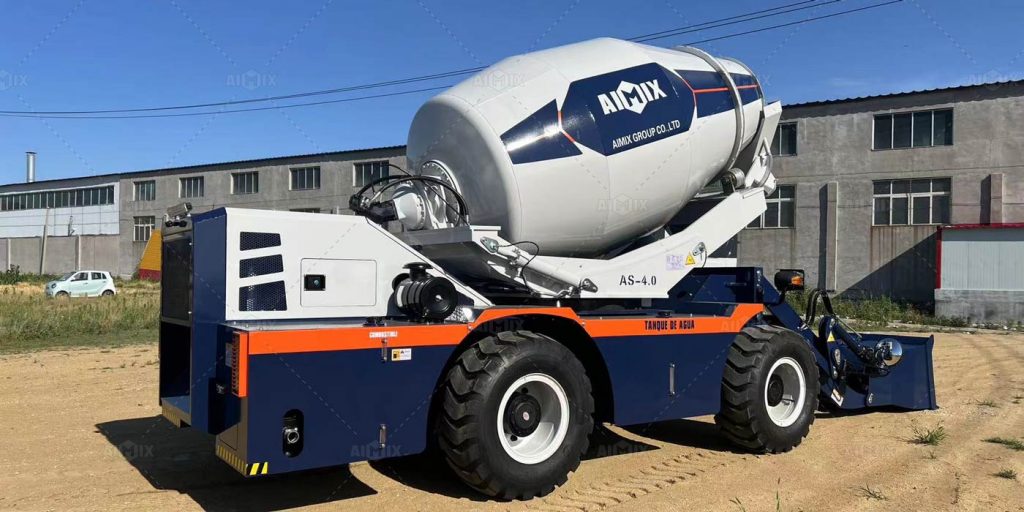
Typical Project Scenarios Where 300 m³ Slab Pouring Is Common
To make this more practical, I often see 300 m³ slab volumes in the following projects:
Factory Floors
Large industrial floors require fast continuous pouring to avoid cracks and weak joints. A self loading mixer truck keeps the supply stable and protects the floor quality.
Warehouse Foundations
Warehouses need strong, flat slabs to handle heavy forklifts. With consistent mixing, the compressive strength stays reliable.
Commercial Yard Pavements
Parking yards and logistics centers also use large slab pours. Faster completion means earlier site handover and quicker project returns.
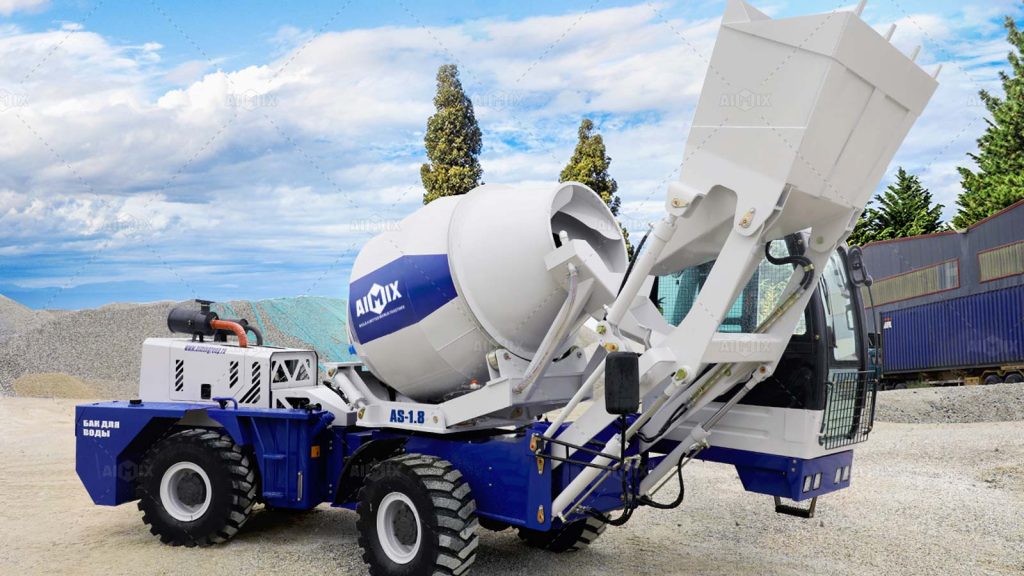
Why I Recommend AIMIX for Contractors Planning 300 m³ Slab Projects
When I look for a reliable 4.5 m³ self loading concrete mixer truck for sale, I pay attention to stability, parts quality, and after-sales support. AIMIX Indonesia designs machines that withstand tough jobsite conditions. The hydraulic systems work smoothly. The weighing system stays accurate. The engines deliver stable power even in high-temperature environments.
More importantly, AIMIX understands the real pressure contractors face. Their technical team helps me choose the right model based on daily output targets and site conditions. This gives me confidence before every large slab pour.
Final Thoughts: Make Your 300 m³ Slab Faster and Easier
When I aim to finish 300 m³ of slab concrete, time always matters. A 4.5 m³ self loading concrete mixer truck can realistically complete this task in about 17 working hours. With good planning, stable material supply, and skilled operators, the whole pouring process becomes predictable and efficient.
If you want to shorten your construction timeline and take full control of your concrete production, AIMIX can help you build a stronger, smarter, and faster jobsite. Now is the right time to upgrade your slab pouring strategy.
No responses yet