
Consistent 20 mm basalt aggregate makes concrete pump easier, finish faster, and last longer. Yet basalt is hard and abrasive. Flaky particles often slip through and hurt workability. So we need a clear target, a smart crushing flow, and tight quality control. In this post, I share a practical, contractor-focused path you can apply on real Indonesian jobs.
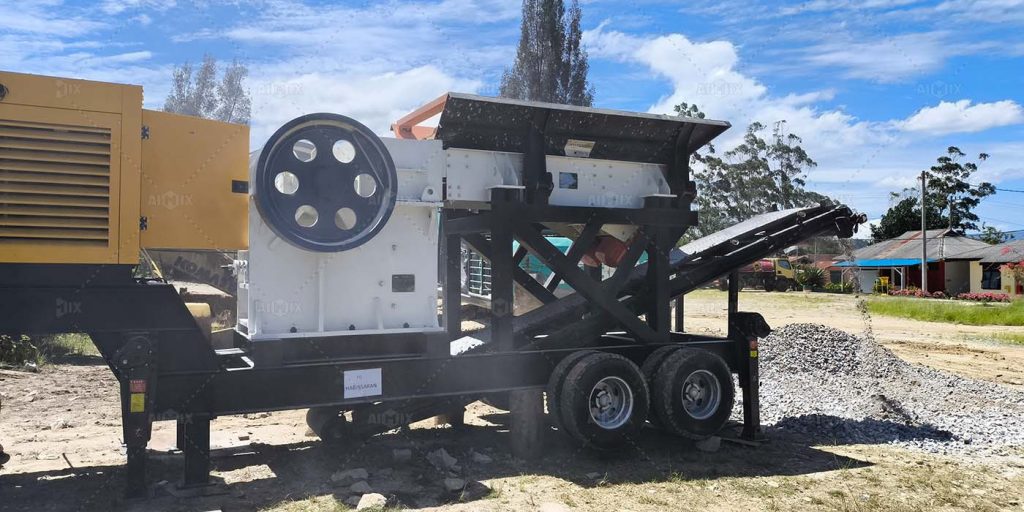
Define “consistent shape” for 20 mm basalt
First, set the goal. For structural concrete, we want cubical aggregate with low flakiness and elongation. A practical target is flakiness+elongation under 25%, with flakiness under 15–20% for most mixes. Meanwhile, keep fines (passing 0.075 mm) within spec, typically around 0–2% unless your project requires leaner dust. Moreover, aim for a narrow 20 mm band with minimal oversize and undersize to stabilize mix water and slump.
Since the goal is clear, we can design a crushing circuit that delivers it shift after shift.
Understand basalt’s behavior before you crush
Basalt resists breakage and wears steel fast. After a primary jaw, many particles stay flat or elongated. Cone crushing improves it, but not enough. Thus, a shaping stage with a vertical shaft impactor (VSI) often makes the final difference. Because of this, the circuit layout matters as much as the machines you buy.
Therefore, let’s build a flowsheet that shapes, screens, and controls the product in closed circuit.
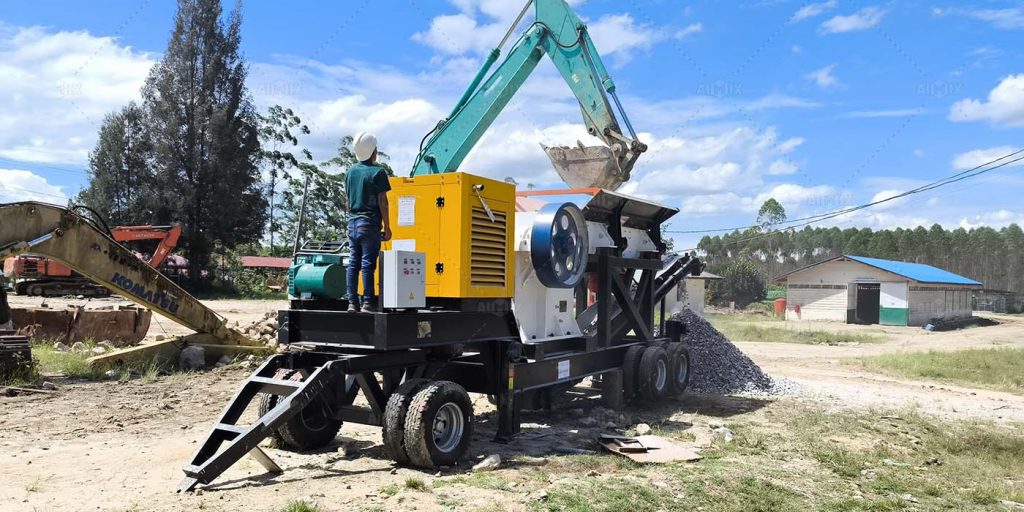
A proven flowsheet for 20 mm cubical aggregate
Primary: Jaw crusher
Use a jaw crusher for sale that feeds the cone with well-graded material. Keep the jaw closed-side setting (CSS) tight enough to avoid slabby output, yet wide enough for target tonnage.
Secondary: Cone crusher (closed circuit)
Choke feed the cone. Run CSS so the bulk of the output sits just above the 20 mm cut, e.g., 22–28 mm based on your liner profile. Consequently, most particles will be close to the target size before shaping.
Tertiary: VSI for shaping (closed circuit)
Use a rotor with adequate tip speed (for example, 60–75 m/s). Increase speed to fix flaky shape; reduce it to cut wear and fines. Balance rotor speed and cascade ratio so you get cubical faces without over-crushing.
Screening: Three-deck classification
Select a high-open-area screen with the 20 mm deck sized correctly. Maintain tension and cleanliness. Return oversize to cone or VSI, not both, to control circulating load.
With the flow in place, fine-tuning settings keeps shape steady even as rock and weather change.
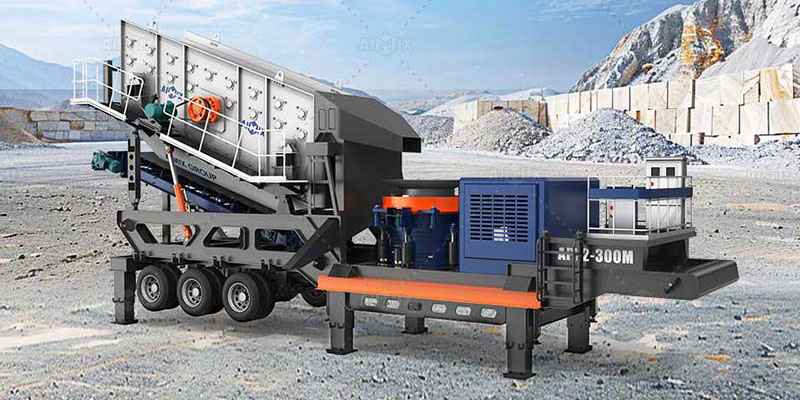
Dial in the settings that drive particle shape
Cone setup and feed
Keep a full, stable feed. Use level sensors and variable-speed feeders. Adjust CSS in small steps. Change liners before performance drops. As a result, you protect shape and throughput.
VSI rotor speed and cascade
Raise tip speed when flakiness rises. Add cascade when you need better control with less wear. However, watch fines: too much speed makes dust, which steals cement and water from your mix.
Screen health and open area
Clean decks often. Replace worn media early. Check vibration settings. Because blinding or low stroke lets flat particles slip through, your shape suffers.
Once machines run right, we must prove the result with quick, repeatable tests.
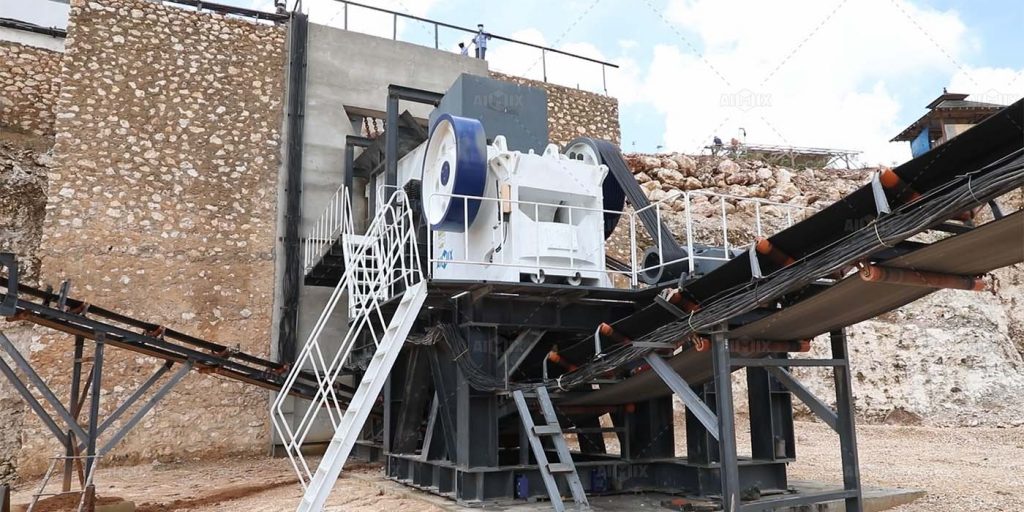
Build a fast, field-ready quality control loop
Sampling and frequency
Sample at the stacker head or from the belt every 400–600 tons or once per shift. Increase frequency after liner changes or big rain.
On-site checks that matter
Run sieve analysis on 40 mm to 5 mm. Measure flakiness with a thickness gauge, and log the index. Track moisture to stabilize asphaltic dust and water demand. Keep a simple dashboard: gradation, flakiness, moisture, and tons produced. Therefore, you spot drifts early and fix them before trucks queue up.
Even perfect shape fails if segregation ruins the stockpile. So, handle piles with the same discipline.
Stop segregation in stockpiles and loading
How to stack
Use a radial stacker or layered windrows. Limit fall height. Build in thin lifts. Rotate stacking positions. Thus, large stones do not roll to the edge while fines stay in the core.
How to load
Load across the face, not just one spot. Blend from top to bottom to keep gradation consistent. If dust rises, use spray bars or a brief wash so cement and admixtures perform as designed.
Because basalt chews through wear parts, a maintenance plan protects shape and uptime.
Plan wear parts and maintenance for basalt
Liners, anvils, and rotors
Choose abrasion-resistant manganese for the cone crusher for sale, and monitor power draw as a proxy for liner life. In the VSI, set proper anvil or rock-on-rock config per your desired shape and cost. Keep spare rotors and shoes. Consequently, you avoid sudden shape swings after a breakdown.
Preventive rhythm
Schedule inspections by tons, not just days. Track amps, vibration, and bearing temperatures. Replace parts before cube quality drops. Hence, your weekly QC stays green without surprises.
Now, match the plant type to your site reality in Indonesia.
Pick the right layout for Indonesian projects
Stationary for quarries with steady demand
Choose stationary when you feed from a fixed basalt face and supply multiple batching plants. Energy per ton falls, and automation gets simple.
Mobile or semi-mobile for scattered jobs
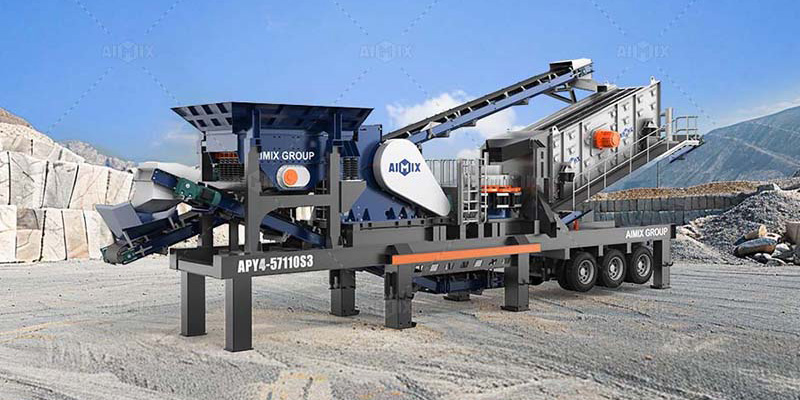
Go mobile when projects scatter across islands or ring roads. Wheel-mounted cones and a compact VSI let you move fast and still shape well. Pair with a generator or local grid. Therefore, you hit the 20 mm spec near the pour and cut haul risk.
Finally, let’s translate all of this into clear, step-by-step actions.
Step-by-step action list you can start this week
1) Set targets
Agree on flakiness, fines, and gradation limits with the concrete team.
2) Tune machines
Lock choke feed on the cone. Set CSS to land near 22–28 mm. Raise VSI tip speed until flakiness meets target, then stop. Clean screens.
3) Control piles
Stack in thin layers. Blend when loading. Keep moisture steady.
4) Check and record
Run sieves and flakiness checks each shift. Log data. Act on trends, not guesses.
With the plan in motion, you can bring in a partner to accelerate results.
Work with AIMIX to lock in consistent 20 mm basalt
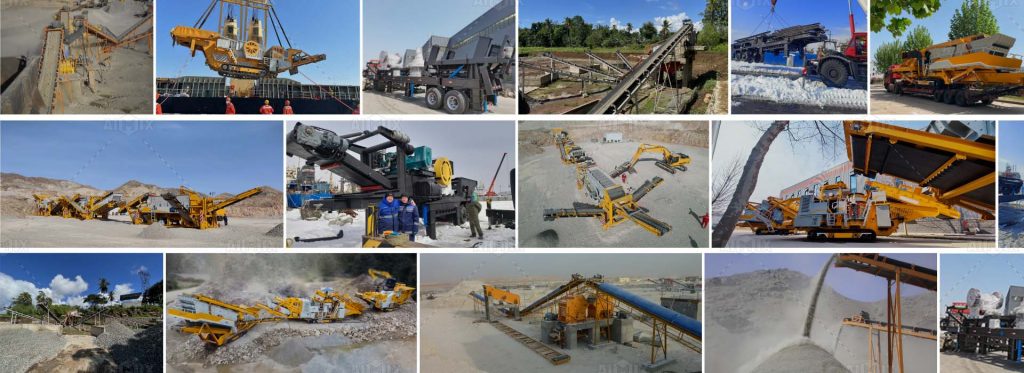
We design and supply complete circuits—jaw, cone, VSI, feeders, and screens—matched to Indonesian basalt. We also deliver mesin penghancur, operator training, QC templates, and spare parts plans. Because of this end-to-end approach, your 20 mm product stays cubical, your slump stays stable, and your crews pour faster. If you want a tailored flowsheet and a payback model for your site, talk with our team at AIMIX Indonesia. Let’s shape your 20 mm basalt right, and keep your concrete strong from the first truck to the last.
No responses yet