
Building roads, houses, bridges, and public facilities in remote Indonesian villages is never simple. Long distances, narrow access roads, unstable power supply, and limited labor all increase construction pressure. In this context, a drum type mixer concrete pump with 50–80 m³/h capacity becomes a practical and popular choice. It mixes and pumps concrete in one system, which helps contractors save time, labor, and transport costs.
However, not every drum mixer pump fits rural projects. To avoid wrong investment, contractors need to understand how to choose the right model based on real jobsite conditions. Below, we break it down step by step, from a customer’s perspective and from the construction industry’s reality.
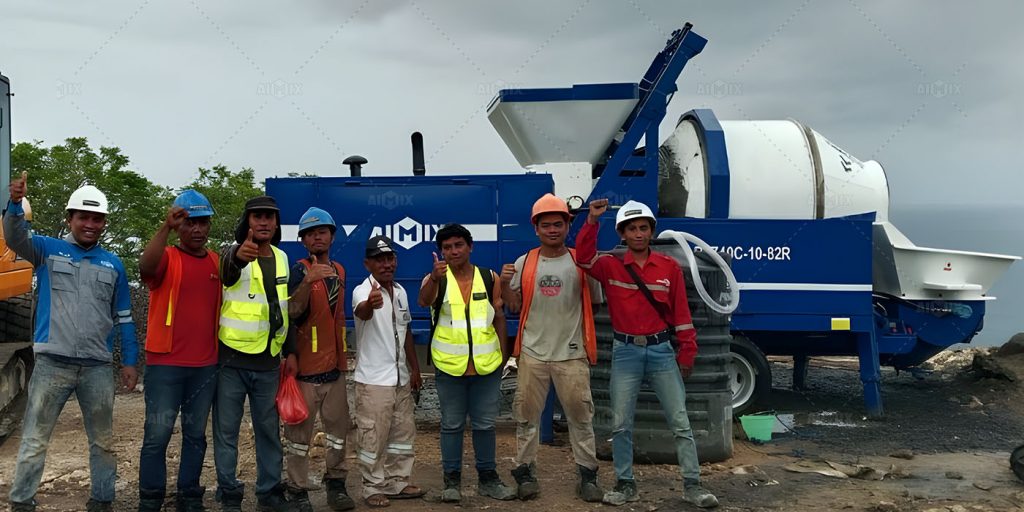
Why a 50–80 m³/h Drum Mixer Pump Fits Remote Village Projects
Before selecting a specific machine, it is important to understand why this capacity range works well. Most rural infrastructure projects do not need extremely high output, but they do require stability and flexibility.
A 50–80 m³/h concrete drum mixer pump sits in a balanced position. It is stronger than small trailer pumps, yet much easier to deploy than large batching plants. As a result, it matches village-scale roads, schools, housing clusters, irrigation channels, and small bridges.
More importantly, it allows continuous work. You can mix and pump on-site without relying on ready-mix supply, which is often unavailable in remote areas.
Understand the Real Jobsite Conditions First
Once the capacity range is clear, the next step is to look at the real construction environment. This step often determines success or failure.
Remote Indonesian villages usually face uneven terrain, muddy roads during rainy seasons, and limited space for equipment setup. Therefore, contractors should prioritize compact structure, strong chassis, and easy relocation.
In addition, many sites lack stable electricity. Because of this, diesel concrete mixer with pumps become more practical than fully electric systems. They allow independent operation and reduce downtime.
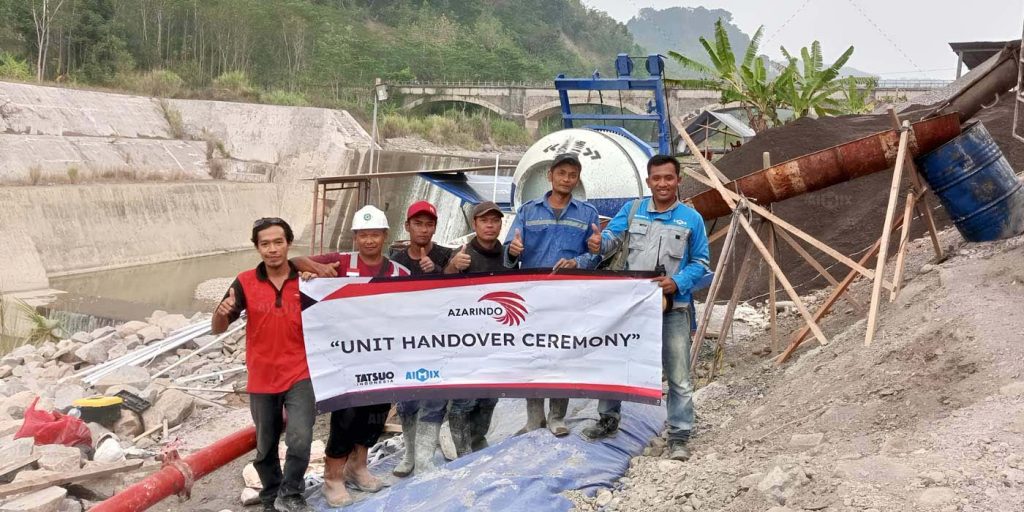
Choose the Right Mixing System for Local Materials
After evaluating the site, material conditions deserve attention. Local aggregates vary greatly across Indonesia.
In many villages, sand contains higher moisture. Gravel size may also be inconsistent. A concrete drum mixer pump must handle these realities without frequent blockages.
A forced drum mixing system with strong blades improves mixing uniformity. It ensures stable concrete quality even when raw materials are not ideal. As a result, finished concrete meets structural requirements more reliably.
Pay Attention to Drum Volume and Rotation Speed
Drum size and rotation speed directly affect output efficiency. A properly designed drum maintains continuous flow and reduces segregation. This detail often separates professional equipment from basic models.
Focus on Pumping Distance and Height, Not Just Output
Capacity alone does not guarantee performance. Pumping distance matters just as much, especially in hilly or scattered village layouts.
A 50–80 m³/h concrete pump should support at least 150–300 meters horizontal pumping and 30–60 meters vertical pumping. This range covers most rural housing and road projects.
With sufficient pumping pressure, contractors can place concrete directly where needed. This reduces manual handling and speeds up construction.
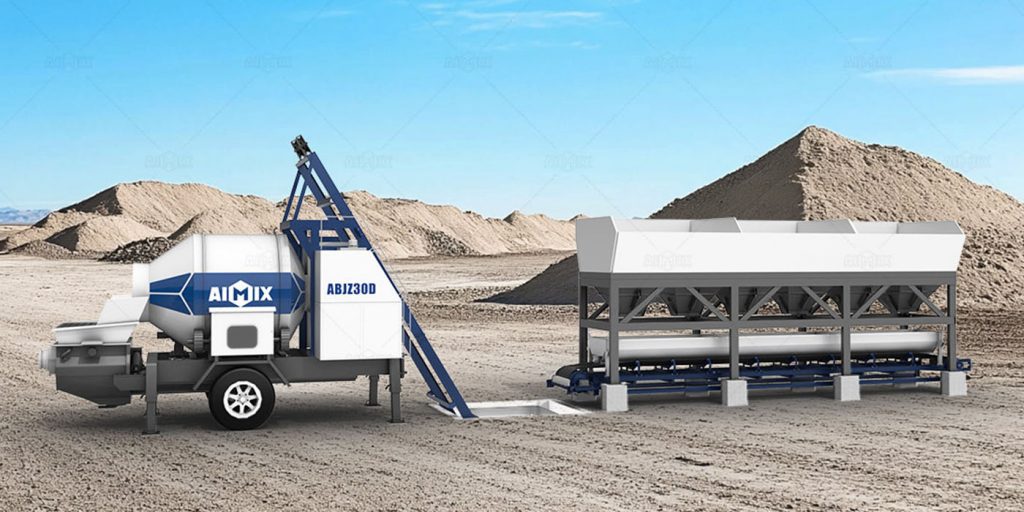
Mobility and Transportation Make a Big Difference
Next, think about how the machine moves between sites. In remote areas, equipment often travels on narrow roads or temporary paths.
Wheel-mounted or truck-mounted drum mixer pumps provide better flexibility. They allow fast relocation between villages without complex disassembly.
Moreover, compact transport size lowers logistics costs. This advantage becomes critical when projects spread across multiple islands or provinces.
Ease of Operation and Maintenance Should Not Be Ignored
Another key factor is who will operate the machine. Skilled operators may not always be available in remote locations.
A user-friendly control system reduces training time. Clear panels, simple start-stop procedures, and stable automation help local teams work confidently.
Maintenance also matters. Easy access to wearing parts, clear lubrication points, and common spare parts reduce long-term operating costs.
Local Service Support Improves Long-Term Reliability
Even reliable machines need service. Choosing a supplier with local support in Indonesia ensures faster response and less downtime.
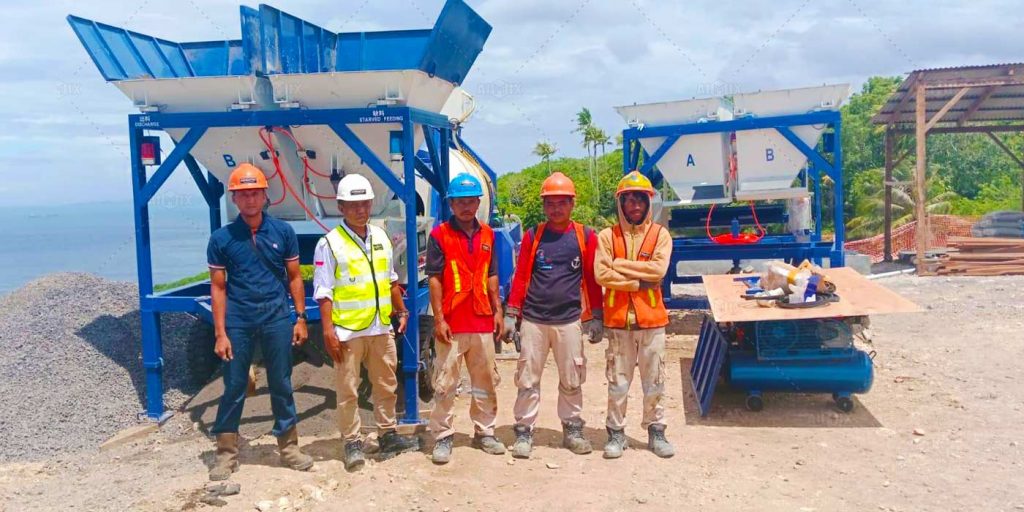
Balance Budget with Long-Term Value
Price always influences decisions. However, focusing only on initial cost often leads to higher expenses later.
A high-quality concrete drum mixer pump delivers stable output, lower fuel consumption, and longer service life. Over time, it reduces repair frequency and project delays.
Therefore, contractors should evaluate total cost of ownership instead of purchase price alone.
Why AIMIX Is a Trusted Choice for Indonesian Village Projects
After understanding all these factors, the final step is choosing the right manufacturer. AIMIX has supplied concrete drum mixer pumps across Indonesia for years.
AIMIX designs 50–80 m³/h drum mixer pumps specifically for tough jobsite conditions. These machines combine strong mixing ability, reliable pumping performance, and flexible mobility.
More importantly, AIMIX provides local market experience, practical configuration advice, and responsive after-sales support. This helps contractors reduce risk and improve project efficiency.
If you are planning infrastructure or housing projects in remote Indonesian villages, a properly selected concrete drum mixer pump can change your workflow. AIMIX is ready to help you choose the right solution and move your projects forward with confidence.
No responses yet