
When planning concrete production for medium-sized residential projects, selecting the right batching plant is key to ensuring smooth operations, steady concrete supply, and cost control. A 60 m³/h mini concrete batching plant offers a compact, efficient, and flexible solution for this scale of construction. But how can you choose the right batching plant mini? Let’s explore step by step from a practical and industry-focused perspective.
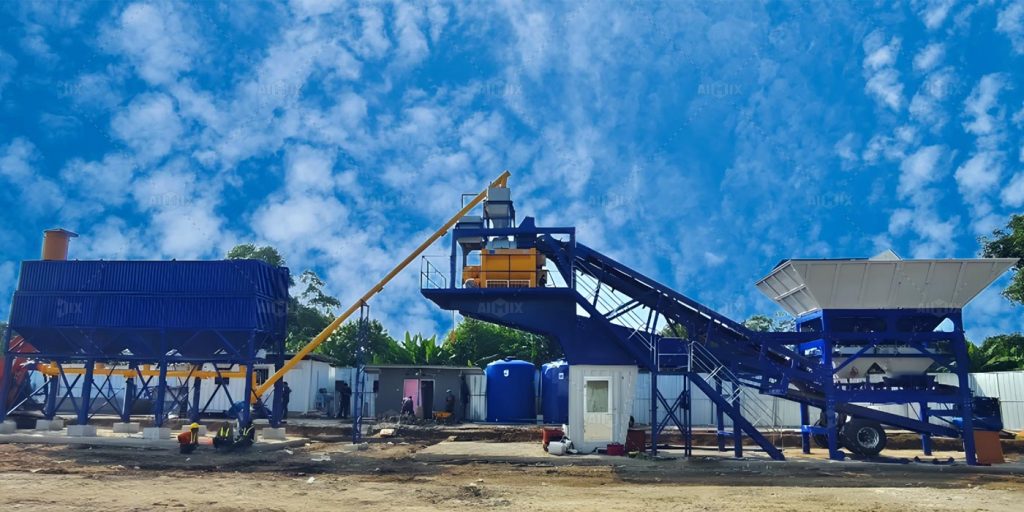
Why a 60 m³/h Mini Concrete Batching Plant is Suitable for Medium-Sized Residential Projects
Medium-sized residential areas usually involve continuous concrete pouring for houses, roads, drainage systems, and sidewalks. The total concrete demand is significant but does not require large-scale batching plants. In this scenario, a 60 m³/h mini batching plant terdekat is a balanced choice. It provides enough capacity to meet daily pouring schedules without causing concrete delays or material waste.
Besides, the mini batching plant saves space and reduces transportation costs since it can be installed closer to the site. Compared to large stationary plants, it is easier to relocate when needed, offering much-needed flexibility for projects spread across multiple locations.
To make the best investment, understanding what to evaluate when choosing this type of plant is essential.
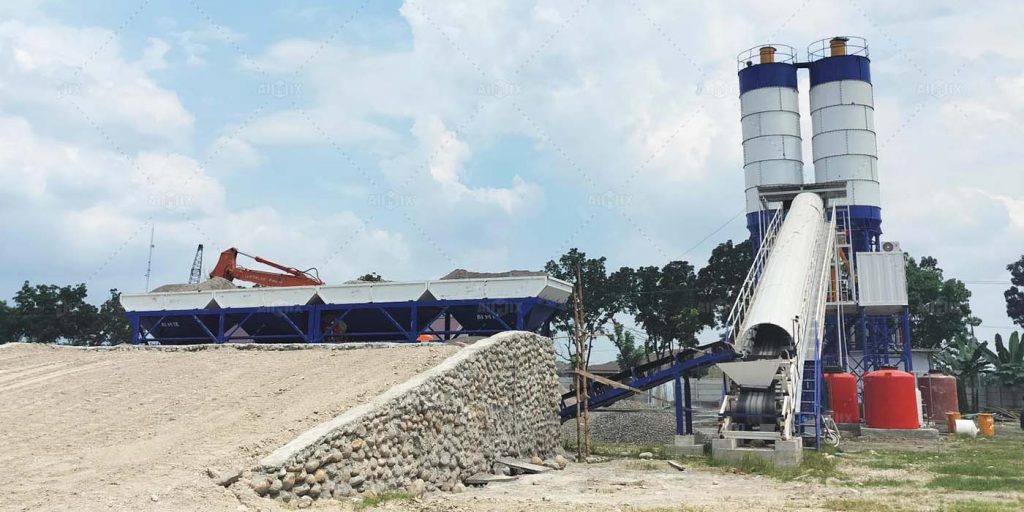
Key Factors to Consider When Selecting a 60 m³/h Mini Batching Plant
To select the right plant, you need to look at several practical factors that directly impact your project’s efficiency and concrete quality.
1. Production Stability and Mixing Quality
For residential areas, the concrete must meet consistent quality standards. You should select a ready mix concrete mixing plant equipped with a twin-shaft concrete mixer, as it delivers uniform mixing and fast discharge. Reliable production helps you keep up with daily pouring needs and maintain the strength and durability of the concrete structures.
Stable performance also ensures that you avoid delays caused by equipment failures. Choosing a trusted supplier with proven plant performance is a smart move.
2. Installation Site and Mobility
The plant’s size and mobility matter. Mini concrete batching plants offer both stationary and mobile options. If your project requires frequent relocation or you have limited site space, a mobile plant with quick setup is a better choice. If you plan to use the plant in one fixed location, a stationary type will offer higher stability and lower long-term maintenance costs.
Consider the site layout, available area, and transportation paths when making this decision.
3. Concrete Demand and Pouring Schedule
It is important to estimate your daily and weekly concrete needs based on the construction plan. A 60 m³/h plant typically produces around 480 to 500 m³ of concrete in a standard 8-hour working day. This capacity is usually sufficient for medium-sized residential projects where concrete pouring is divided into sections.
If your project requires faster pouring within a short time frame, ensure the selected plant has reliable discharge speed and minimal downtime between batches.
4. Supporting Equipment and Delivery Efficiency
The batching plant works closely with concrete pumps, mixers, and transport trucks. Choosing the right configuration, including the cement silo size, aggregate batching machine, and screw conveyors, will improve site productivity. If your concrete needs to be delivered to distant points within the project, ensure that the plant’s loading system matches your truck fleet capacity.
Planning this equipment connection in advance saves time and improves the overall concrete delivery cycle.
5. Local After-Sales Support and Spare Parts Availability
From a contractor’s perspective, quick service response and local spare parts supply are critical. A minor plant breakdown could affect the entire pouring schedule. Therefore, it is best to choose a supplier with a local service team and warehouse in Indonesia. Fast support minimizes downtime and reduces financial risk for your project.
In addition, a supplier who provides operator training and technical guidance helps you start production smoothly and reduces operation errors.
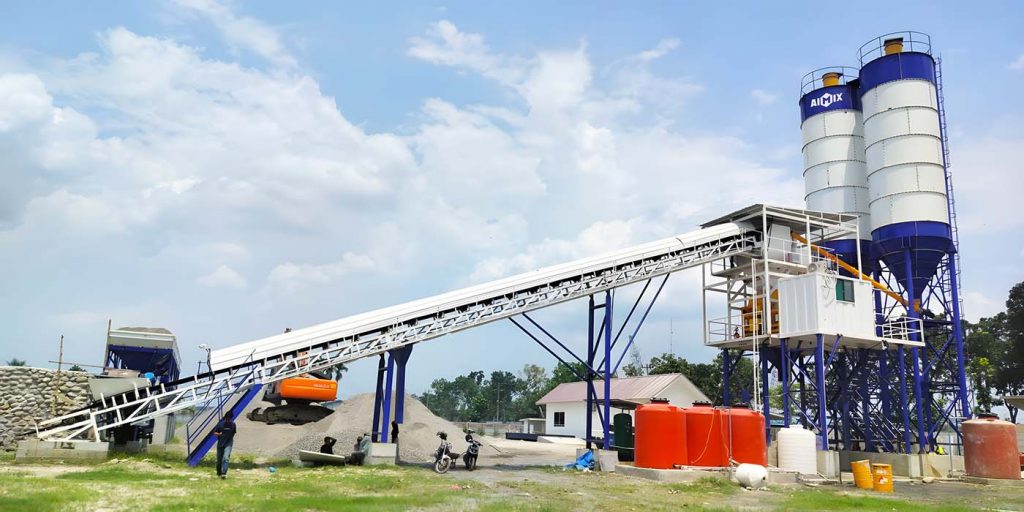
How to Make the Right Decision
After understanding all the key factors, the final decision should align with your project size, timeline, budget, and future use. Comparing different plant models, checking customer reviews, and asking for detailed quotations will help you narrow down the best option.
It is also wise to inspect the batching plant before purchase, if possible, to verify its build quality and configuration suitability.
Conclusion: Contact Us to Find the Best Solution
Choosing a 60 m³/h mini concrete batching plant for medium-sized residential projects is a valuable step toward efficient and reliable concrete production. By focusing on capacity, mobility, mixing quality, and after-sales service, you can secure the best solution that fits your needs.
If you are currently planning to purchase a concrete batching plant for your project in Indonesia, contact us today. We are ready to provide detailed product information, customized quotations, and professional technical support to help you start production quickly and smoothly.
Contact AIMIX Indonesia:
- Website: https://aimixgroup.id/
- Email: sales@aimixgroup.id
- WhatsApp: +62 898-3129-840
No responses yet