
For many medium-scale asphalt suppliers in Indonesia, producing around 80,000 tonnes of asphalt mix per year is a realistic and profitable goal. However, choosing the right asphalt plant capacity to reach this target can be tricky. The capacity directly affects your production efficiency, cost control, and ability to take on multiple road and bridge projects. In this article, I’ll walk you through how to select the right capacity for your pabrik aspal in Indonesia, based on practical industry experience and local operating conditions.
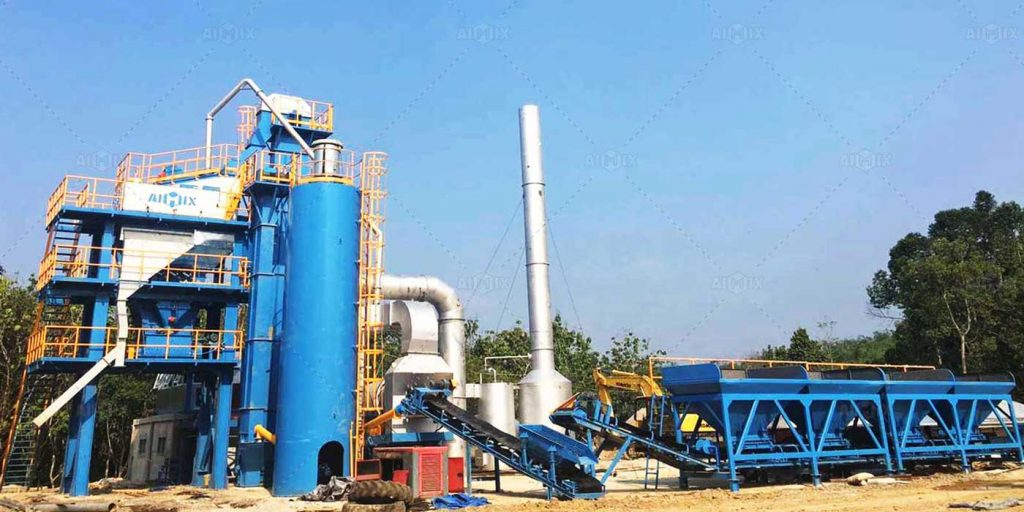
Understanding Your Annual Production Goal and Market Demand
The first step is to convert your annual production goal into daily or hourly production needs. If you aim to produce 80,000 tonnes per year, that’s about 6,600 tonnes per month or roughly 220 tonnes per day (assuming 300 working days per year). Understanding this breakdown helps you match your target with a suitable asphalt plant model.
However, production targets alone don’t tell the full story. You should also look at your project pipeline. For instance, are you mainly supplying asphalt for local road maintenance, or do you serve large provincial highway projects? Smaller municipal contracts may require flexibility and mobility, while large government projects demand higher output and continuous operation. Balancing these needs is key to choosing the right amp hotmix.
Matching Plant Capacity to Your Operational Schedule
Once you have your daily target, the next question is: how many hours per day will your plant run? Let’s assume your plant runs 8 hours per day. To produce 220 tonnes per day, your asphalt plant should have a rated capacity of around 30 tonnes per hour. But if you plan to run only 6 hours per day or expect production interruptions due to rain or maintenance, you may need a 40–50 tph plant to stay on schedule.
In other words, your working schedule and plant utilization rate directly influence your capacity decision. In Indonesia, where weather and logistics can be unpredictable, it’s often safer to choose a slightly higher capacity than your theoretical need. This gives you a margin to meet urgent orders or recover from downtime.
Considering the Type of Projects You Serve
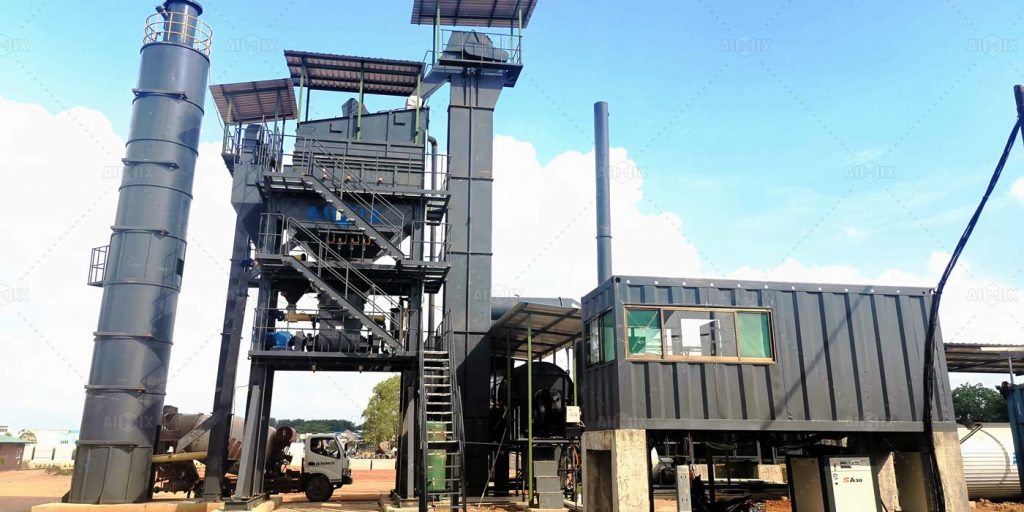
Different project types demand different mixes and production patterns. For example, if you mainly serve road repair contractors, a continuous drum mix plant with 40–60 tph capacity is often ideal. It’s easy to operate, quick to move, and can produce consistent quality mix for small and medium contracts.
However, if you work on regional or national road construction projects where quality control and mix variety matter, a batch mix plant may be more suitable. A 60–80 tph batch plant can help you produce different asphalt recipes for multiple clients, which increases flexibility and competitiveness.
Therefore, it’s not just about “how much” asphalt you produce, but also “what kind” of asphalt you need to produce. Understanding your core customers and typical project specifications will help you make the right investment.
Evaluating Site Conditions and Logistics
Another crucial factor is your production site and material logistics. Medium-scale suppliers in Indonesia often operate in areas where space, electricity, and aggregate supply may be limited. If your site is in a rural area with unstable electricity, a smaller mobile drum mix plant may be more efficient and easier to maintain. It requires less setup time and can move closer to your project locations.
On the other hand, if you have a fixed site with stable power supply and consistent material sources, investing in a stationary batch mix plant makes sense. It can handle higher production volumes and provide long-term returns for suppliers planning to grow their output in the coming years.
Balancing Investment Cost and Long-Term Return
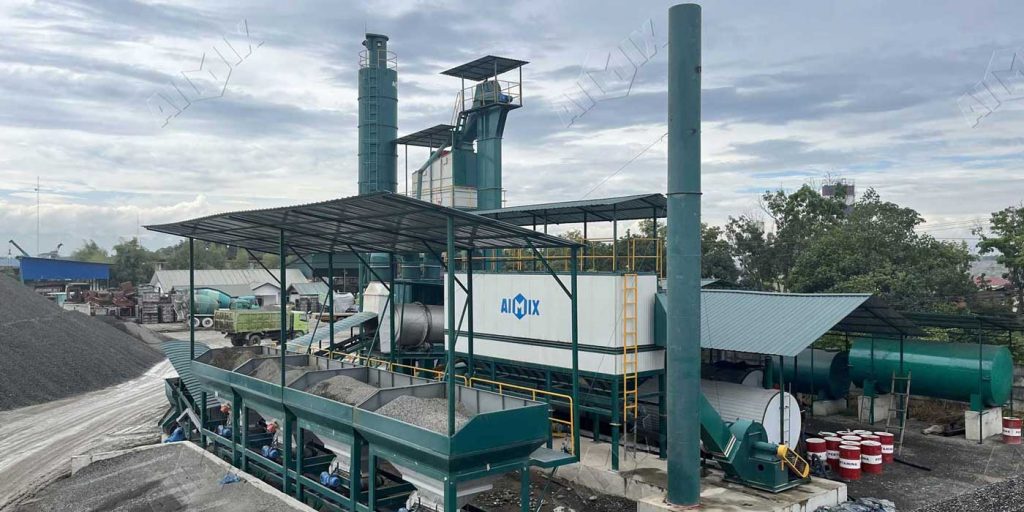
Capacity affects not only your productivity but also your capital investment. Larger plants cost more to buy and operate. Before making a decision, calculate your payback period based on expected production volume, selling price, and fuel consumption. For many medium-scale Indonesian suppliers, a 40–80 tph asphalt mixing plant mini usually strikes the right balance between investment cost, operational efficiency, and profit margin.
Besides, choosing energy-efficient burners and reliable control systems can help you save fuel and reduce downtime. Over the long term, stable operation and lower maintenance costs will bring you better returns than simply selecting the cheapest plant available.
Choosing a Reliable Partner for Long-Term Support
Finally, selecting the right supplier is as important as choosing the right plant capacity. You need a partner who understands Indonesian road construction conditions and can provide installation guidance, operator training, and after-sales service. Good technical support ensures your plant runs smoothly and achieves its designed capacity year after year.
My Recommendation
For suppliers targeting around 80,000 tonnes per year, I usually recommend an asphalt plant with a rated capacity of 40–60 tph. This range offers enough flexibility for both private and public projects, maintains stable performance under local conditions, and keeps investment reasonable for medium-sized businesses.
Conclusion: Choose Capacity That Matches Your Real Workload
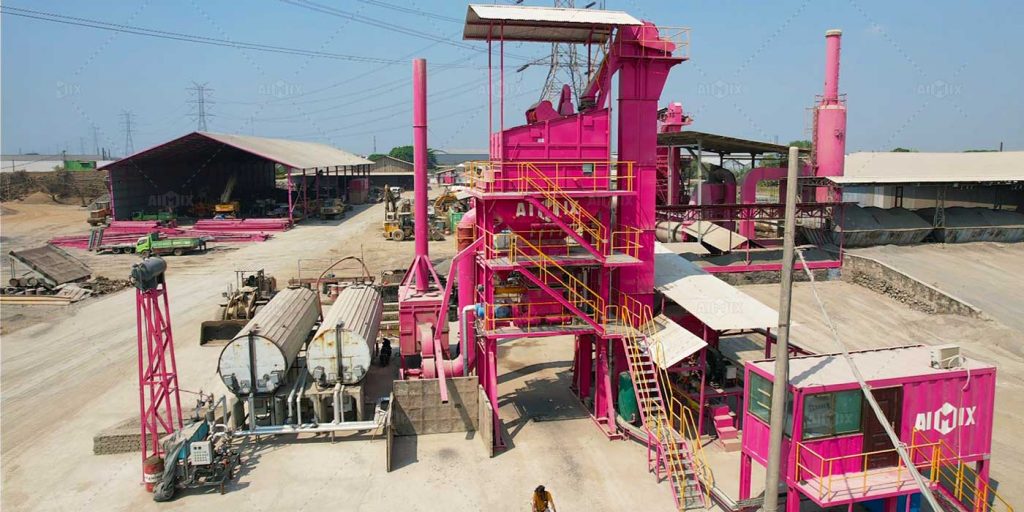
Selecting asphalt plant capacity is not only about reaching your yearly target. It’s about aligning your production capability with your market demand, project type, and operation schedule. When these factors work together, you’ll find it much easier to deliver consistent supply, control costs, and win more contracts.
If you’re planning to start or expand your asphalt production business in Indonesia, I can help you evaluate your expected output and recommend the most suitable plant model for your goals. Contact me to discuss your project and get a customized solution that fits your production target of 80,000 tonnes per year.
No responses yet