
For many small and medium contractors in Indonesia, choosing the right concrete pump is not just a technical decision. It directly affects project speed, labor cost, and overall profit. Among all options, the 30 m³/h pompa beton kecil often appears as a popular choice. But is it really enough for daily construction needs? To answer this question, we need to look at real job sites, real budgets, and real challenges faced by Indonesian contractors.
This article explores the suitability of a 30 m³/h concrete pump from a contractor’s perspective. We connect machine capacity with project scale, working conditions, and long-term business growth. Step by step, you will see whether this capacity matches your expectations.
Understanding the Real Meaning of 30 m³/h Capacity
Before deciding if 30 m³/h is enough, it is important to understand what this number actually means. Capacity figures often look simple, but real performance depends on many factors.
What 30 m³/h Represents on Site
A 30 m³/h concrete pump means the machine can theoretically pump 30 cubic meters of concrete per hour under standard conditions. These conditions include smooth aggregate, short pumping distance, and stable power supply. In real Indonesian job sites, conditions vary. However, even with some loss, the output often stays practical.
For small contractors, this capacity usually supports slab pouring, column filling, and foundation work without delay. As a result, daily pouring targets remain achievable.
Capacity Versus Daily Concrete Demand
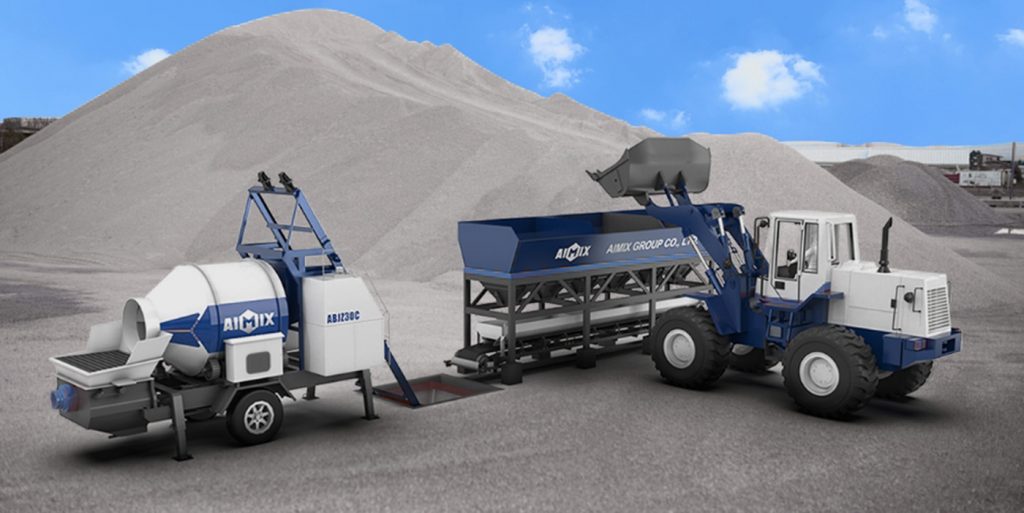
Most small projects in Indonesia do not require continuous high-volume pouring. Residential houses, shop buildings, warehouses, and small infrastructure projects often need 100–200 m³ per day. With proper planning, a 30 m³/h jual pompa beton mini can complete these tasks within normal working hours.
Therefore, capacity often matches demand rather than limiting it.
Why Small Contractors Prefer 30 m³/h Concrete Pumps
Once capacity is clear, the next question naturally follows. Why do so many small contractors choose this size instead of larger machines?
Balanced Investment Cost
Budget always matters. A 30 m³/h concrete pump costs significantly less than higher-capacity models. At the same time, it still delivers reliable performance. This balance helps contractors control initial investment while entering mechanized construction.
Lower investment also reduces financial pressure during project gaps.
Lower Operating and Maintenance Expenses
Smaller pumps consume less fuel or electricity. They also use fewer wear parts. As a result, daily operating cost stays manageable. Maintenance remains simple, even in remote areas.
This advantage becomes critical in Indonesia, where projects often spread across islands.
Easier Transportation and Setup
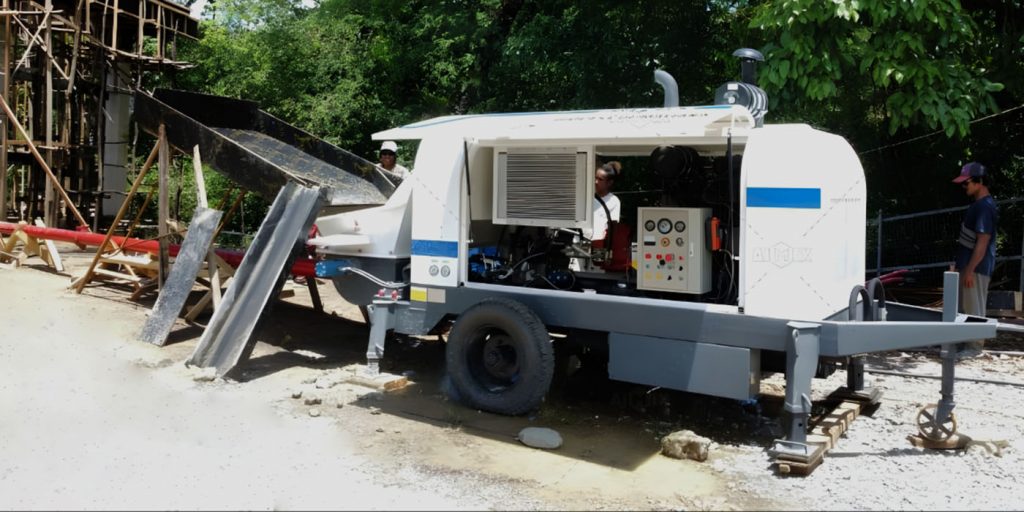
Many Indonesian job sites have limited access roads. Large equipment struggles to enter narrow urban areas or rural villages. A 30 m³/h concrete pump, especially trailer or small truck-mounted types, offers easier mobility.
Quick setup saves time and reduces manpower needs.
Matching Pump Capacity With Typical Indonesian Projects
To judge suitability, we must connect pump capacity with real construction scenarios in Indonesia.
Residential and Commercial Buildings
Small housing projects dominate the local market. Contractors often pour slabs, beams, and columns in stages. A 30 m³/h pump fits this rhythm well. It supports steady pouring without overwhelming the formwork team.
This controlled pace also improves concrete quality.
Road and Infrastructure Maintenance
Village roads, drainage systems, and sidewalks require flexible equipment. A medium-capacity pump allows precise placement. It reduces waste and speeds up work.
In these projects, efficiency matters more than extreme output.
Remote and Island Projects
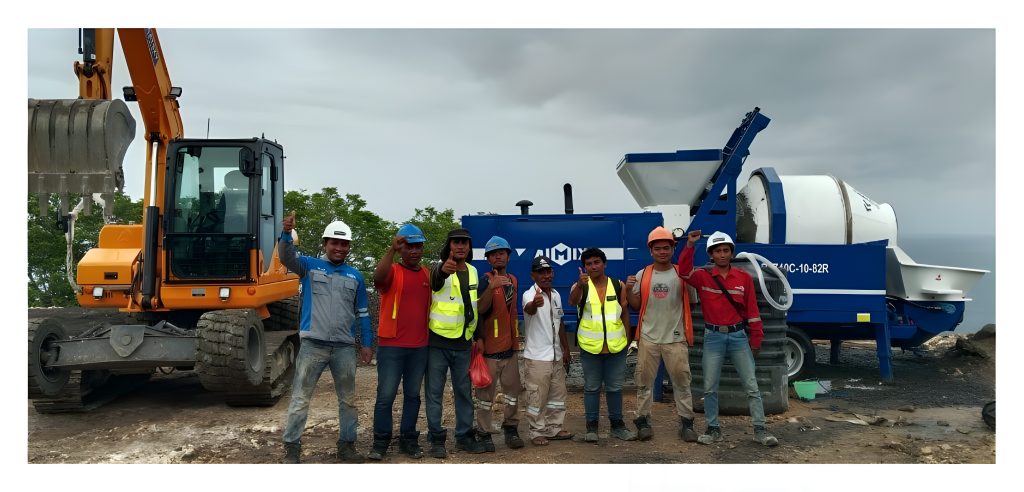
Indonesia’s geography creates logistical challenges. Smaller pumps simplify transport by truck or ferry. Contractors can reach more projects without hiring oversized equipment.
This flexibility directly increases business opportunities.
Is There a Risk of Choosing Too Small?
Every decision carries trade-offs. So, it is fair to ask whether a 30 m³/h pump might limit growth.
When 30 m³/h Might Not Be Enough
If your projects involve high-rise buildings, large bridges, or continuous mass pouring, higher capacity becomes necessary. Long pumping distances and large aggregates also reduce efficiency.
However, these scenarios usually belong to medium or large contractors.
Planning for Future Expansion
Many small contractors start with 30 m³/h concrete pump machines and upgrade later. This step-by-step approach reduces risk. It allows contractors to learn pump operation, win more projects, and reinvest profits.
In this way, the machine supports growth instead of blocking it.
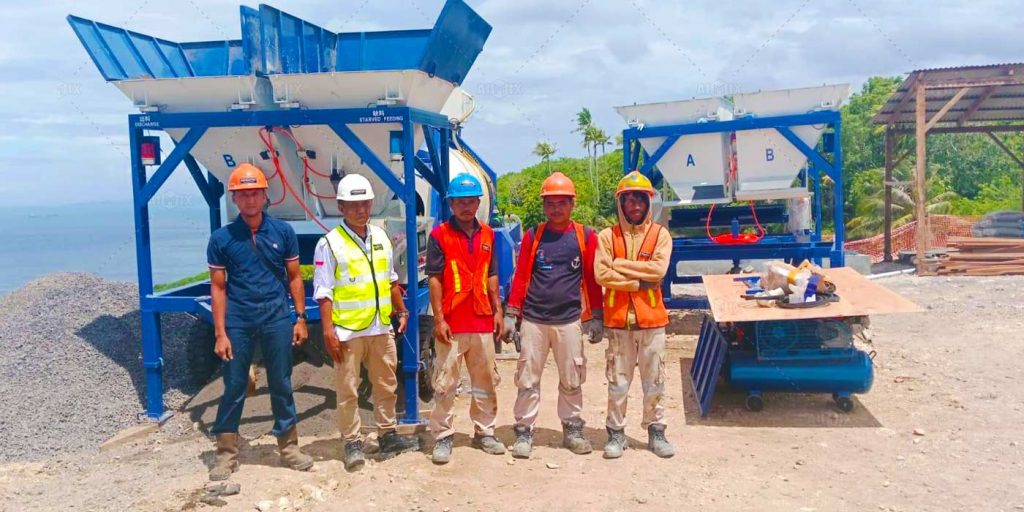
How a 30 m³/h Concrete Pump Improves Competitiveness
Beyond technical performance, equipment choice affects market position.
Faster Project Completion
Compared with manual pouring, a concrete pump dramatically shortens construction time. Faster completion means earlier payment and better cash flow.
Clients notice this efficiency and prefer professional contractors.
Reduced Labor Dependence
Labor shortages and rising wages challenge Indonesian contractors. A concrete pump reduces reliance on large labor teams. Fewer workers can handle the same workload.
This shift improves cost control and site safety.
Consistent Concrete Quality
Stable pumping ensures uniform concrete placement. This consistency improves structural quality and reduces rework.
High quality leads to repeat clients and strong reputation.
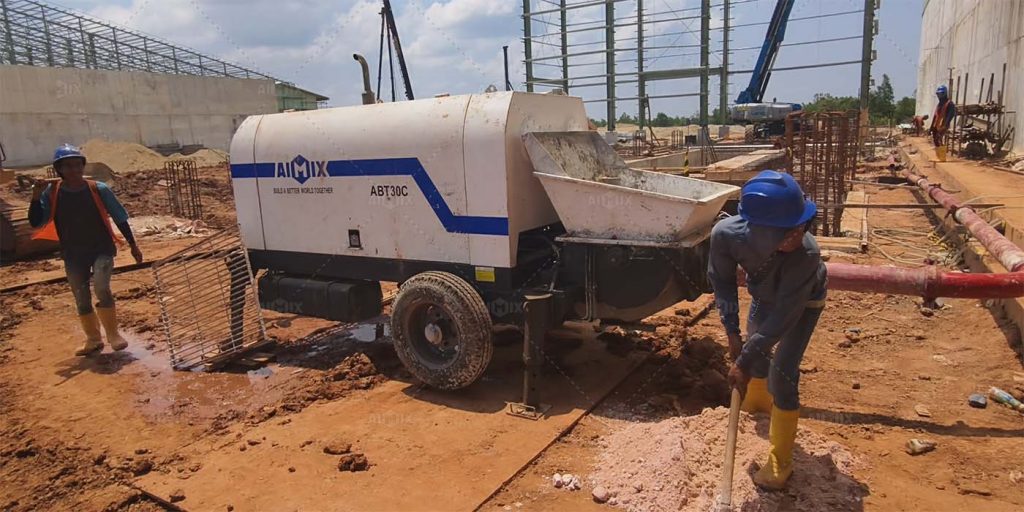
Why AIMIX 30 m³/h Concrete Pumps Fit Indonesian Contractors
After understanding capacity, cost, and application, equipment choice becomes clearer.
AIMIX designs 30 m³/h concrete pumps specifically for developing markets like Indonesia. These machines focus on durability, easy operation, and stable performance. They adapt well to local materials and working conditions.
In addition, AIMIX provides technical support, spare parts supply, and practical solutions. Contractors do not just buy a machine. They gain a reliable partner.
Final Thoughts: Is 30 m³/h Enough?
For most small contractors in Indonesia, the answer is yes. A 30 m³/h concrete pump offers the right balance of capacity, cost, and flexibility. It supports common projects, improves efficiency, and strengthens competitiveness.
If you want to grow steadily without overinvesting, this capacity makes sense.
Now is the right time to upgrade your construction process. Choose a solution that fits your real needs. Explore AIMIX 30 m³/h concrete pumps and take your projects to the next level.
No responses yet