
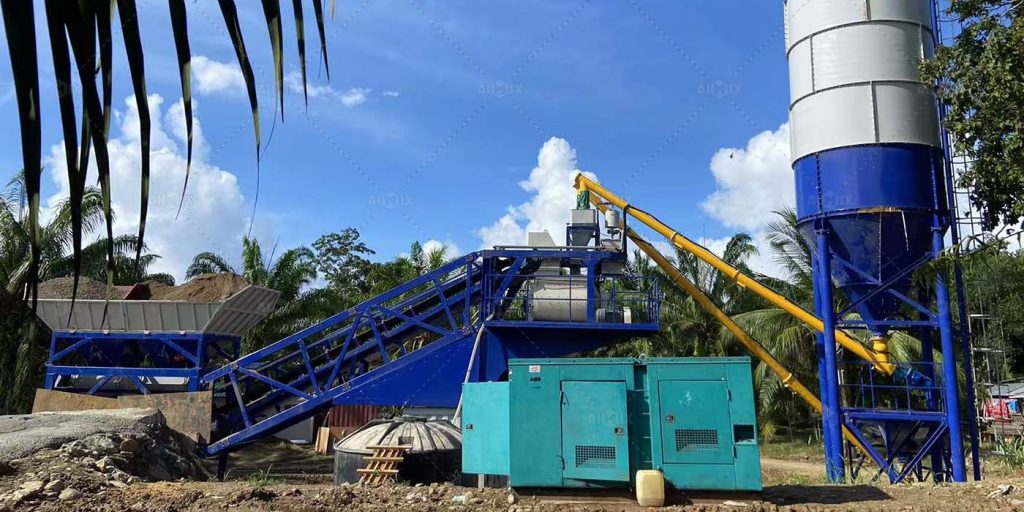
When planning a medium-sized warehouse project, one of the first questions that arises is how to manage the concrete supply efficiently. For a warehouse that requires around 15,000 m³ of concrete in total, many contractors consider whether a 35 m³/h mini batching plant Indonesia is the right choice. This article looks at the suitability of this plant size for such projects, considering both technical and practical aspects from the customer’s perspective.
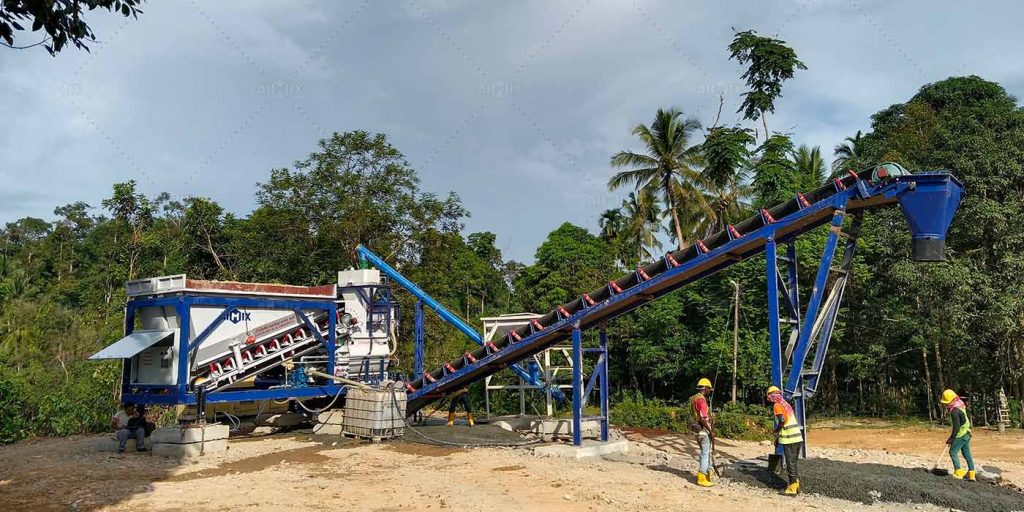
Understanding the Scale of the Project
Before choosing equipment, it is essential to look at the numbers. A medium-sized warehouse often demands durable foundations, strong floors, and reinforced walls. With a total demand of 15,000 m³ of concrete, the supply capacity must be matched to the project timeline. Here is where a 35 m³/h mini batching plant becomes a realistic option, as it balances production speed with manageable investment costs.
Breaking Down the Timeline
If the project requires concrete over a period of six months, that equals about 2,500 m³ per month. A 35 m³/h small concrete batching plant for sale can produce close to 280 m³ of concrete in a single 8-hour working day. With just 9–10 working days per month, the plant can easily meet the monthly demand. This calculation shows that the production capacity aligns well with project needs.
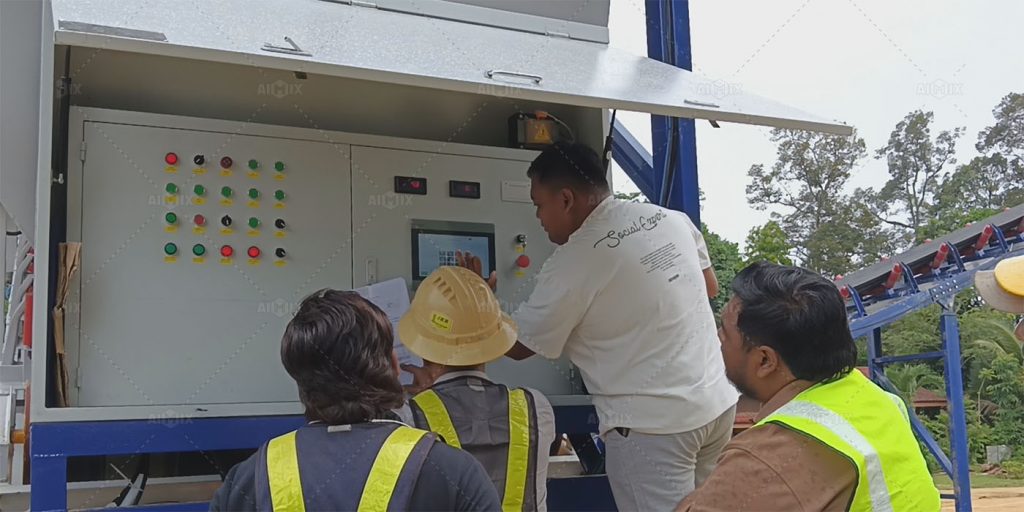
Advantages of a 35 m³/h Mini Batching Plant
After considering the project requirements, the next step is to look at the benefits of using this type of plant. Customers often want to know how the choice impacts cost, efficiency, and flexibility. A mini batching plant offers practical solutions that fit the scale of a warehouse project without overspending on oversized equipment.
Efficient Use of Resources
Since the plant is compact, it consumes less energy and requires less space on site. This makes it ideal for projects where available land is limited, such as warehouse zones in industrial areas. At the same time, it reduces unnecessary operational costs.
Flexibility for Different Applications
A warehouse project involves more than just one type of concrete pour. Floors, foundations, and walls each demand different mixes. With a 35 m³/h peralatan batching plant, operators can adjust mix designs quickly. This flexibility saves time and avoids the risk of delays caused by waiting for external supply.
Cost Control for Contractors
Buying concrete from commercial suppliers for 15,000 m³ can become very expensive. Producing concrete on-site with a mini batching plant gives contractors control over material quality and costs. Over the course of the project, this decision often saves significant amounts of money.
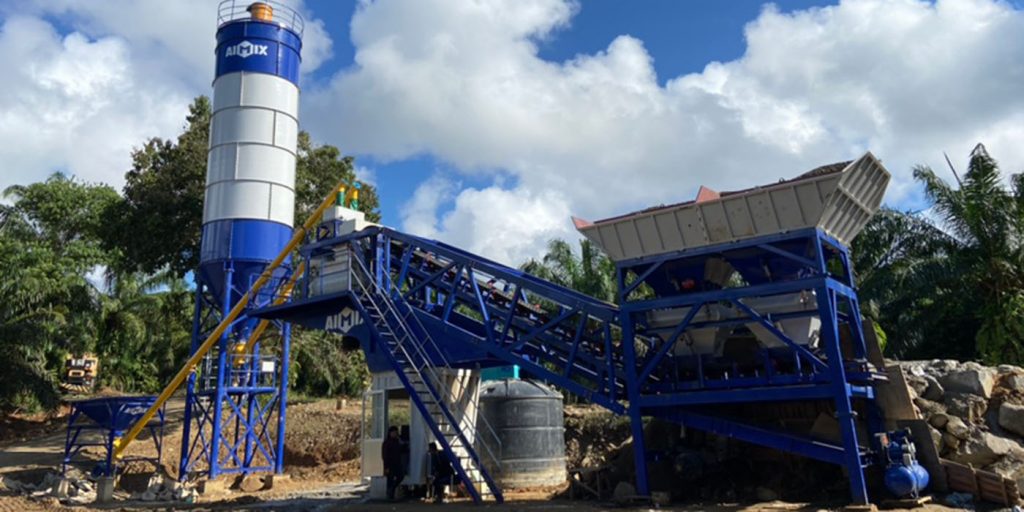
Challenges and Considerations
While the advantages are clear, customers should also consider the challenges. No equipment is a one-size-fits-all solution. Therefore, it is important to evaluate the potential limitations and prepare solutions in advance.
Labor and Operation
Even though the plant is smaller, it still requires skilled operators to ensure proper batching and consistent quality. Training or hiring experienced staff should be part of the plan.
Storage and Logistics
A steady supply of cement, aggregates, and water must be available to keep production running smoothly. Planning for storage areas and delivery schedules helps avoid downtime.
Maintenance and Reliability
Regular maintenance is essential. A small breakdown can interrupt production and delay construction. Having a reliable supplier for spare parts and technical support reduces this risk.
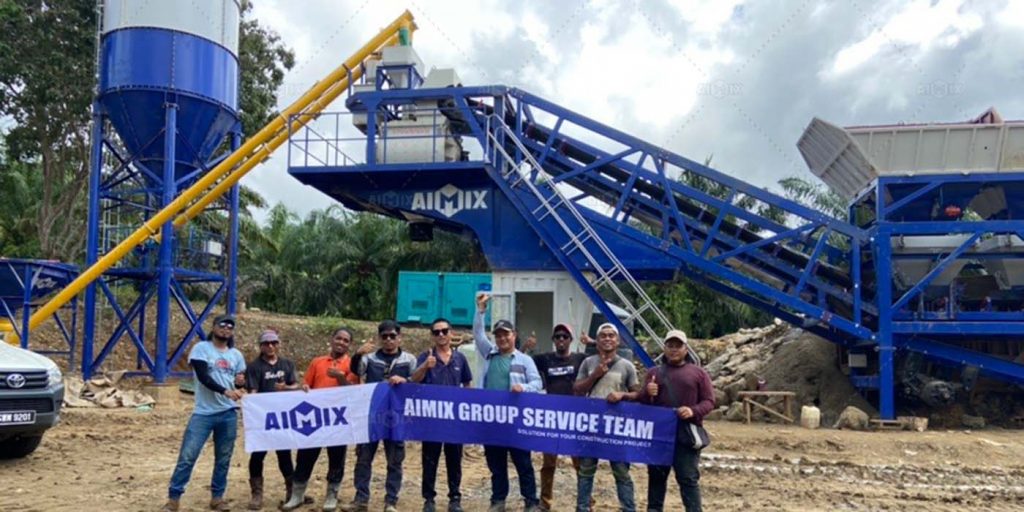
Why Contractors Choose This Option
Many medium-sized contractors choose the 35 m³/h mini batching plant because it strikes the right balance. It is not too large to cause unnecessary expenses, yet not too small to delay project progress. The plant matches the scale of a 15,000 m³ concrete requirement, providing both capacity and efficiency. This is why it is increasingly popular for warehouse and industrial building projects.
Conclusion: Is It Suitable for Your Warehouse Project?
Looking at the numbers, the 35 m³/h mini batching plant is more than capable of meeting the needs of a medium-sized warehouse with 15,000 m³ total concrete demand. It ensures steady supply, cost control, and operational flexibility. While contractors must also plan for labor, logistics, and maintenance, the benefits usually outweigh the challenges. For most warehouse developers, this solution provides the right mix of efficiency and value.
Take the Next Step
If you are planning a warehouse project and want to secure reliable concrete production, consider investing in a 35 m³/h mini batching plant. With the right setup, it will not only meet your project’s demand but also give you long-term savings. Contact us today to discuss your requirements and find the best solution for your project.
No responses yet