
Every contractor in Java faces the same pressure. Deadlines keep getting tighter. Labor costs keep rising. Clients ask for steady quality and clear schedules. In this context, choosing the right ready mix concrete batching plant is not a small decision. It shapes your daily output. It also shapes your profit. So here is the real question: can a 75 m³/h ready mix concrete plant for sale support a target of 600 m³ per day in Java, Indonesia? Let’s break it down from both the customer side and the construction industry side, with real logic and practical thinking.
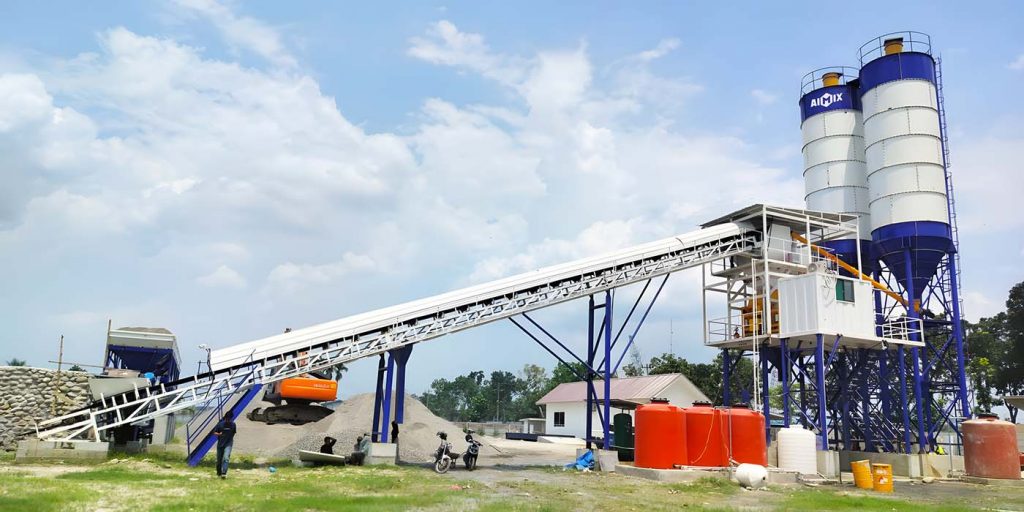
What 600 m³ Per Day Really Means on Site
Before we talk about machine capacity, we should talk about real production needs. On paper, 600 m³ per day looks simple. In reality, it depends on your working hours, your site layout, and your pouring plan. For example, if you run one shift of 10 hours, you need an average of 60 m³ per hour. If you run two shorter shifts, the hourly target changes again.
However, numbers on paper do not tell the whole story. On site, trucks may wait. Workers may pause. Weather in Java can change fast. Because of that, you should not plan at the exact limit. You should leave a buffer. In other words, your plant should work comfortably, not under stress. This is why many contractors look at a 75 m³/h plant when they aim for around 600 m³ per day.
With this in mind, let’s move to the machine itself and see what it can really do.
What a 75 m³/h Batching Plant Can Deliver in Practice
On the nameplate, a 75 m³/h jual batching plant sounds powerful. And in many cases, it is. If you run it for 10 hours at a stable pace, the theoretical output reaches 750 m³. Even if you consider normal losses and small stops, reaching 600 m³ in one day is still realistic.
But theory and practice are not the same. In practice, you may deal with mixer cleaning, material refilling, and truck dispatch gaps. Because of these factors, most sites reach about 80% to 90% of the rated capacity in a smooth operation. That still gives you around 60 to 67 m³ per hour on average. Over 9 to 10 hours, you can hit or pass 600 m³.
So, the short answer is yes. A 75 m³/h plant can handle 600 m³ per day. Yet, this answer only works if the rest of your system also works well. That leads us to the next key point.
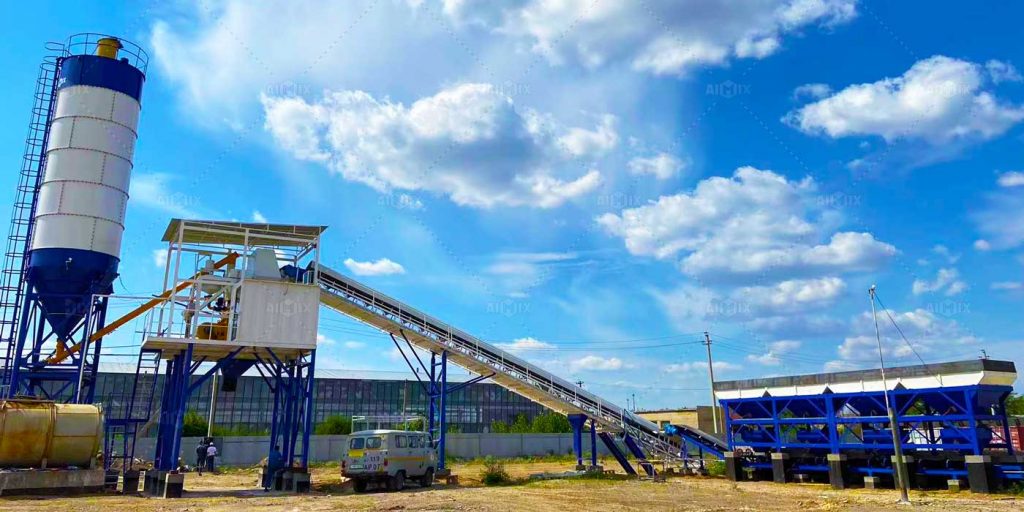
Why the Whole Production System Matters More Than Just the Plant
Many buyers focus only on the batching plant. That is understandable. It is the core machine. However, concrete production is a system, not a single device. If one link is weak, the whole chain slows down.
Material Supply and Storage
First, you need stable material supply. Cement, aggregates, and additives must arrive on time. Your silos and aggregate bins must hold enough stock for the whole day. If your loader stops to wait for aggregates, your plant also stops. As a result, your real output drops fast.
Truck Fleet and Dispatch Rhythm
Second, you need enough mixer trucks. Even the best plant becomes useless if trucks queue too long or return too late. In Java, traffic conditions can change by the hour. Therefore, you should plan extra trucks or better routes. This way, the plant can keep mixing without long breaks.
Site Management and Pouring Plan
Third, you need a clear pouring plan. Crews on site should receive concrete at a steady rhythm. If the site cannot place concrete fast enough, trucks will wait. Then the plant must slow down. In contrast, when placement and production match, the whole process flows.
Because of these reasons, a 75 m³/h plant works best as part of a well-organized system. Now, let’s connect this to the real conditions in Java.
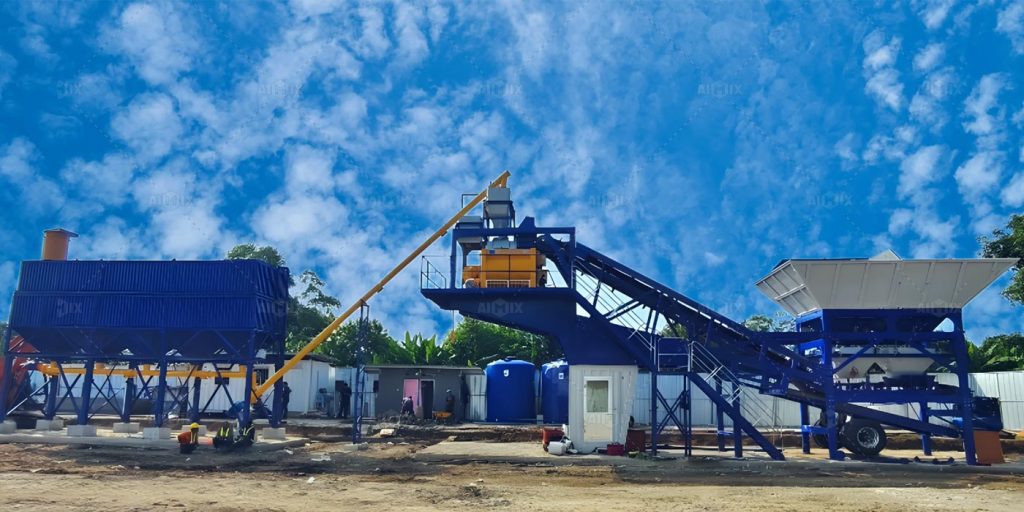
Is a 75 m³/h Plant a Smart Fit for Java, Indonesia?
Java has a strong construction market. You see housing projects, industrial buildings, and infrastructure work everywhere. At the same time, many projects sit in areas with limited space and busy roads. This creates two clear needs: stable output and flexible operation.
A 75 m³/h concrete mix plant sits in a sweet spot. It does not feel too small for medium to large projects. Yet, it also does not feel too big to manage. You can install it on many typical sites or in a commercial batching yard. You can also scale your daily plan. On busy days, you push closer to full capacity. On lighter days, you run fewer hours and save costs.
Moreover, from a business view, this capacity level helps control risk. You avoid over-investing in a much larger plant that stays underused. At the same time, you avoid the stress of running a smaller plant at full speed every day. This balance matters, especially when projects change or overlap.
Still, capacity alone does not decide everything. Let’s talk about quality and reliability, which matter just as much to your clients.
How Production Stability and Quality Protect Your Reputation
In today’s market, clients do not only buy concrete. They buy reliability. They want the right mix. They want it on time. They also want the same quality from the first truck to the last truck.
A 75 m³/h batching plant usually comes with a mixer and control system designed for stable output. This helps you keep mix accuracy under control. It also helps reduce waste and rework. When your quality stays stable, your site runs smoother. When your site runs smoother, your client trusts you more. And when your client trusts you, repeat business becomes much easier.
In addition, running a plant below its maximum limit often improves reliability. You put less stress on components. You reduce sudden breakdowns. Over time, this lowers maintenance costs and protects your schedule.
Now, let’s bring all these points together and answer the core question in a clear way.
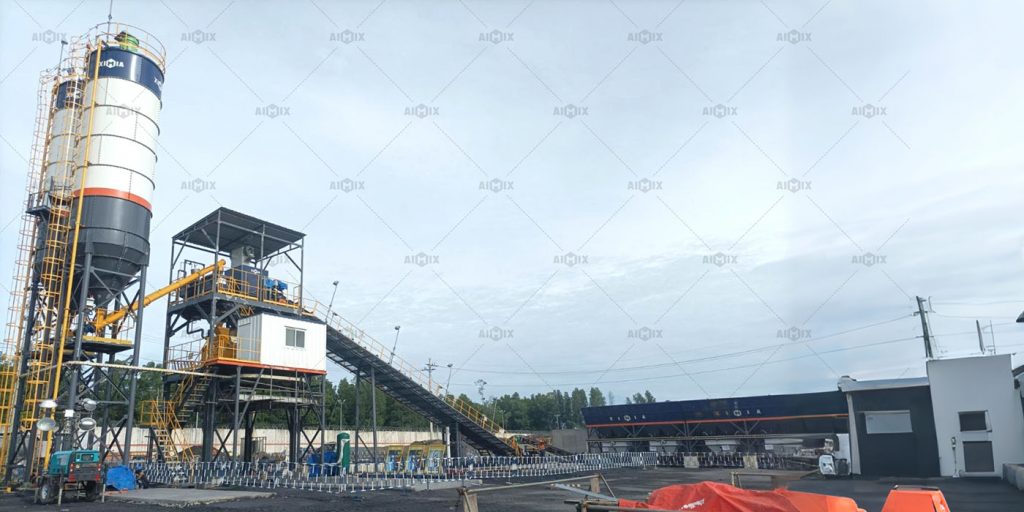
So, Is 75 m³/h Enough for 600 m³ Per Day?
Yes, it is enough in most normal conditions. With good planning, a 75 m³/h ready mix concrete batching plant can reach 600 m³ per day without struggle. However, this depends on three key factors. First, you need stable material supply. Second, you need a well-managed truck fleet and site schedule. Third, you need realistic working hours and a clear pouring plan.
If you ignore these points, even a bigger plant will not save you. On the other hand, if you manage them well, a 75 m³/h plant can become a very efficient and profitable choice for projects in Java.
In short, the machine gives you the potential. Your management turns that potential into real output.
Final Thoughts: Choose Capacity, But Think in Systems
When you choose a batching plant, do not only look at the number on the brochure. Look at your daily target. Look at your site conditions. Look at your business plan for the next few years. A 75 m³/h plant fits well for contractors who aim for around 600 m³ per day and want a balance between capacity, cost, and flexibility.
If you want to plan your next project with more confidence, it is worth talking to a supplier who understands both equipment and real site work. The right advice can help you avoid costly mistakes and build a more stable operation.
Ready to make your concrete production more predictable and more profitable? Take the next step, review your project needs, and choose a batching plant solution that truly matches your daily goals in Java, Indonesia.
No responses yet