
After a flood, time is not a luxury. Roads must reopen fast. Communities need access to hospitals, food supplies, and emergency services. For contractors and government agencies, one key question often comes up immediately: Is a 90 t/h asphalt mixing plant terdekat fast enough to produce 1,200 tons per day for emergency flood repairs?
This is not just a technical question. It is a real-world decision that affects project timelines, budgets, and public safety. In this article, we will answer this question step by step. We will use practical data, real construction logic, and on-site experience. More importantly, we will look at the issue from your perspective as a contractor, project manager, or decision-maker.
Let’s start with the basics, then move toward real production scenarios.
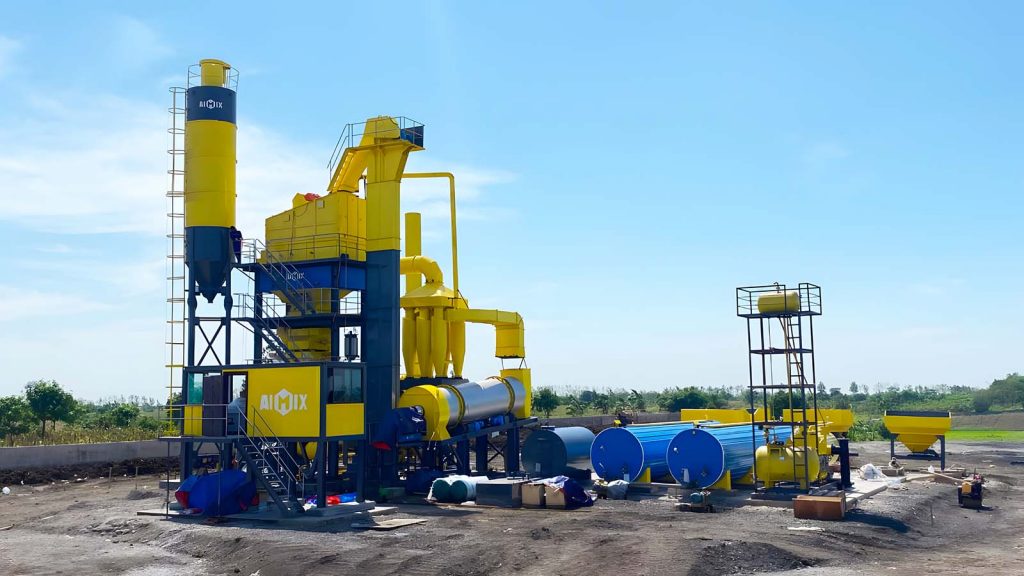
Understanding What “90 t/h” Really Means in Practice
Before judging whether a plant is “fast enough,” we need to clarify what 90 t/h actually represents.
A 90 t/h asphalt mixing plant refers to its theoretical maximum output under ideal conditions. These conditions include stable material supply, skilled operators, no interruptions, and optimal weather.
However, emergency flood repair projects rarely operate under perfect conditions. Therefore, understanding the gap between theory and reality is essential.
Theoretical vs. Actual Output
In real projects, a 90 t/h asphalt plant mobile or stationary usually achieves about 70–85% of its rated capacity. This reduction happens due to:
– Aggregate moisture after flooding
– Frequent starts and stops
– Truck coordination issues
– Quality control adjustments
As a result, the realistic hourly output often falls between 63 and 76 tons per hour.
This difference does not mean the plant underperforms. Instead, it reflects real construction conditions.
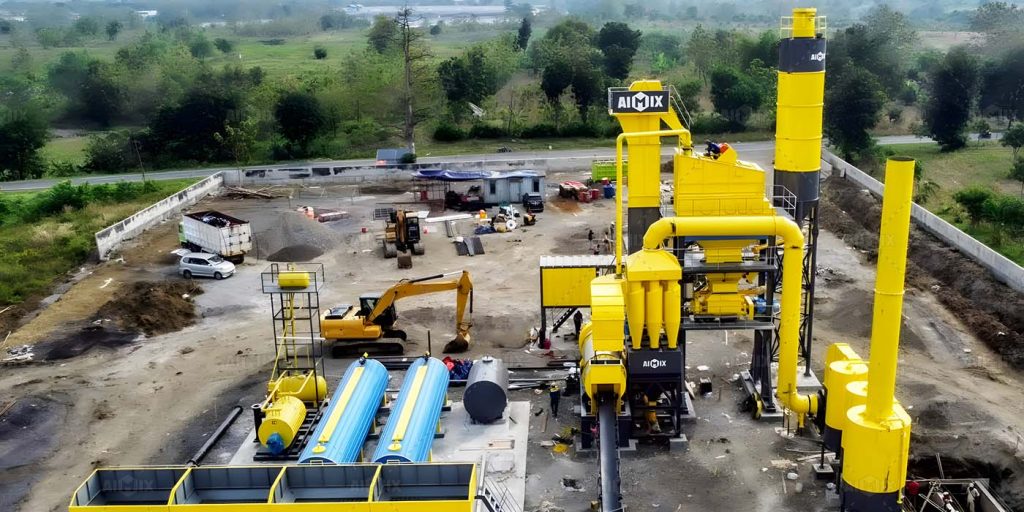
Calculating Whether 1,200 Tons per Day Is Achievable
Now that we understand real output, we can move to the key calculation. This step is critical for planning emergency repairs.
Let’s break it down logically.
Daily Production Math That Matters
If a 90 t/h amp hotmix runs at an average of 75 t/h, daily output depends mainly on effective working hours.
Here are three common scenarios:
Scenario 1: 12-hour operation
75 t/h × 12 h = 900 tons/day
Scenario 2: 16-hour operation
75 t/h × 16 h = 1,200 tons/day
Scenario 3: 20-hour operation
75 t/h × 20 h = 1,500 tons/day
Based on this, the answer becomes clear.
Yes, a 90 t/h asphalt mixing plant can produce 1,200 tons per day, but only if the operation runs for around 16 hours per day with good coordination.
This leads us to an important transition: production speed alone is not enough.
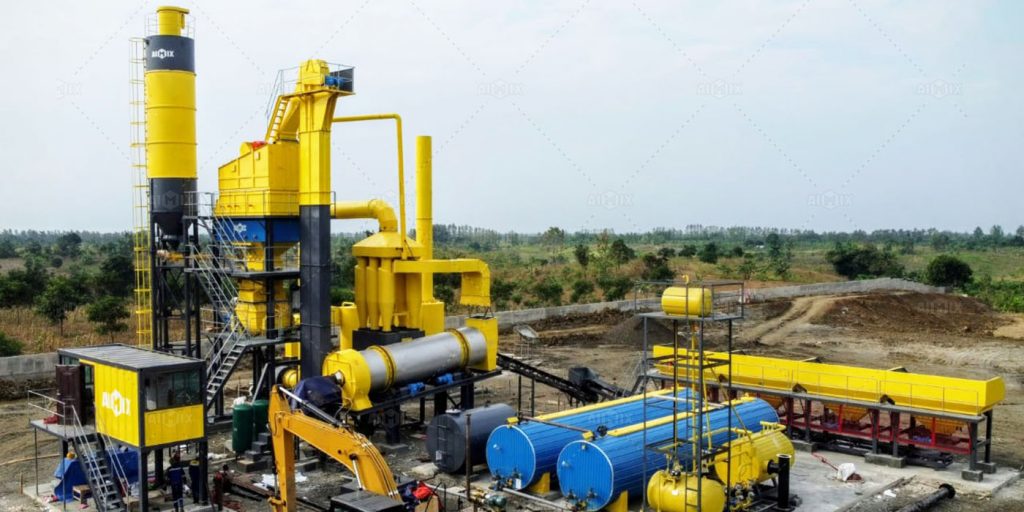
Why Emergency Flood Repairs Require More Than Just High Capacity
In flood recovery projects, speed matters. However, consistency matters even more.
A plant that produces fast but stops often will delay paving crews. Therefore, project success depends on the entire system.
Continuous Supply Keeps Paving Crews Moving
During emergency repairs, paving crews work in narrow time windows. Weather changes fast. Traffic pressure increases daily.
If asphalt supply stops, rollers cool down. Pavers wait idle. Productivity drops sharply.
A 90 t/h plant offers a strong balance here. It is fast enough to support continuous paving, yet compact enough to deploy quickly near damaged areas.
Mobility and Setup Speed Matter After Floods
Flood-damaged zones often have limited access. Large stationary plants may take weeks to install.
In contrast, many 90 t/h plants come in containerized or modular designs. They allow:
– Faster transportation
– Shorter installation time
– Lower foundation requirements
This advantage often outweighs pure capacity numbers.
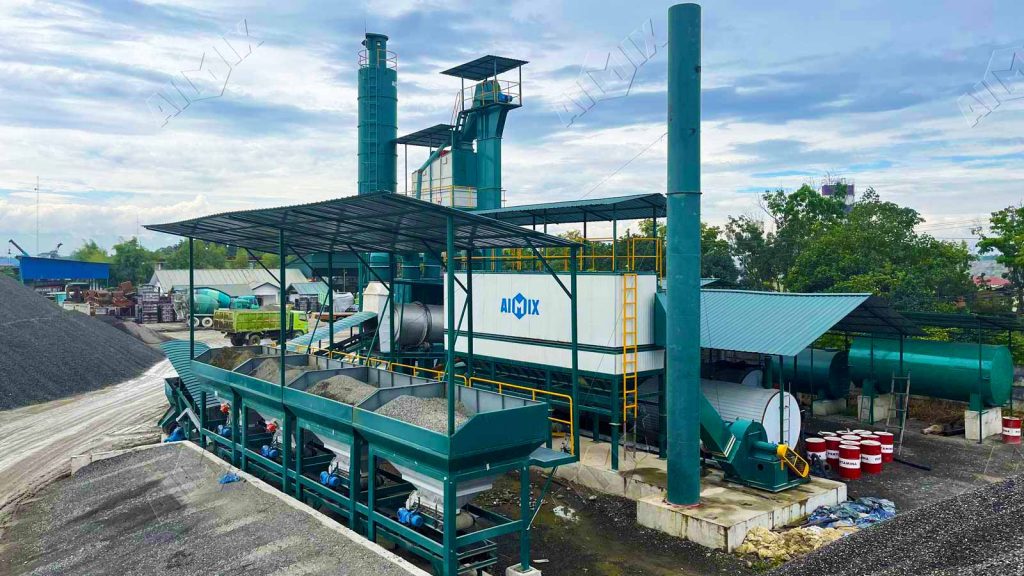
Key Factors That Help a 90 t/h Plant Reach 1,200 Tons/Day
To reliably reach 1,200 tons per day, several supporting conditions must align. Understanding these factors helps you plan realistically.
Aggregate Moisture Control After Flooding
After floods, aggregates often contain high moisture. This directly affects drying time.
To maintain output, operators should:
– Use covered aggregate storage
– Improve drainage around stockpiles
– Adjust burner capacity properly
These steps stabilize production speed.
Efficient Truck Dispatch and Logistics
Even the best plant fails if trucks are late.
For 1,200 tons per day, you typically need:
– 15–20 dump trucks
– Clear dispatch scheduling
– Short hauling distances
Many emergency projects succeed because the plant is placed close to the repair site.
Experienced Operators Reduce Downtime
In urgent projects, mistakes cost hours.
Skilled operators can:
– Adjust mix formulas quickly
– Handle moisture variations
– Reduce startup losses
This human factor often decides whether daily targets are met.
Is a 90 t/h Asphalt Plant the Most Cost-Effective Choice for Flood Repairs?
Capacity is only one side of the decision. Cost efficiency matters just as much, especially for public-funded projects.
Here is where a 90 t/h plant shows strong value.
Lower Fuel and Operating Costs
Compared with 120 t/h or 160 t/h plants, a 90 t/h unit:
– Consumes less fuel per hour
– Requires fewer operators
– Has lower maintenance costs
For short-term emergency use, this makes a big difference.
Better Match for Temporary High-Intensity Projects
Flood repairs often require high output for a limited period. After that, demand drops.
Oversized plants become underutilized.
A 90 t/h asphalt mix plant fits this pattern well. It can run long hours during emergencies and switch to normal schedules later.
Common Mistakes When Choosing Asphalt Plants for Emergency Work
Many buyers focus only on rated capacity. This often leads to poor decisions.
Let’s briefly highlight common pitfalls.
Overestimating Real Output
Assuming 90 t/h means constant 90 t/h output causes planning errors. Realistic buffers are essential.
Ignoring Support Systems
Plants fail not because of the mixer, but because of weak logistics, power supply, or storage planning.
Choosing Slow-Installation Equipment
In emergencies, installation speed can matter more than extra capacity.
So, Is a 90 t/h Asphalt Mixing Plant the Right Choice for You?
Based on real construction logic, the answer depends on your operating strategy.
If your project can support:
– 16-hour daily operation
– Stable aggregate supply
– Efficient truck coordination
Then a 90 t/h asphalt mixing plant is fully capable of producing 1,200 tons per day for emergency flood repairs.
More importantly, it offers flexibility, faster deployment, and better cost control.
How We Support Emergency Asphalt Projects
From our experience in flood recovery and urgent road rehabilitation projects, equipment alone is not enough.
We support clients with:
– Plant selection based on real production needs
– Layout planning to shorten installation time
– Operator training for emergency operations
– After-sales support during high-intensity production
Our goal is not just to sell an asphalt plant. It is to help you reopen roads faster and safer.
Final Call to Action
If you are planning emergency flood repairs and need to confirm whether a 90 t/h asphalt mixing plant can meet your daily target of 1,200 tons, now is the right time to act.
Share your project details with us. We will help you evaluate production hours, site conditions, and logistics. Together, we can turn urgent challenges into reliable solutions.
Fast decisions save time. The right equipment saves projects.
No responses yet