
In many Indonesia cities such as Jakarta, Surabaya, and Medan, contractors often face a practical question: should they buy ready-mix concrete or produce concrete on-site? This decision directly affects project cost, timeline, and flexibility. Especially for mid-sized projects, the choice between ready-mix supply and a 4.5m³ self loading concrete mixer becomes critical. In this post, we break down the real cost differences and help you find the most suitable solution based on your project needs.
Understanding Two Common Concrete Supply Methods
Before comparing costs, it is important to clearly understand how each option works. This helps you see where the money goes.
Ready-Mix Concrete Supply
Ready-mix concrete comes from batching plants and gets delivered by transit mixers. You pay per cubic meter. The supplier controls mix quality and logistics. However, you depend heavily on delivery schedules and traffic conditions.
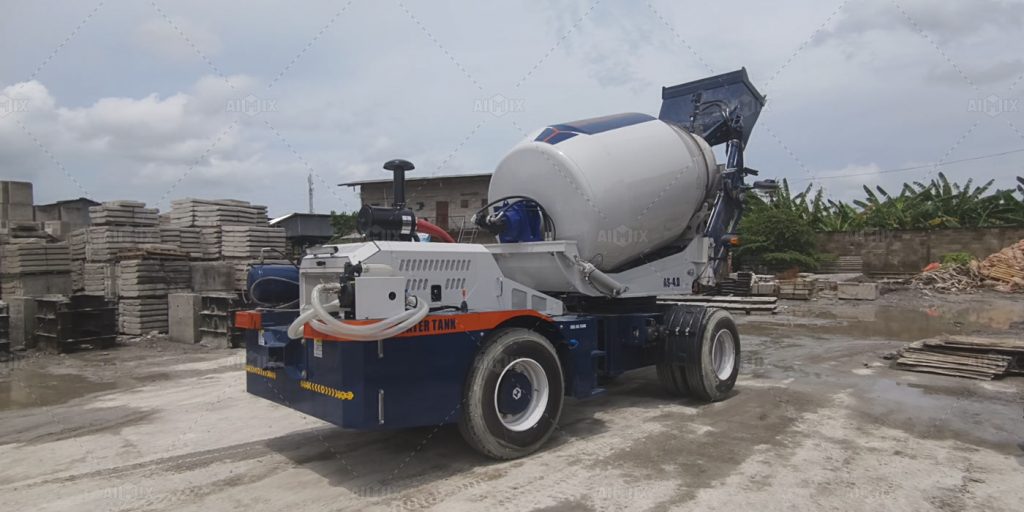
4.5m³ Self Loading Concrete Mixer
A 4.5m³ concrete mixer truck self loading produces concrete directly on-site. Each batch delivers 4.5m³, and hourly output reaches about 18m³ per hour (4.5 × 4). One operator can handle loading, mixing, transporting, and discharging. This machine reduces labor and increases flexibility.
Now that the basics are clear, let’s move to the actual cost comparison.
Direct Cost Comparison Per Cubic Meter
Cost per cubic meter is the first factor most contractors check. However, the real situation is more complex.
Ready-Mix Cost Structure
In Indonesia cities, ready-mix prices usually range from $70 to $110 per m³ depending on grade and location. For example:
– Jakarta: $80–$110/m³ due to traffic and demand
– Surabaya: $75–$100/m³
– Medan: $70–$95/m³
In addition, you often pay for pumping, waiting time, and minimum order volume. Small pours become expensive.
Self Loading Mixer Cost Structure
With a 4.5m³ self loading concrete mixer, cost comes from raw materials, fuel, and operator. On average:
– Cement, الرمل, aggregate: $40–$55/m³
– Fuel and operation: $5–$10/m³
So total cost usually stays around $45–$65/m³. That is significantly lower than ready-mix.
However, direct cost is only one side. Next, we should consider hidden costs.
Hidden Costs That Affect Your Budget
Many contractors underestimate indirect costs. These costs often decide the final profit.
Ready-Mix Hidden Costs
First, traffic delays in cities like Jakarta can slow delivery. This leads to cold joints or wasted material. Second, suppliers often require minimum orders, usually 5–7m³. Third, waiting fees apply if unloading takes too long.
As a result, your actual cost per m³ can increase by 10%–20%.
Self Loading Mixer Hidden Savings
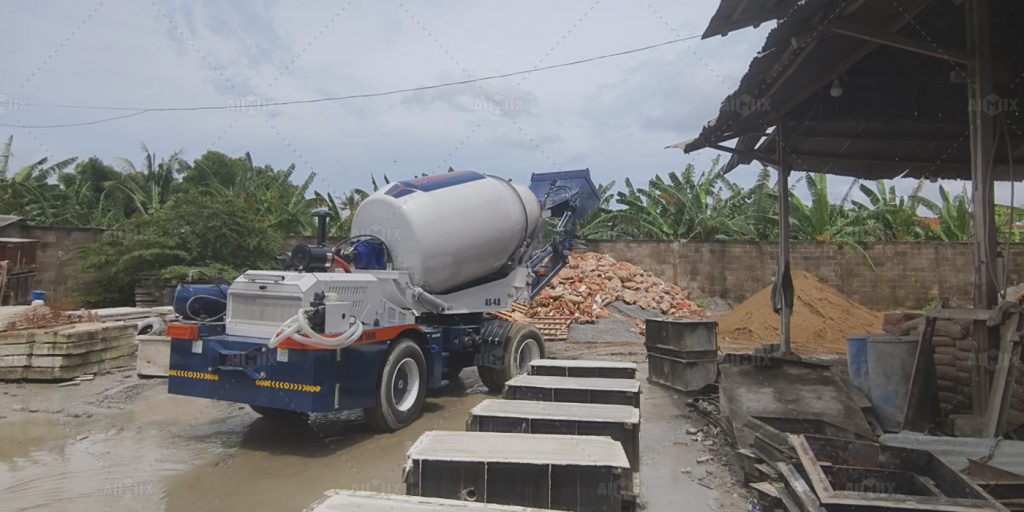
On the other hand, a self loading mixer gives full control. You produce exactly what you need. There is no minimum volume. You avoid delays and reduce waste.
Moreover, one machine replaces loader, mixer, and transporter. This reduces labor costs by 2–3 workers.
Therefore, when you include hidden factors, the cost gap becomes even larger.
Efficiency And Productivity Comparison
Cost is important, but efficiency also matters. Faster work means earlier project completion.
Ready-Mix Efficiency
Ready-mix works well for large continuous pours. However, it depends on logistics. If trucks arrive late, your crew waits. Idle time increases labor cost.
Self Loading Mixer Efficiency
A 4.5m³ machine produces about 18m³ per hour. It works independently. You can adjust production based on site conditions. This flexibility is ideal for remote areas or projects with changing schedules.
So, while ready-mix suits large urban pours, self loading mixers perform better in dynamic job sites.
Which Option Fits Different Project Types?
Now, let’s connect cost and efficiency to real project scenarios.
Best Use Cases For Ready-Mix
– High-rise buildings in city centers
– Large continuous concrete pours (over 200m³/day)
– Projects with stable supply access
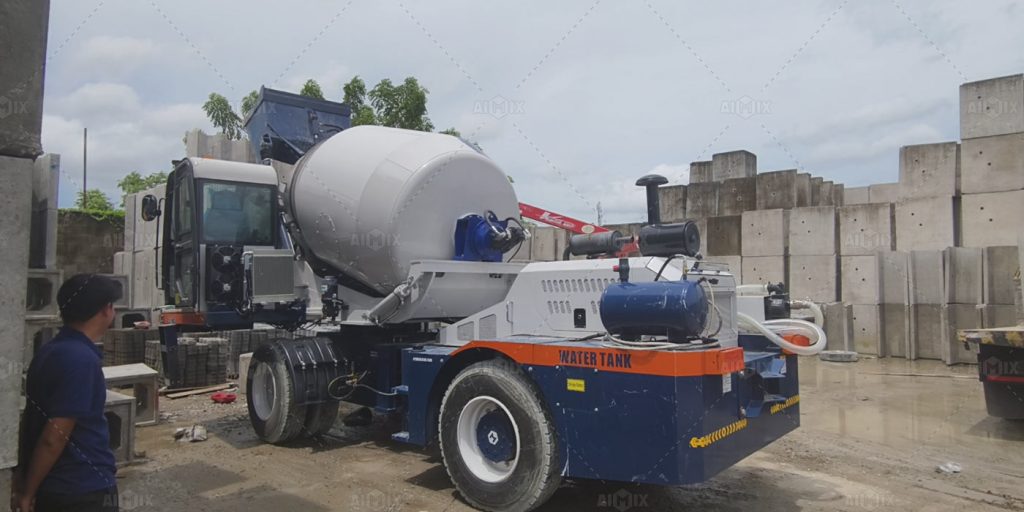
Best Use Cases For 4.5m³ Self Loading Mixer
– Rural or remote projects
– Medium projects (50–150m³/day)
– Road, housing, and small commercial buildings
– Projects with tight budgets
Clearly, the self loading mixer offers more advantages for flexible and cost-sensitive projects.
Long-Term Investment Value
Finally, think beyond one project. Equipment investment creates long-term value.
A 4.5m³ self loading concrete mixer can serve multiple projects over 5–8 years. It helps contractors reduce dependence on suppliers. It also improves bidding competitiveness.
In contrast, ready-mix remains a recurring expense. You pay again for every project. There is no asset accumulation.
Therefore, if you have continuous projects, owning a mixer brings higher returns.
Conclusion: Making The Right Choice For Your Project
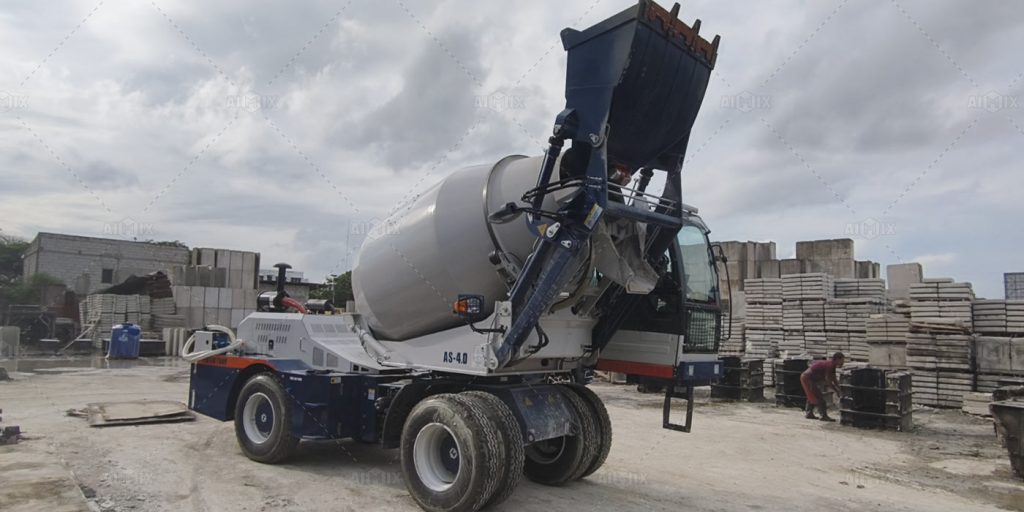
In summary, ready-mix concrete offers convenience but comes with higher and less predictable costs. A 4.5m³ self loading concrete mixer reduces cost per cubic meter, improves flexibility, and increases control over your project.
If your project is medium-sized, located in a congested or remote area, or requires flexible scheduling, the self loading mixer is often the smarter choice.
Are you planning a project in Indonesia and want to reduce your concrete cost by 20%–40%? Contact us today to get a customized solution based on your project size, daily output, and budget. Let us help you choose the right equipment and maximize your return on investment. Get to know the self loading concrete mixer price at right!
No responses yet