
Road construction around nickel mining areas in Southeast Sulawesi presents different challenges from ordinary urban road projects. Heavy-duty dump trucks, excavators, mining vehicles, and material transport trucks place continuous pressure on access roads. At the same time, contractors must manage remote construction locations, changing weather conditions, material transportation costs, and tight project schedules.
For contractors planning to produce their own hot mix asphalt, an important question is whether an 80 TPH asphalt plant can meet these requirements. A larger plant may offer higher production capacity, but it also requires more investment, fuel, operating resources, and project demand. On the other hand, a plant that is too small may struggle to maintain paving operations during busy construction periods.
The right decision depends on the road length, pavement design, daily asphalt demand, construction schedule, and transportation distance between the plant and the paving site. In this article, we examine how an 80 TPH asphalt mixing plant can support road construction around nickel mining areas in Southeast Sulawesi and when contractors should consider a higher capacity.
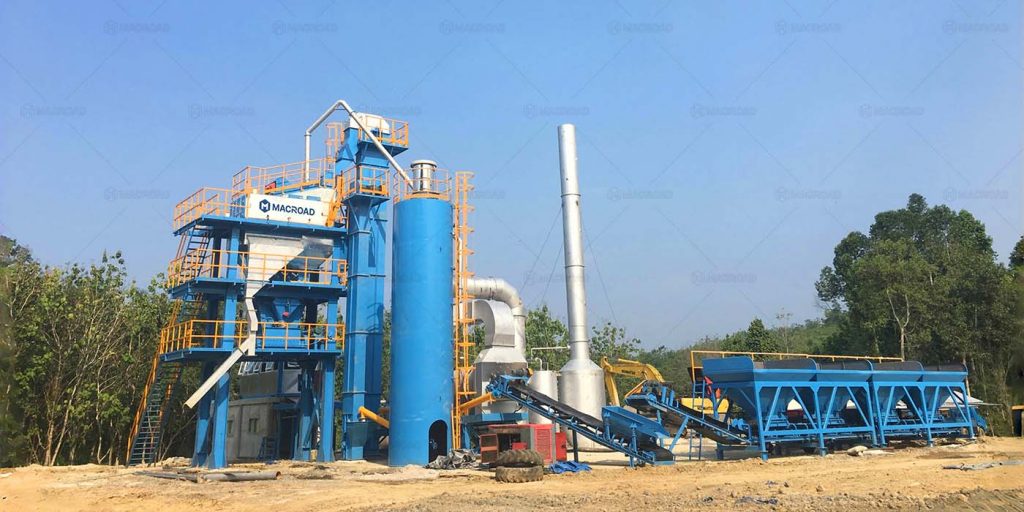
1. Understanding Road Construction Requirements Around Nickel Mines
Before selecting an asphalt plant, contractors need to understand how mining operations affect road construction. Roads around nickel mining areas often serve several purposes. They connect mining sites with processing facilities, worker accommodation, stockyards, loading areas, and public transportation networks.
As a result, road design and asphalt production requirements can differ significantly from those of ordinary residential roads. Contractors looking for a suitable pabrik aspal need to consider not only production capacity but also the operating conditions of the mining area.
Heavy-Duty Traffic Requires Consistent Pavement Quality
Mining access roads may experience frequent movements from loaded trucks and other heavy vehicles. These vehicles create repeated wheel loads, braking forces, and turning pressure. Consequently, the pavement structure must match the expected traffic volume and axle loads.
Contractors need to consider several factors when planning asphalt production:
- Heavy vehicle traffic: Mining trucks and material transport vehicles can place substantial stress on pavement structures.
- Continuous road use: Some mine access roads must remain operational during construction and maintenance.
- Variable road conditions: Rainfall, drainage problems, and weak subgrades can affect pavement performance.
- Construction logistics: Remote project locations can increase aggregate, bitumen, fuel, and equipment transportation costs.
- Maintenance requirements: Contractors may need to complete road repairs and resurfacing without interrupting mining activities.
Therefore, the asphalt plant must do more than produce a certain quantity of hot mix per hour. It must also maintain consistent aggregate drying, accurate mixing temperatures, reliable bitumen dosing, and stable output throughout the paving schedule.
Why Southeast Sulawesi Requires Careful Equipment Planning
Southeast Sulawesi has important nickel mining and processing activities, particularly around areas such as Konawe, North Konawe, and Kolaka. However, project conditions vary between locations. Some contractors work near established industrial facilities, while others operate in more remote areas with limited transportation infrastructure.
This geographical difference directly affects asphalt plant selection. For example, a contractor working on several connected access roads may benefit from centralized asphalt production. However, a project located far from the plant may experience delivery delays and temperature losses during transportation.
In addition, seasonal rainfall can interrupt aggregate handling, road preparation, and asphalt paving. Contractors should therefore calculate their realistic production requirements rather than relying only on the plant’s advertised capacity.
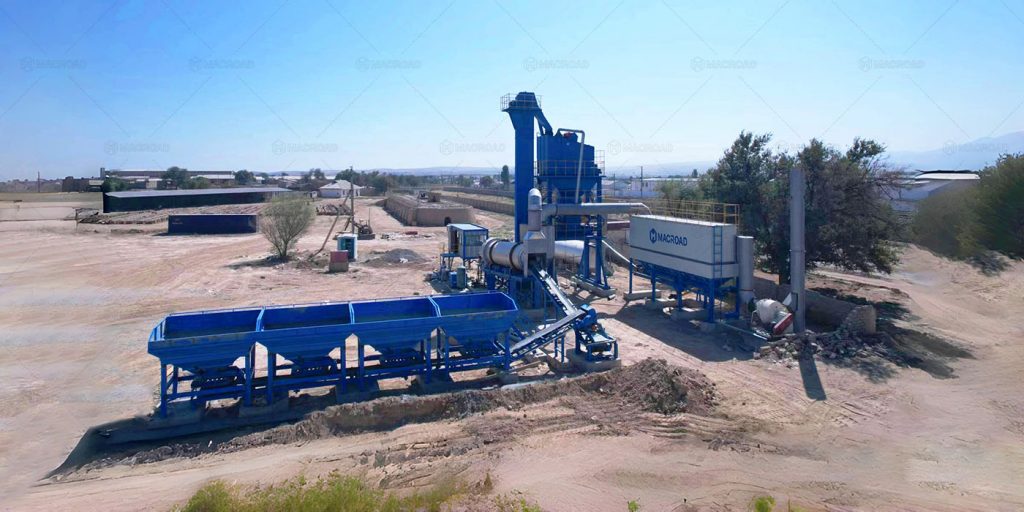
2. What Does an 80 TPH Asphalt Plant Actually Produce?
An 80 TPH asphalt plant has a nominal production capacity of 80 tons of hot mix asphalt per hour under specified operating conditions. This capacity provides a useful reference for contractors, but it does not mean the plant will produce 80 tons every hour throughout an entire working day.
Actual output depends on aggregate moisture, material temperature, mix design, operating efficiency, equipment configuration, and the continuity of material supply. When evaluating a hot mix asphalt plant, contractors should distinguish between theoretical production capacity and practical daily output.
Nominal Capacity vs. Practical Daily Production
For preliminary planning, contractors can estimate daily production using the following calculation:
- Nominal hourly capacity: 80 tons per hour.
- Scheduled production time: 8 hours per day.
- Theoretical daily production: 640 tons.
- Illustrative operating utilization: 70% to 85%.
- Estimated practical daily output: Approximately 448 to 544 tons.
The 70% to 85% utilization range is a planning assumption, not a guaranteed performance figure. Actual output may be lower when aggregate moisture is high, material supply is interrupted, equipment requires maintenance, or paving operations cannot accept continuous deliveries.
For example, if a contractor plans to produce 500 tons of asphalt per day, an 80 TPH plant may meet the target under favorable operating conditions. However, the contractor should allow additional time for startup, temperature stabilization, material changes, cleaning, and unexpected interruptions.
How Much Road Can an 80 TPH Plant Support?
Daily asphalt demand depends on the pavement width, compacted thickness, asphalt mixture density, and road length. Contractors can use a basic calculation to estimate the required quantity.
For example, consider a mining access road with the following preliminary design assumptions:
- Road width: 7 meters.
- Asphalt layer thickness: 5 centimeters.
- Assumed compacted asphalt density: 2.4 tons per cubic meter.
- Road length: 1 kilometer.
The estimated asphalt requirement is:
7 m × 1,000 m × 0.05 m × 2.4 t/m³ = 840 tons.
Therefore, one kilometer of this road would require approximately 840 tons of asphalt mixture for the specified layer. This calculation excludes additional quantities for construction losses, surface irregularities, and other design adjustments.
If the plant produces 448 to 544 tons per day, it could theoretically supply the asphalt required for approximately 0.53 to 0.65 kilometers of this layer per day. However, the actual paving distance will also depend on compaction, truck availability, delivery distance, and site conditions.
3. When Is an 80 TPH Asphalt Plant Sufficient for Nickel Mining Roads?
After estimating daily output, contractors should compare production capacity with their actual project workload. An 80 TPH plant can be a practical solution for several types of mining-related road construction, particularly when the project does not require continuous high-volume asphalt production.
Mining Access Road Construction
Mining access roads connect public roads, processing facilities, stockyards, and mining operations. These projects may involve new road construction, pavement upgrades, and the improvement of existing gravel roads.
For contractors handling a moderate road construction workload, an 80 TPH plant can provide sufficient asphalt production when daily demand remains within its practical operating range.
However, road width, asphalt thickness, and the number of paving fronts must be considered. If several crews require hot mix simultaneously, the contractor may need higher production capacity or a more carefully coordinated delivery schedule.
Road Maintenance and Rehabilitation
Mining roads require regular maintenance because heavy vehicles can accelerate pavement deterioration. Common work includes pothole repairs, surface rehabilitation, asphalt overlays, and localized pavement reconstruction.
These projects often have variable daily demand. Some days require only a limited quantity of asphalt, while other days involve larger resurfacing operations.
An 80 TPH plant offers useful production flexibility for contractors handling multiple maintenance contracts. It can supply different work areas according to their schedules, provided that transportation distance and hot mix temperature remain manageable.
Industrial Roads and Processing Facility Access
Nickel processing facilities need reliable internal roads for material transportation, equipment movement, and employee access. These roads may require different pavement structures depending on vehicle loading and operational requirements.
For medium-sized industrial road projects, an 80 TPH plant can provide a reasonable balance between production capacity and capital investment. Contractors can also schedule production according to different construction sections instead of operating at maximum capacity every day.
Remote Projects With Limited Daily Asphalt Demand
Some construction projects in Southeast Sulawesi are located far from major asphalt suppliers. Transporting hot mix over long distances can increase costs and create temperature control problems.
In such situations, establishing a local asphalt production facility may offer logistical advantages. An 80 TPH plant can support a contractor who has several medium-sized road projects within a manageable service area.
Nevertheless, the contractor must evaluate site access, aggregate availability, bitumen supply, electricity or fuel arrangements, and environmental requirements before establishing the plant.
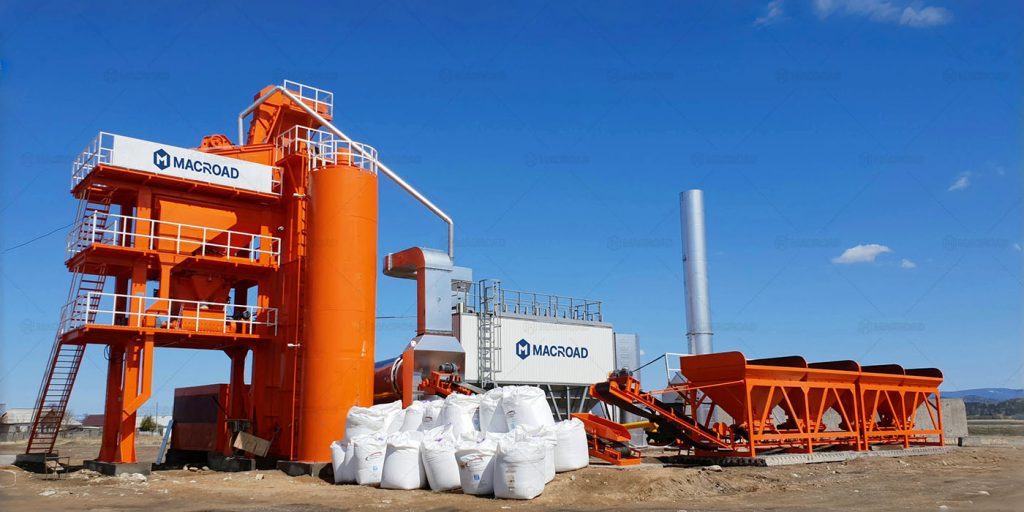
4. When Should Contractors Choose a Plant Larger Than 80 TPH?
Although an 80 TPH asphalt plant can support many mining road projects, it is not suitable for every construction workload. A larger plant may provide better operational efficiency when asphalt demand is consistently high and the project schedule leaves little room for production delays.
The following situations deserve particular attention.
Large-Scale Mine Access Road Networks
When a contractor needs to construct or rehabilitate several kilometers of road within a short period, daily asphalt demand can increase rapidly. Multiple paving teams may also work simultaneously across different sections.
If the required daily production consistently exceeds the practical output of an 80 TPH plant, a higher-capacity model may be necessary.
Highway and Industrial Infrastructure Projects
Some mining-related infrastructure projects include connecting roads, industrial corridors, port access roads, and large internal transportation networks. These projects may require substantial asphalt volumes and continuous production.
For example, a contractor targeting 700 to 900 tons of asphalt per day should not assume that an 80 TPH plant can reliably meet the schedule. A larger production capacity may provide additional operational flexibility and reduce the risk of supply shortages.
Multiple Paving Crews and Tight Construction Deadlines
Plant capacity must match the combined demand of all paving crews. If the plant supplies several crews, production interruptions can affect the entire construction schedule.
In this case, contractors should evaluate an asphalt plant with higher output, sufficient hot mix storage, reliable aggregate feeding, and an effective truck loading system.
However, a larger plant is not automatically more profitable. If the project only requires moderate daily production, the additional investment and operating costs may outweigh the benefits.
5. Batch Mix or Drum Mix: Which Is Better for Mining Road Construction?
Once contractors confirm their required production capacity, the next decision concerns the asphalt mixing process. Both batch mix and drum mix asphalt plants can support mining road construction, but they serve different production and quality management requirements.
80 TPH Batch Mix Asphalt Plant
A batch mix asphalt plant produces hot mix asphalt in separate batches. It weighs and combines aggregate, filler, and bitumen according to the selected mix design.
This production method gives contractors greater flexibility when they need to change asphalt mixture specifications or produce different mix types for separate road sections.
Its main advantages include:
- Separate aggregate weighing and controlled material proportions.
- Flexible production for different asphalt mix designs.
- Suitable for projects requiring changes in aggregate grading or binder content.
- Better control over individual production batches.
- Useful for contractors handling several road construction specifications.
For mining roads, a batch mix plant may be suitable when the project requires different asphalt mixtures for access roads, industrial areas, and connecting infrastructure.
80 TPH Drum Mix Asphalt Plant
An asphalt drum mixing plant combines aggregate drying and asphalt mixing in a continuous production process. Aggregate enters the drying drum, where the system heats and mixes the materials with bitumen according to the plant configuration.
This arrangement can provide a relatively straightforward production process for projects that use a consistent asphalt mixture over extended periods.
Its main advantages include:
- Continuous production for relatively consistent mix requirements.
- A more integrated drying and mixing process.
- Potentially simpler operation for contractors with stable production plans.
- Suitable for recurring road maintenance and projects with consistent mix specifications.
- Practical production arrangements for contractors seeking a continuous asphalt supply.
However, contractors should compare the complete equipment configuration rather than assume that every drum mix plant has lower operating costs. Fuel consumption, aggregate moisture, burner efficiency, dust collection, and material handling all affect production economics.
Which Configuration Should You Select?
For a contractor building mining access roads with several asphalt mix requirements, an 80 TPH batch mix plant may offer useful production flexibility. For a contractor producing a relatively consistent mixture for long road sections, an 80 TPH drum mix plant may be worth considering.
The best choice depends on project specifications, expected production hours, material characteristics, and operating costs. Contractors should also confirm the applicable asphalt mixture requirements with the project owner and engineering team.

6. Five Factors That Determine the Real Performance of an 80 TPH Plant
Production capacity alone does not determine whether an asphalt plant can complete a mining road project on time. Several operational factors influence the actual output and the total cost per ton.
Aggregate Moisture and Drying Efficiency
Aggregate moisture is one of the important factors affecting asphalt production. Wet aggregate requires more thermal energy and additional drying time before mixing.
This issue deserves attention in Southeast Sulawesi, where rainfall and exposed aggregate storage areas can affect material conditions. Contractors should provide suitable aggregate stockpiles, drainage, and covered storage where practical.
Aggregate Supply and Material Quality
A plant cannot maintain stable production if aggregate supply becomes irregular. Contractors should evaluate the distance between the quarry, aggregate storage area, and asphalt plant.
They should also check aggregate grading, cleanliness, moisture, and suitability for the specified asphalt mixture. Material quality affects both production consistency and pavement performance.
Bitumen Supply and Storage
Bitumen delivery schedules can influence plant utilization, especially when the project operates far from major supply centers. Contractors should calculate the required storage capacity based on daily production and expected delivery intervals.
They should also confirm that the heating and circulation systems maintain the binder within the temperature range specified by the supplier and the approved mix design.
Truck Availability and Transportation Distance
Even when the asphalt plant produces 80 tons per hour, insufficient trucks can interrupt paving operations. Long transportation distances also increase the risk of temperature loss before the mixture reaches the paving site.
Contractors should calculate the complete delivery cycle, including loading, travel, unloading, and return time. The number of trucks must match the plant’s production rate and the paving crew’s consumption rate.
Maintenance and Technical Support
Unexpected equipment downtime can affect the entire project schedule. Therefore, contractors should evaluate spare parts availability, maintenance access, operator training, and technical support before purchasing an asphalt plant.
For remote mining areas, these factors can be just as important as the initial equipment price. A plant with a suitable capacity but limited maintenance support may create unnecessary operational risks.
7. How Much Does an 80 TPH Asphalt Plant Cost to Operate?
For contractors, the purchasing price is only one part of the investment. The more important question is how much it costs to produce and deliver each ton of hot mix asphalt.
A practical cost evaluation should include the following components:
- Fuel consumption: Burner fuel and other energy requirements for aggregate drying and heating.
- Electrical consumption: Power for motors, conveyors, elevators, mixing equipment, dust collection, and control systems.
- Raw materials: Aggregate, bitumen, mineral filler, and other approved mixture components.
- Labor: Plant operators, maintenance technicians, quality control personnel, and loading staff.
- Maintenance: Wear parts, filters, lubrication, replacement components, and scheduled servicing.
- Transportation: Aggregate delivery to the plant and hot mix transportation to the construction site.
- Site costs: Land preparation, foundations where required, utilities, storage facilities, and environmental management.
For example, contractors comparing two plant configurations should calculate the total production cost at their expected daily output rather than compare equipment prices alone.
An 80 TPH plant may have a lower initial investment than a larger model. However, if the project regularly requires more production than the plant can supply, extended working hours, additional shifts, and schedule delays can reduce its economic advantage.
Conversely, purchasing a larger plant for a project with irregular or limited asphalt demand can increase capital costs and reduce equipment utilization. The most economical solution is the plant that matches the contractor’s long-term production requirements.
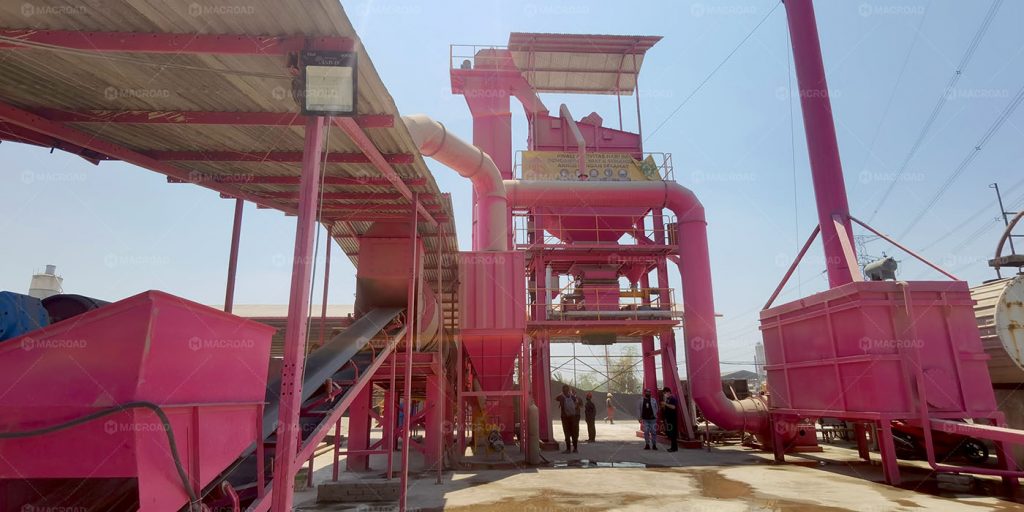
8. Can an 80 TPH Asphalt Plant Use Recycled Asphalt Pavement?
Recycled Asphalt Pavement (RAP) is another consideration for contractors seeking to manage material costs and reduce the use of new raw materials. RAP contains reclaimed asphalt mixture from existing pavements and may be reused in new asphalt production when the project specifications allow it.
For mining road rehabilitation, RAP may provide an opportunity to reuse suitable reclaimed pavement materials instead of sending all removed asphalt to disposal facilities.
However, RAP production requires more than simply feeding reclaimed material into a conventional asphalt plant. Contractors need to evaluate the following factors:
- RAP percentage permitted by the approved mix design.
- RAP moisture content and particle size.
- Separate RAP storage and feeding arrangements.
- Heating technology and temperature control.
- Additional equipment requirements for RAP processing and mixing.
- Quality testing to confirm the final mixture meets project specifications.
Not every standard 80 TPH asphalt plant can process RAP at the required percentage without additional equipment. Contractors should confirm whether the selected plant supports cold RAP feeding, hot RAP recycling, or another recycling configuration.
For projects with a regular supply of reclaimed asphalt, a suitable recycling system may improve material utilization. Nevertheless, the economic benefit depends on RAP availability, processing costs, transportation, and the approved mixture design.
9. How to Decide Whether 80 TPH Is the Right Investment
Before placing an equipment order, contractors should prepare a production and financial assessment. This step helps avoid two common problems: purchasing an undersized plant that cannot meet the construction schedule or investing in excessive capacity that remains underutilized.
Calculate the Required Daily Asphalt Volume
Start with the road construction schedule. Estimate the asphalt quantity for each pavement layer, then divide the total requirement by the available working days.
Include additional quantities for construction losses, maintenance work, and possible schedule changes. The result provides a more realistic daily production target.
Compare Production Demand With Actual Plant Output
Do not use nominal capacity as the only reference. Compare the required daily quantity with a realistic operating scenario that accounts for startup, material conditions, maintenance, and delivery interruptions.
If the project requires around 450 to 500 tons per day, an 80 TPH plant may be a reasonable option under suitable conditions. If daily demand regularly approaches 700 tons or more, contractors should assess a higher-capacity solution.
Evaluate the Total Investment
The total investment includes the asphalt plant, transportation, installation, site preparation, aggregate storage, bitumen tanks, dust collection, power supply, and supporting equipment.
Contractors should also calculate expected annual production, operating days, average selling price or internal transfer cost, and net contribution per ton.
A simple investment assessment can use the following formula:
Estimated Annual Operating Contribution = Annual Asphalt Production × Net Contribution per Ton.
Estimated Payback Period = Total Initial Investment ÷ Annual Net Operating Cash Flow.
These formulas provide a starting point rather than a guaranteed return. A complete financial assessment should also include financing costs, taxes, depreciation, working capital, maintenance, and periods without production.
Check Local Installation and Operating Conditions
Before finalizing the purchase, confirm whether the selected location can support plant transportation, installation, aggregate storage, bitumen storage, and regular truck movement.
Contractors should also review environmental approvals, dust emissions, noise control, wastewater management, and applicable local regulations. These requirements can affect the project schedule and total setup cost.
10. Why Work With an Asphalt Plant Manufacturer That Understands Project Requirements?
Selecting an asphalt plant is not simply a matter of choosing an 80 TPH model from a product list. Contractors need equipment that matches their road construction conditions, production targets, material supply, and long-term business plans.
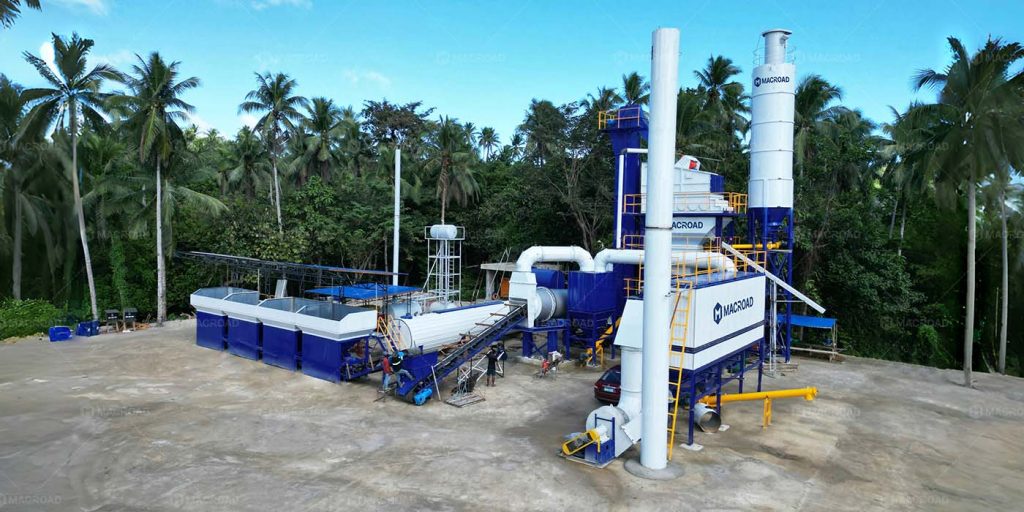
At MACROAD, we focus on asphalt mixing solutions for road construction contractors, infrastructure developers, and asphalt producers. We understand that different projects require different production arrangements.
Our asphalt plant solutions cover several production configurations:
- Stationary batch mix asphalt plants: Suitable for contractors requiring controlled batch production and flexible mix specifications.
- Stationary drum mix asphalt plants: Suitable for continuous production with relatively consistent asphalt mixture requirements.
- Mobile asphalt mixing plants: Designed for projects that require equipment relocation between construction sites.
- Portable asphalt plants: Provide alternative production arrangements for contractors handling temporary or distributed projects.
We can help contractors evaluate production capacity, mixing configuration, aggregate handling, burner systems, bitumen storage, dust collection, and optional RAP recycling equipment.
Rather than recommending a larger model automatically, we consider the expected asphalt demand and the operating conditions of each project. This approach helps contractors select equipment that supports both construction performance and investment efficiency.
11. Frequently Asked Questions About 80 TPH Asphalt Plants in Southeast Sulawesi
Is an 80 TPH asphalt plant enough for a nickel mining access road?
Yes, an 80 TPH asphalt plant can support many medium-sized mining access road projects. Its suitability depends on road length, pavement thickness, daily asphalt demand, and transportation distance. Contractors should compare their actual production target with realistic plant output before purchasing.
How many tons of asphalt can an 80 TPH plant produce in 8 hours?
The theoretical production is 640 tons in 8 hours. Under an illustrative utilization rate of 70% to 85%, practical production would be approximately 448 to 544 tons. Actual output depends on material moisture, mix specifications, operating conditions, and production interruptions.
How many kilometers of mining road can an 80 TPH plant pave per day?
There is no fixed answer because road width and asphalt thickness determine material consumption. For a 7-meter-wide road with a 5-centimeter asphalt layer and an assumed density of 2.4 tons per cubic meter, one kilometer requires approximately 840 tons. An 80 TPH plant producing 448 to 544 tons per day could theoretically supply around 530 to 650 meters of this layer per day.
Is a batch mix or drum mix plant better for mining roads?
A batch mix plant offers flexibility for contractors producing different asphalt mixtures. A drum mix plant can suit projects requiring continuous production of relatively consistent mixtures. The best option depends on the project specifications, production schedule, and operating costs.
Can an 80 TPH asphalt plant operate in remote areas of Southeast Sulawesi?
Yes, provided that the project site has suitable access, aggregate supply, bitumen storage, fuel, power, and technical support. Contractors should also consider transportation restrictions, site preparation, environmental requirements, and maintenance arrangements.
Should contractors choose a 120 TPH plant instead of an 80 TPH plant?
A 120 TPH plant may be more suitable when daily asphalt demand consistently exceeds the practical production capacity of an 80 TPH plant. However, contractors should compare capital investment, annual utilization, fuel consumption, and expected project revenue before selecting the larger capacity.
Can an 80 TPH asphalt plant process recycled asphalt?
It can be configured for RAP recycling when the selected equipment includes the appropriate feeding, heating, and mixing systems. Contractors should confirm the required RAP percentage, processing technology, and approved mix design with the plant manufacturer and project engineering team.
Conclusion: Is 80 TPH the Right Capacity for Your Southeast Sulawesi Project?
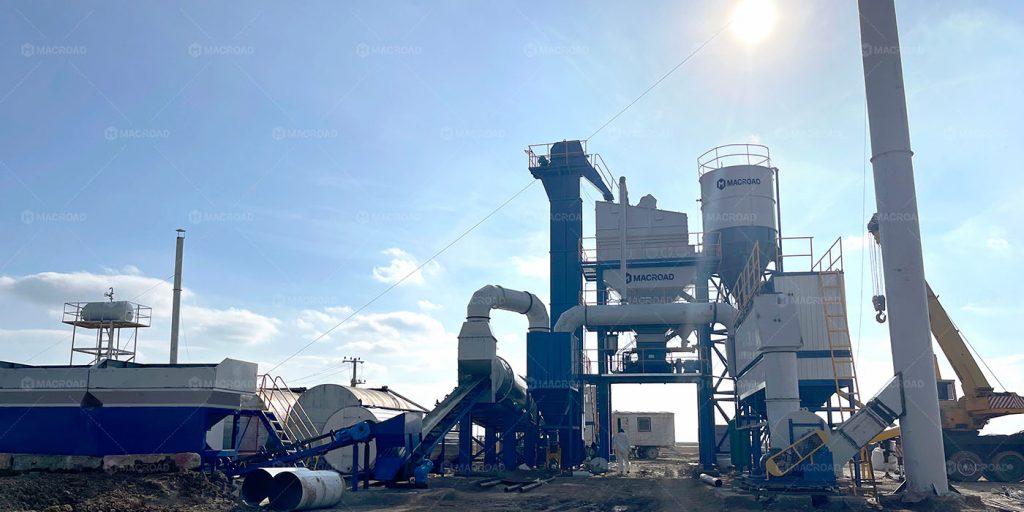
An 80 TPH asphalt plant can be a practical investment for contractors working on medium-sized mining access roads, industrial roads, road rehabilitation, and recurring maintenance projects around Southeast Sulawesi. With an illustrative practical output of approximately 448 to 544 tons during an eight-hour production shift, it can support a considerable amount of asphalt paving work under suitable operating conditions.
However, the right capacity depends on more than the size of the mining area. Contractors must consider actual daily asphalt demand, pavement specifications, aggregate moisture, transportation distance, paving equipment, and the construction deadline.
If your project requires moderate and flexible production, an 80 TPH asphalt plant may provide a sensible balance between investment and output. If you need to supply several paving crews or complete large road networks within a short period, a higher-capacity plant may offer better long-term efficiency.
Are you planning to build or upgrade mining access roads in Southeast Sulawesi? Contact MACROAD to discuss your project location, required asphalt output, road specifications, and preferred production configuration. Our team can help you evaluate whether an 80 TPH asphalt plant is sufficient or whether another capacity would better match your construction schedule and investment plan.
No responses yet