
For Indonesian road contractors, moving from one project to another is often part of the business. A contractor may finish a highway section in Java, then take a road or mining-access project in Kalimantan. Another contract may follow in Sulawesi. In this situation, asphalt production becomes more than a question of output. The location of the plant, relocation time, transport cost, installation work, and future project use can all affect the contractor’s profit.
This is why mobile asphalt plants attract attention in Indonesia. A mobile asphalt plant can move with the contractor instead of remaining tied to one production site. However, mobility does not automatically make it the better investment. A fixed asphalt plant can still provide stronger value when a project lasts for several years and requires continuous high-volume production.
So, is a mobile asphalt mixing plant better for contractors moving between Java, Kalimantan, and Sulawesi? In many cases, yes. But the decision depends on project duration, production demand, site access, transport distance, and how often the contractor expects to relocate the equipment. The following analysis looks at the decision from the contractor’s actual operating perspective.
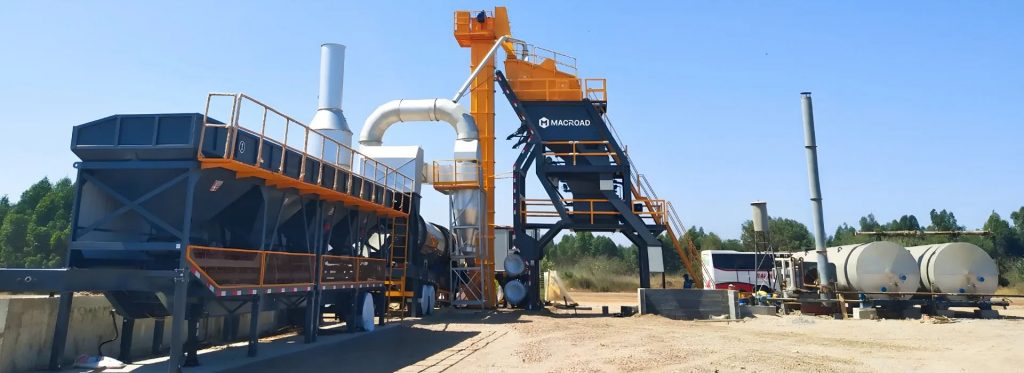
Why Project Mobility Matters In Indonesia
Indonesia’s geography makes asphalt logistics different from those in a single-landmass road market. Java, Kalimantan, and Sulawesi have different project locations, transport conditions, aggregate sources, and infrastructure access. Moving heavy equipment between islands can also involve additional logistics planning.
For contractors, this creates an important question: should asphalt production equipment stay at one permanent location, or should it follow the construction project?
The answer becomes more important when the company does not depend on one long-term project. A contractor with several road contracts may need to establish asphalt production close to each project. If the asphalt plant takes too long to dismantle and reinstall, the contractor may lose valuable production time between contracts.
The Cost Of Staying In One Location
A stationary asphalt plant can work efficiently when the production site remains unchanged. However, its location becomes a constraint when the next project is far away.
- Asphalt may need to travel a longer distance to the paving site.
- Truck cycle times can increase.
- Hot mix asphalt transportation becomes more difficult to manage.
- Fuel and transport costs can rise.
- The contractor may need to establish another temporary production arrangement.
Therefore, plant location should be considered together with production capacity. A high-capacity plant does not necessarily provide the best result if its location creates expensive logistics.
Once mobility becomes an important requirement, contractors should look more closely at the structure and relocation process of the plant.
What Makes A Mobile Asphalt Plant Different?
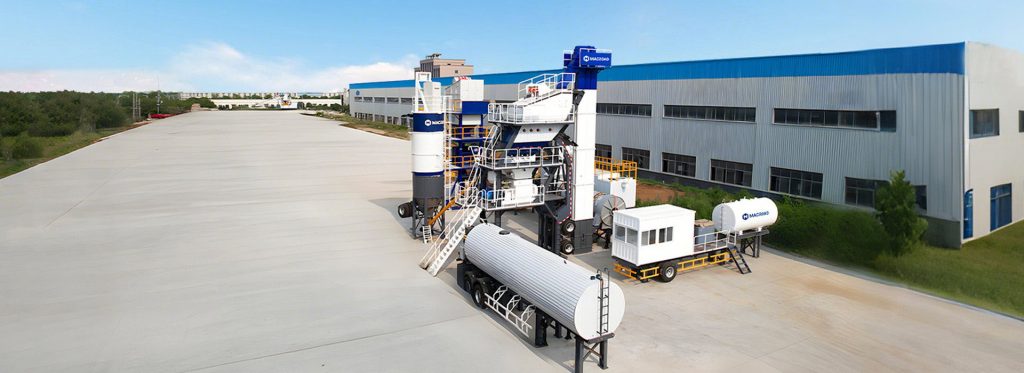
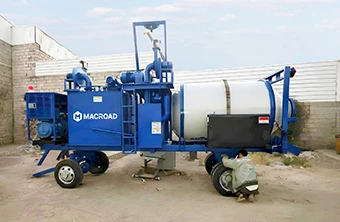
A mobile asphalt plant is designed around relocation. Its main equipment is arranged so that the plant can be transported and installed at another project location more easily than a conventional fixed installation.
This does not mean that relocation requires no planning. The contractor still needs suitable transport, site preparation, utilities, aggregate stockpiles, fuel storage, and commissioning work. However, the overall process can be more practical when the equipment is designed for repeated movement.
For contractors working across different Indonesian islands, this flexibility can become an important part of equipment value.
Mobility Is More Than Moving The Machine
When evaluating a mobile asphalt plant, contractors should not focus only on whether the equipment has wheels or can be transported. The complete relocation process matters.
- How many transport vehicles are required?
- How much dismantling is necessary?
- How long does installation take at the next site?
- What type of foundation or ground preparation is required?
- How easily can electrical and fuel systems be connected?
- Can the plant be commissioned quickly after relocation?
These questions help reveal the actual value of mobility. A plant that is technically mobile but difficult to relocate may not provide the expected business advantage.
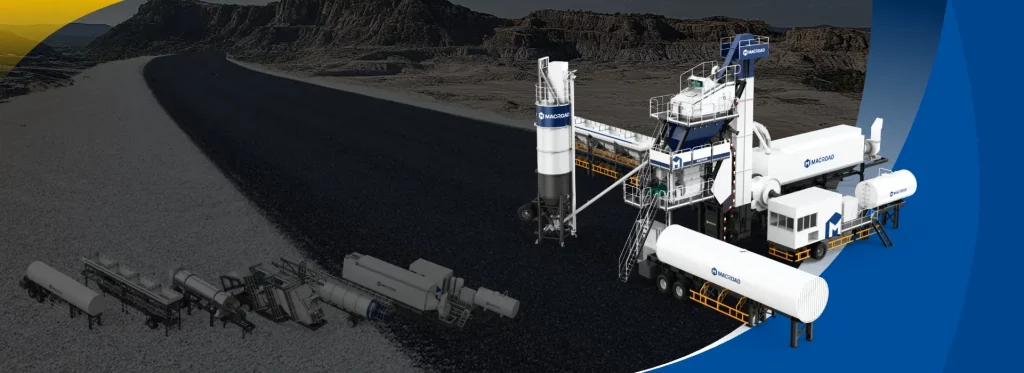
Java: When Does A Mobile Plant Make Sense?
Java has a high concentration of infrastructure activity and a dense network of roads, cities, industrial areas, and construction projects. Contractors may have easier access to established asphalt suppliers and supporting services in some areas.
Because of this, a fixed plant can make sense for a contractor operating a long-term project in one location. The contractor can establish a stable production base and optimize aggregate supply, fuel delivery, maintenance, and truck dispatch.
However, mobility becomes more attractive when the contractor works on multiple road sections or frequently changes project locations.
Example: A Contractor With Several Java Projects
Imagine a contractor has three road projects in different regions of Java. Each project requires asphalt production for several months. Instead of purchasing or establishing separate fixed production facilities, the contractor may move one mobile asphalt plant between project areas.
The financial result depends on the actual relocation cost and the time saved. Therefore, the contractor should compare the total cost of moving the plant with the cost of transporting asphalt from an existing fixed plant.
If the second project is close to the existing production site, keeping the hot mix asphalt plant in place may still be cheaper. If the new project is far away, mobile production may become more attractive.
Kalimantan: Why Site Logistics Can Change The Decision
Kalimantan can present a different operating environment. Some infrastructure and resource-related projects are located far from major urban centers. Road access can vary considerably between project areas.
For a contractor working in a remote location, the distance between an external asphalt supplier and the paving site can become a major operating concern. Long truck routes consume time and fuel. They also make daily asphalt delivery more dependent on road conditions and traffic.
Producing asphalt closer to the project can reduce this logistical dependency.
However, the contractor must also consider how raw materials reach the plant. Local aggregate availability can strongly influence the economics of on-site asphalt production.
Aggregate Supply Should Be Checked Before Plant Relocation
A mobile asphalt plant does not solve every logistics problem. Asphalt production still requires aggregates, mineral filler, asphalt binder, fuel, and other inputs.
Before moving a plant to a new Kalimantan project, the contractor should confirm:
- Local aggregate sources and quality.
- Required aggregate sizes.
- Hauling distance from quarry to plant.
- Available stockpile area.
- Fuel supply and storage conditions.
- Road access for plant components and trucks.
If aggregates must travel hundreds of kilometers to reach the new plant, the expected benefit of mobile production may decrease. Therefore, plant mobility should always be evaluated as part of the entire supply chain.
Sulawesi: When Flexibility Can Become A Competitive Advantage
Sulawesi offers another useful example because contractors may work on highways, provincial roads, industrial infrastructure, mining-related roads, and other projects spread across different regions.
A contractor that wins projects in different areas may not want to build a permanent asphalt production base for every contract. Instead, one mobile plant can potentially serve several projects during its useful operating life.
This can improve equipment utilization. Rather than leaving a plant idle after completing one project, the contractor can plan its next assignment.
However, island-to-island transportation requires careful planning. The contractor should calculate the cost of moving the equipment by road, port, and sea transport where applicable. The cost must then be compared with the savings from local asphalt production.
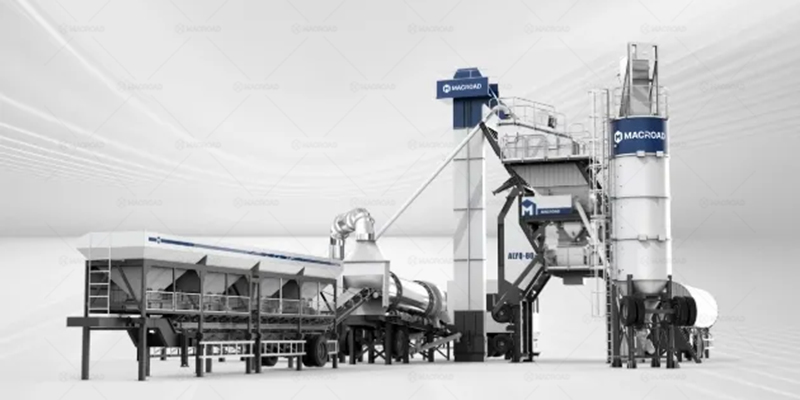
Mobile Vs Stationary Asphalt Plant For Contractors
The decision becomes clearer when contractors compare both options according to actual business conditions. Neither plant type is universally better. Each one solves a different operational problem.
| Factor | Mobile Asphalt Plant | Stationary Asphalt Plant |
|---|---|---|
| Relocation | Better suited to repeated project moves | Best for long-term fixed production |
| Long-Term Project | Suitable when relocation remains possible | Often highly suitable |
| Multiple Projects | Strong flexibility | May require longer asphalt transport |
| Installation | Designed for easier relocation and setup | Usually requires a more permanent installation |
| Future Utilization | Can follow future project locations | Depends more on local demand |
| Production Stability | Can provide stable production after setup | Strong choice for permanent production |
The comparison shows that mobility is mainly a business flexibility feature. Contractors should pay for it when they can actually use it.
Therefore, the next step is to calculate how often the plant will move and whether those moves create enough economic value.
How Often Will You Actually Move The Asphalt Plant?
This is one of the most important questions before buying mobile equipment. A contractor should estimate the expected number of relocations over the plant’s planned service period.
For example, consider two contractors.
- Contractor A: One highway project lasts three years at the same location.
- Contractor B: Five road projects will be completed in different locations over the same period.
Contractor A may obtain limited value from frequent mobility. A stationary plant could provide a simpler long-term production arrangement.
Contractor B has a very different business model. If one mobile plant can efficiently serve several projects, relocation flexibility may increase equipment utilization and reduce the need for multiple fixed installations.
Therefore, contractors should forecast project locations for the next several years. Equipment selection should support the company’s project pipeline, not just its current contract.
Does Mobile Mean Lower Asphalt Production Cost?
Not necessarily. A mobile asphalt plant can reduce certain logistics costs, but it also introduces relocation and setup expenses.
Contractors should compare at least four cost categories:
- Plant purchase and installation cost.
- Asphalt transportation cost.
- Plant relocation cost.
- Operating and maintenance cost.
Suppose an external supplier is located far from a highway project. The contractor may need many truck trips every day. The cost includes fuel, drivers, vehicle depreciation, travel time, and potential delays.
With an asphalt manufacturing plant near the project, those transportation requirements may decrease. However, the contractor must pay for plant transportation, site setup, and operation.
The right comparison is therefore not “mobile versus fixed price.” It is total project cost versus total project cost.
Production Capacity Still Matters
Mobility should never distract contractors from the basic production requirement. A mobile plant must still produce enough asphalt for the paving operation.
For example, a contractor targeting 800 tons per day should calculate the required hourly production based on actual working hours.
800 Tons ÷ 10 Hours = 80 TPH
This is a theoretical calculation. The contractor should still allow production margin for maintenance, weather, material changes, truck delays, and other interruptions.
If the project requires higher daily output, a higher-capacity plant may be more appropriate. At the same time, contractors should avoid excessive capacity when the paving operation cannot consume the asphalt.
Balance The Plant With The Paver
The asphalt plant, transport trucks, paver, and rollers should form one production chain.
If the plant produces too slowly, the paver may wait for material. If the plant produces too quickly, trucks or paving equipment may become the bottleneck.
Therefore, plant capacity should match the planned paving rate. This approach creates a more stable workflow and reduces idle time.
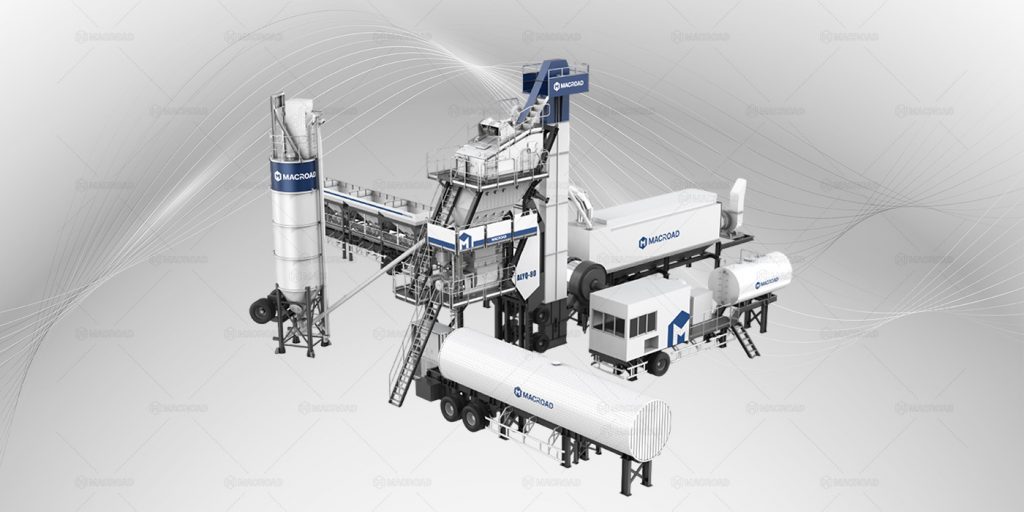
What About Fuel And Operating Efficiency?
Fuel is another major cost for asphalt production. This becomes particularly important when diesel prices increase or when the contractor operates the plant for long shifts.
A mobile plant can reduce transportation distance for hot mix asphalt, but the plant itself still consumes energy during aggregate drying, heating, and mixing. Therefore, contractors should evaluate burner performance, dryer efficiency, aggregate moisture, and operating practices.
Wet aggregates generally require more energy because the plant must remove additional water before the material reaches the required temperature. In Indonesia’s rainy climate, stockpile drainage and material management can therefore influence operating cost.
Contractors should ask suppliers for fuel consumption information under clearly defined conditions. Useful data should include production rate, aggregate moisture, fuel type, and target material temperature.
Do not rely on a simple claim that one plant “uses less fuel.” Instead, compare measurable fuel consumption per ton under similar operating conditions.
Site Preparation Still Matters For Mobile Plants
Mobile equipment reduces relocation difficulty, but it does not eliminate site preparation. The contractor still needs a suitable area for production and material storage.
Check These Conditions Before Moving The Plant
- Ground stability and drainage.
- Access roads for heavy transport vehicles.
- Aggregate stockpile space.
- Fuel storage arrangements.
- Electrical power or generator requirements.
- Water management and environmental controls.
- Safe truck access and asphalt loading areas.
Good site planning can reduce setup delays. It also helps operators maintain a cleaner and safer production environment.
Environmental And Local Compliance Should Be Part Of The Plan
Moving an asphalt plant to a new project area also means entering a new operating environment. Contractors should check applicable local requirements before installation.
Depending on the project and location, the contractor may need to address environmental controls, dust emissions, noise, fuel storage, waste handling, traffic access, and other site-specific requirements.
This is especially important when projects move between provinces or operate close to communities. A mobile plant should provide flexibility without creating unnecessary compliance risks.
Contractors should therefore include permits, environmental planning, and local consultation in the relocation schedule.
How Contractors Can Make The Final Investment Decision
Instead of asking whether mobile asphalt plants are generally better, contractors should score the equipment against their own project conditions.
| Question | If The Answer Is Yes | Likely Direction |
|---|---|---|
| Will the contractor handle several projects? | High equipment reuse potential | Mobile becomes more attractive |
| Will projects remain in one location for years? | Low relocation requirement | Stationary may be more practical |
| Are asphalt suppliers far from the project? | High delivery cost | Local mobile production may help |
| Are aggregates available near each project? | Lower material transport burden | Mobile production becomes more practical |
| Does the contractor have strict deadlines? | Production control is important | On-site production may offer advantages |
| Will the plant move only once? | Limited mobility benefit | Compare carefully with fixed options |
This framework helps turn a general equipment question into a business decision. It also prevents contractors from paying for mobility that they rarely use.
What Should You Ask A Mobile Asphalt Plant Supplier?
Before purchasing, contractors should ask detailed questions about both the equipment and the relocation process. A professional supplier should explain how the plant works in real project conditions.
- What production capacities are available?
- What is the expected setup process at a new site?
- How many transport units are required for relocation?
- What site preparation is necessary?
- What fuel options are available?
- How is asphalt quality controlled?
- What spare parts should be kept locally?
- What technical support is available after installation?
- Can the configuration be adapted to different project requirements?
Contractors should also request a complete cost estimate. The quotation should clearly separate equipment, transport, installation, commissioning, and other project-related costs.
Java, Kalimantan Or Sulawesi: Which Projects Benefit Most?
There is no single island where mobile asphalt plants are always the better option. The project itself determines the value.
In Java, mobile equipment can benefit contractors handling several projects with relatively frequent relocation. However, a fixed plant may remain attractive for long-term production near major markets.
In Kalimantan, mobile production can become valuable when the paving site is far from established asphalt suppliers. Yet aggregate availability and heavy transport access must be checked carefully.
In Sulawesi, contractors working across dispersed road and infrastructure projects may benefit from equipment that can move between contracts. Still, inter-island transport costs should form part of the financial calculation.
In other words, geography creates the opportunity for mobile production, but project economics determine whether that opportunity is worthwhile.
Final Verdict: Is A Mobile Asphalt Plant Better?
For contractors moving between Java, Kalimantan, and Sulawesi projects, a mobile asphalt plant can be a better investment when project locations change frequently and local asphalt supply is costly or unreliable. Its main advantage is not simply transportation. It is the ability to move asphalt production closer to where the contractor needs it.
However, mobility comes with its own costs. Contractors must account for relocation, installation, transport, site preparation, maintenance, and production efficiency. A stationary plant may provide better value when one project lasts for several years and the plant can operate continuously at high utilization.
The strongest choice is therefore the one that matches the contractor’s project pipeline. If your company regularly wins road contracts in different regions, mobile production can provide valuable flexibility. If your work remains concentrated at one location, a fixed installation may deliver better long-term economics.
Before investing, calculate your real project locations, daily asphalt demand, working hours, aggregate sources, asphalt transport distance, and expected number of relocations. These figures provide a much stronger basis for equipment selection than plant capacity or purchase price alone.
Planning asphalt production for projects across Java, Kalimantan, or Sulawesi? Contact an experienced asphalt plant team with your project locations, required daily output, construction period, and relocation plans. A project-specific assessment can help you determine whether a mobile asphalt plant can reduce logistics pressure and improve the long-term utilization of your equipment.
No responses yet