
A mining project may need reliable asphalt production for access roads, internal haul roads, worker facilities, and connecting infrastructure. However, when the project will last only 3–5 years, buying an asphalt plant requires careful financial planning. The equipment must support construction schedules without creating excessive capital costs or leaving the owner with an underused asset after mining operations end.
For mining contractors in Indonesia, a stationary asphalt plant can be an economical choice when the project requires substantial asphalt volumes, stable production, and long-term road maintenance. However, it may not be the best option for every mine. The decision depends on total asphalt demand, site location, material transportation, annual operating hours, installation costs, and the plant’s resale or relocation value.
This article explains how to evaluate a stationary asphalt mix plant for a 3–5-year mining project in Indonesia. It also compares stationary and mobile options, estimates production requirements, and outlines a practical investment calculation that mining companies can use before requesting equipment quotations.
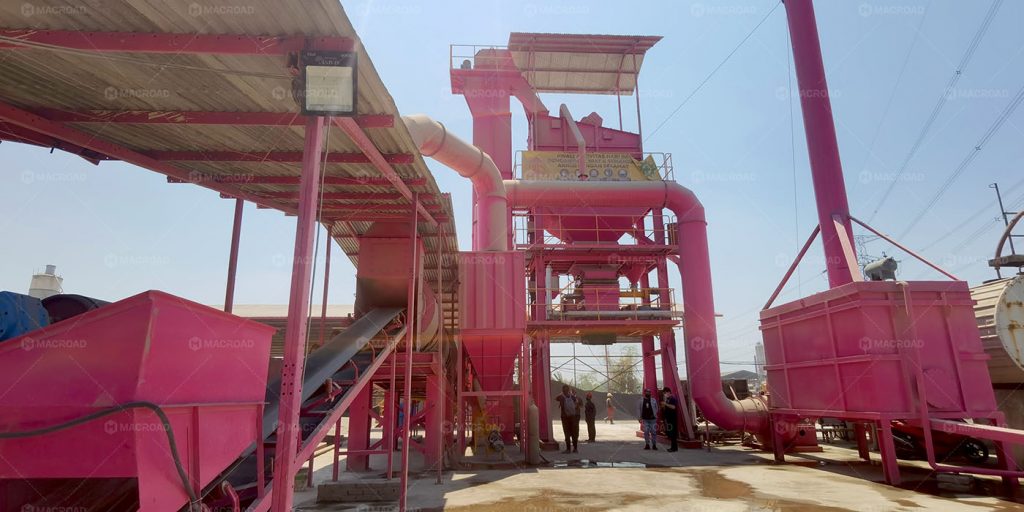
1. Why Mining Projects Need a Different Asphalt Plant Investment Strategy
Mining road construction differs from ordinary urban roadwork. A mine may operate far from established asphalt suppliers, major roads, and equipment service centers. Consequently, transportation distance and production reliability can affect both construction costs and the overall project schedule.
At the same time, a mining project with a defined 3–5-year life creates a specific investment challenge. The plant must deliver enough value during the contract period to justify its purchase and installation. Therefore, contractors should evaluate the complete operating period instead of comparing equipment prices alone.
Long Hauling Distances Can Increase Asphalt Costs
When a mine sits far from an existing asphalt mixing plant, trucks must travel longer distances to deliver hot mix asphalt. This can increase fuel consumption, transportation expenses, and delivery coordination requirements. Long journeys may also complicate temperature control and paving schedules.
Establishing an asphalt plant closer to the mine can reduce dependence on distant suppliers. However, the actual savings depend on the distance avoided, truck availability, road conditions, and the cost of operating the plant at the mining site.
Mining Roads Require Reliable Maintenance
Mining operations place demanding loads on access roads and internal traffic routes. Heavy trucks, repeated axle loads, dust, rain, and drainage problems can accelerate pavement deterioration. Contractors may therefore need asphalt for initial road construction as well as periodic maintenance.
For this reason, the investment calculation should include the asphalt required throughout the project. A plant that serves both initial construction and scheduled maintenance may achieve better utilization than equipment used for a single paving phase.
These operating conditions establish the business case. The next step is to determine whether the expected asphalt volume can support the investment in a stationary plant.
2. When Is a Stationary Asphalt Plant Economical for a 3–5-Year Mining Project?
A stationary asphalt plant becomes more attractive when a mining project requires substantial and relatively predictable asphalt production. It can support continuous construction, recurring maintenance, and multiple work areas supplied from one production base.
Nevertheless, project duration alone cannot determine profitability. A five-year project with limited paving requirements may not justify the same equipment investment as a three-year project with intensive road construction and high daily asphalt demand.
Conditions That Favor a Stationary Plant
- High cumulative asphalt demand: The project requires enough hot mix asphalt to keep the plant productively occupied.
- Stable construction schedules: Road construction and maintenance activities create regular production demand.
- Limited nearby asphalt supply: Existing suppliers cannot consistently meet the project’s delivery, quality, or volume requirements.
- Long-term site access: The mine can provide suitable space, utilities, aggregate storage, and truck access throughout the project.
- Potential future use: The contractor can relocate the plant to another mine or road project after the current contract ends.
When several of these conditions apply, a stationary asphalt batch plant may offer a practical balance between production capacity and long-term cost control. Its suitability still depends on the plant configuration and the actual site requirements.
When the Investment May Not Be Worthwhile
A stationary asphalt plant can become an expensive asset if the project requires only occasional asphalt production. Low utilization spreads the purchase, installation, and fixed operating costs across fewer tons of asphalt.
The investment also becomes less attractive when a nearby supplier offers competitive prices and reliable deliveries. Similarly, a project with uncertain reserves, changing development plans, or a high probability of early closure requires a more conservative financial assessment.
Therefore, contractors should establish the total asphalt demand before choosing a plant capacity or committing capital.
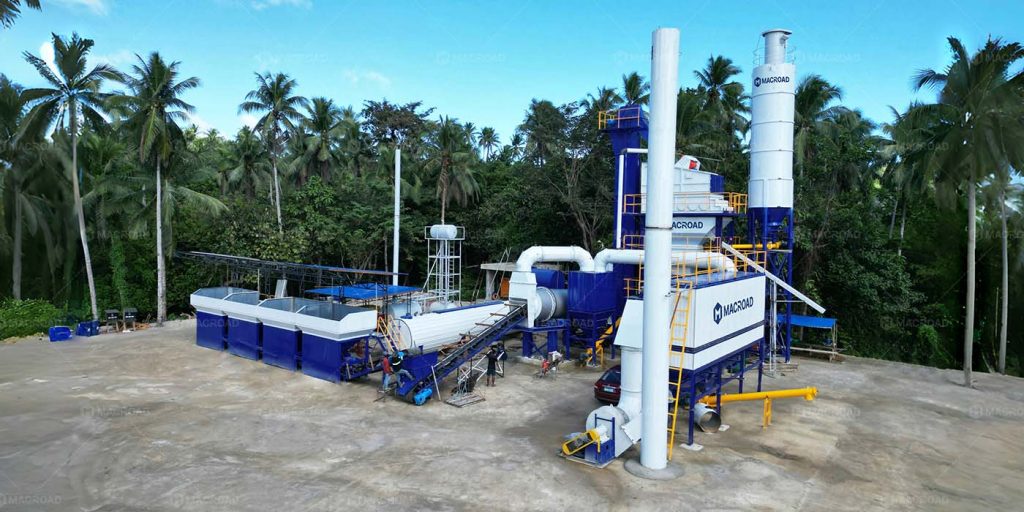
3. Calculate the Total Asphalt Demand Before Selecting Capacity
The plant’s nominal capacity should follow the construction plan rather than the size of the mine alone. A large mining operation does not automatically require a high-capacity asphalt plant. The important factors are the paved road area, pavement thickness, mix density, construction schedule, and maintenance requirements.
Estimate Asphalt Requirements From Road Dimensions
For preliminary planning, contractors can estimate asphalt mixture demand using the following formula:
Asphalt demand (tons) = Road length (m) × Paved width (m) × Asphalt thickness (m) × Compacted mix density (t/m³)
For example, consider a mining access road measuring 10 km in length, with a paved width of 7 m and an asphalt layer thickness of 0.05 m. Assume a preliminary compacted mix density of 2.35 t/m³.
- Road length: 10,000 m
- Paved width: 7 m
- Asphalt thickness: 0.05 m
- Assumed compacted mix density: 2.35 t/m³
The estimated asphalt requirement is 10,000 × 7 × 0.05 × 2.35 = 8,225 tons.
This figure represents the calculated asphalt layer volume for the example road. It does not include additional roads, shoulders, intersections, construction losses, or future maintenance. Contractors should refine the estimate using the approved pavement design and actual project quantities.
Include Maintenance and Additional Road Sections
Initial construction may represent only part of the total demand. Mining projects may add access roads, expand working areas, repair damaged pavement, or upgrade connecting roads as operations develop.
Consequently, the procurement team should prepare a phased demand forecast covering the entire 3–5-year period. This forecast helps determine whether the plant will operate regularly or remain idle between construction stages.
Once the total volume is clear, the contractor can compare it with realistic production capacity and working hours.
4. How Much Capacity Does a Mining Project Need?
Asphalt plant capacity is commonly expressed in tons per hour (TPH). However, the rated capacity does not represent guaranteed daily production. Actual output depends on aggregate moisture, mix design, fuel supply, operating efficiency, maintenance, and truck loading arrangements.
For planning purposes, contractors should estimate effective production rather than assume the plant will operate continuously at its rated capacity.
| Nominal Capacity | Illustrative Effective Output at 70% Utilization | Potential Application |
|---|---|---|
| 60 TPH | 42 tons/hour | Smaller mining roads and phased paving |
| 80 TPH | 56 tons/hour | Medium-scale access roads and maintenance |
| 100 TPH | 70 tons/hour | Substantial road construction with recurring demand |
| 120 TPH | 84 tons/hour | Higher-volume roadworks and multiple paving sections |
Note: These figures are illustrative planning estimates, not guaranteed plant performance. The 70% factor represents an assumed effective utilization level for comparison. Actual output requires confirmation against the selected plant’s specifications and site conditions.
Example: A 100 TPH Plant Operating at a Mining Site
Suppose a contractor selects a 100 TPH stationary asphalt batch plant. The project schedules eight production hours per day and assumes an effective utilization factor of 70%.
Estimated daily output = 100 × 8 × 70% = 560 tons per day.
If the pabrik aspal hotmix operates for 100 production days per year, estimated annual output reaches 56,000 tons. Over three years, that equals 168,000 tons. Over five years, it equals 280,000 tons.
These totals illustrate the relationship between capacity, operating days, and project duration. They are not production forecasts for every Indonesian mine. Actual operating days may fall significantly if paving is seasonal, material supplies are irregular, or the project has long periods without roadwork.
Therefore, a 100 TPH plant may be suitable for a project with substantial asphalt demand, but it could be oversized for a small mine with intermittent paving requirements.
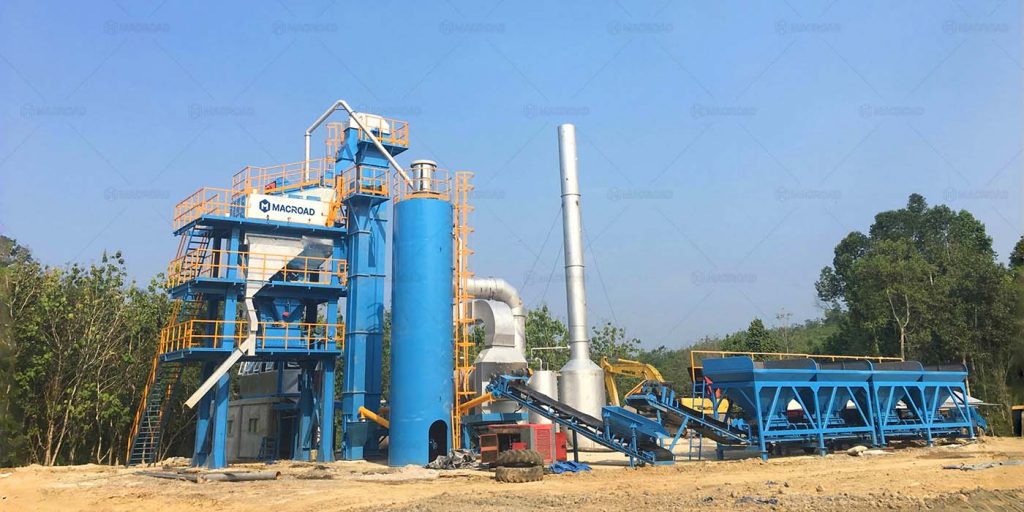
5. Compare Stationary and Mobile Asphalt Plants
After estimating production demand, contractors should compare plant mobility and installation requirements. The lowest initial equipment price does not necessarily produce the lowest total project cost.
A stationary asphalt plant can suit a long-term production base. A mobile asphalt plant for sale or modular configuration may offer advantages when the project location changes frequently or the contractor must move equipment between work areas.
| Decision Factor | Stationary Asphalt Plant | Mobile or Relocatable Plant |
|---|---|---|
| Installation | May require more extensive site preparation and foundation work | May reduce installation requirements, depending on design |
| Production base | Suited to a stable, centralized production site | Suited to projects requiring greater relocation flexibility |
| Relocation | Can require more dismantling, transport, and reinstallation work | Designed to simplify transport or relocation, subject to configuration |
| Long-term utilization | Attractive when demand remains concentrated at one location | Attractive when equipment can serve several projects |
| Investment decision | Depends on production volume, site costs, and future asset value | Depends on mobility costs, production needs, and transport restrictions |
Why Batch Mixing Matters for Mining Roads
A batch-type asphalt mixing plant produces asphalt in separate mixing cycles. It weighs and combines aggregates, filler, and bitumen according to the selected mix design. This process supports controlled batching and allows the operator to change recipes when the project requires different asphalt mixtures.
For mining contractors, mix consistency matters because road sections may have different traffic loads and pavement specifications. The final configuration must match the project’s approved mix designs and quality requirements.
However, batch technology alone does not guarantee compliance. The contractor must also verify aggregate quality, binder specifications, temperature control, calibration, laboratory testing, and paving procedures.
With the production system selected, the next question is whether owning the plant costs less than purchasing asphalt from an external supplier.
6. Calculate the Total Cost of Ownership Over 3–5 Years
To evaluate a stationary asphalt plant, contractors should calculate all major costs over the planned project life. The purchase price is only one component. Installation, transportation, fuel, electricity, labor, maintenance, spare parts, and eventual relocation can materially affect the final result.
Initial Investment Costs
- Plant purchase price and selected configuration
- Shipping, inland transport, unloading, and handling
- Site preparation, foundations, drainage, and access roads
- Power supply, fuel systems, aggregate storage, and other utilities
- Installation, commissioning, testing, and operator training
- Permits, environmental controls, and required site compliance measures
- Initial spare parts, working capital, and supporting equipment
These costs vary by location, plant design, import arrangements, and the condition of the mining site. Remote locations may require additional transport planning and technical support. Therefore, buyers should request a project-specific quotation instead of relying on the equipment price alone.
Operating Costs
Operating costs accumulate throughout the project. Fuel consumption depends on plant design, aggregate moisture, production rate, and operating conditions. Wet aggregates generally require more energy to heat and dry than drier materials.
Other recurring expenses include electricity, labor, bitumen handling, wear parts, routine servicing, repairs, and equipment downtime. Contractors should also account for the cost of supplying aggregates and bitumen to the plant.
For a mining project in Indonesia, the site team should assess rainfall, drainage, access conditions, and the distance between material sources and the production area. These factors can affect both plant availability and the cost of delivering asphalt to the paving front.
End-of-Project Costs and Residual Value
A 3–5-year project should not end the financial assessment on the final day of production. The contractor may need to dismantle the plant, transport it to another project, sell it, or retain it for future contracts.
Each option creates a different financial outcome. A plant with a viable second use may retain considerable business value. However, resale value is not guaranteed. It depends on equipment condition, market demand, maintenance history, transport costs, and the configuration’s suitability for future projects.
For that reason, include a conservative residual value in the investment model and obtain realistic relocation or resale estimates before purchase.
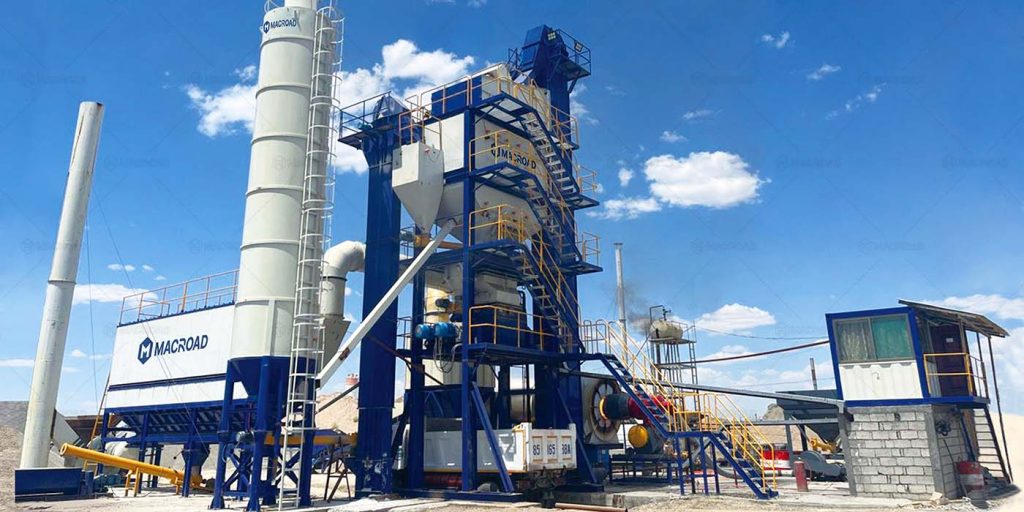
7. Compare Plant Ownership With Buying Asphalt From Suppliers
The clearest way to judge whether a stationary plant is economical is to compare the total cost of producing asphalt in-house with the delivered price of purchasing equivalent asphalt from a supplier.
For a fair comparison, both options must use the same mix specification, quality requirements, delivery location, and project volume. Otherwise, the calculation may favor one option simply because the cost assumptions differ.
Use a Break-Even Volume Calculation
A simplified break-even calculation can help identify the volume at which ownership becomes financially competitive.
Break-even volume (tons) = Additional fixed cost of ownership ÷ Net cost saving per ton
Here, additional fixed cost includes the relevant ownership costs that exceed the alternative supplier arrangement. Net cost saving per ton equals the comparable delivered supplier cost minus the in-house variable production cost per ton.
Consider a hypothetical example. Assume the plant investment and other fixed ownership costs total US$500,000 over the evaluation period, after accounting for an estimated residual value. Assume in-house variable production costs are US$42 per ton, while the comparable delivered supplier price is US$52 per ton.
The estimated saving is US$10 per ton. The simplified break-even volume is therefore US$500,000 ÷ US$10 = 50,000 tons.
This example is for illustration only. It does not represent a market quotation or an actual MACROAD project result. The fixed-cost figure must include all relevant ownership expenses without double-counting costs already included in the per-ton calculation.
If the project can consume more than the break-even volume, ownership may be worth further evaluation. If expected demand falls below that level, external supply may offer a lower-risk solution.
Check the Result Against the Project Schedule
Even when total demand exceeds the break-even volume, production timing matters. The contractor may need to produce most of the asphalt within a short construction window. A plant that cannot meet peak demand may create delays, while an oversized plant may remain idle for long periods.
Therefore, the final comparison should consider monthly production, working days, seasonal conditions, and the timing of cash flows. A positive total saving does not automatically guarantee a good investment if the project cannot support the required initial cash outlay.
8. Indonesian Mining Site Conditions That Affect Plant Economics
Mining projects in Indonesia can face challenging transport routes, heavy rainfall, humid conditions, and considerable distances between production areas and major service centers. These conditions make site planning an important part of the investment decision.
Rainfall, Aggregate Moisture, and Drainage
Rainfall can increase aggregate moisture and affect material handling. The plant needs adequate drainage, protected electrical components, suitable aggregate storage, and a production plan that accounts for changing material conditions.
Higher moisture can increase drying energy requirements and reduce effective output. Contractors should therefore ask suppliers for realistic fuel consumption assumptions under the expected aggregate conditions, rather than relying solely on standard operating figures.
Transport and Access Roads
A remote mine may have narrow roads, steep gradients, bridge restrictions, or limited access for heavy transport vehicles. These conditions affect the delivery of the plant, aggregates, bitumen, fuel, and spare parts.
Before ordering equipment, the contractor should check transport dimensions, component weights, unloading arrangements, crane access, and the route from the port to the mining site. The installation plan should also account for the movement of trucks between the plant and paving locations.
Environmental and Site Approval Requirements
An asphalt plant can create dust, exhaust emissions, noise, and other environmental impacts. Mining operators should review the project’s environmental approval conditions and applicable Indonesian requirements before finalizing the plant location.
The selected configuration may need suitable dust collection, emission controls, noise management, drainage, and safe fuel storage. Buyers should confirm which systems come with the equipment and which require separate site engineering or additional investment.
Addressing these issues early can reduce the risk of installation delays and unexpected operating costs.
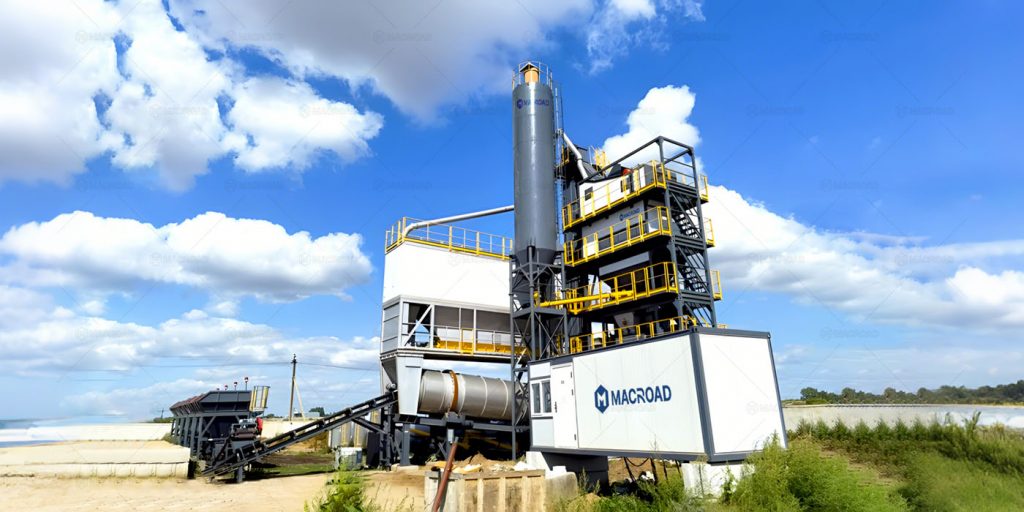
9. How to Choose a Suitable Stationary Asphalt Plant for Your Mine
Once the financial case looks promising, contractors should evaluate suppliers against the project’s technical and operational requirements. A low quotation is not enough if the plant cannot meet the required output, quality standards, or site conditions.
Confirm Capacity and Configuration
Start with the forecast asphalt demand, peak hourly requirements, and available working hours. Then compare suitable plant capacities, such as 80 TPH, 100 TPH, or 120 TPH, against the construction schedule.
Ask the supplier to explain the expected production rate under your aggregate moisture conditions and selected mix design. Also confirm the configuration of cold aggregate feeders, drying and heating systems, dust collection, hot aggregate screening, weighing, mixing, bitumen supply, and control systems.
Evaluate Technical Support and Spare Parts
Mining operations cannot afford unnecessary production interruptions. Before placing an order, confirm commissioning support, operator training, troubleshooting arrangements, spare-parts availability, and maintenance requirements.
For a remote site, response time and spare-parts delivery can matter as much as the initial purchase price. Ask for a recommended spare-parts list and clarify which components require regular replacement.
Review the Complete Commercial Offer
A useful quotation should clearly identify the plant model, nominal capacity, included components, fuel requirements, electrical specifications, installation scope, delivery terms, warranty, and payment schedule.
It should also distinguish included equipment from optional accessories and site works. This makes quotations easier to compare and reduces the risk of unexpected expenses after the order.
Finally, discuss the plan for the end of the mining project. If the contractor expects to continue road construction elsewhere, a relocation plan may strengthen the investment case.
10. Is a Stationary Asphalt Plant the Right Investment for Your 3–5-Year Project?
A stationary asphalt plant can be economical for an Indonesian mining project lasting 3–5 years, but only when the production volume, operating schedule, and cost savings justify the investment.
It is generally worth evaluating when the mine requires substantial asphalt quantities, external supply is costly or unreliable, and the plant can operate regularly. The case becomes stronger when the contractor can use the equipment for maintenance work or transfer it to another project after mining operations end.
Conversely, purchasing may not make financial sense when asphalt demand is low, production is intermittent, or nearby suppliers can deliver the required mix at a competitive total cost. In those situations, buying asphalt or selecting a more relocatable solution may reduce financial exposure.
The final decision should follow a project-specific comparison. Calculate total demand, estimate realistic annual output, include all ownership and operating costs, and evaluate the plant’s residual value. Then compare the result with the cost and reliability of external supply.
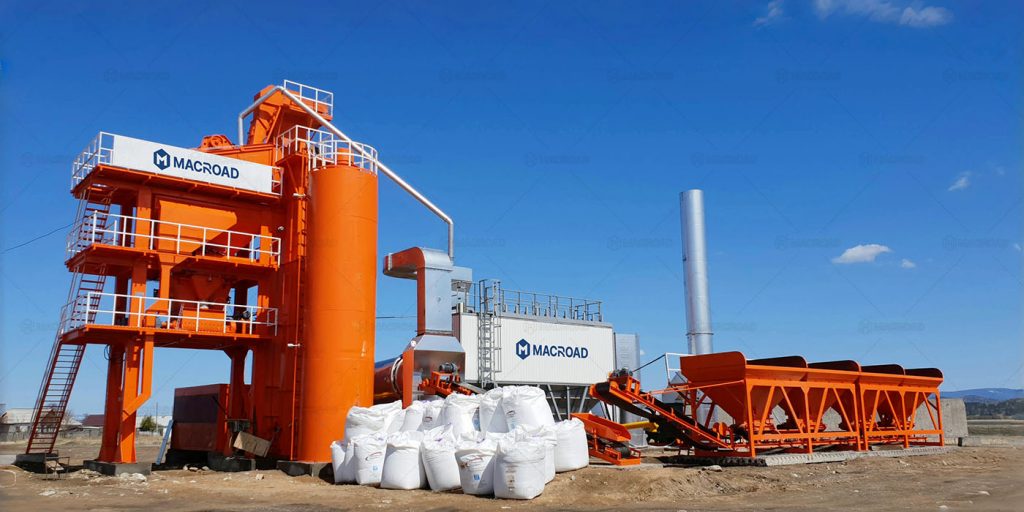
Plan Your Mining Asphalt Plant Investment With MACROAD
If you are preparing a mining road project in Indonesia, MACROAD can help you evaluate asphalt plant configurations based on your required capacity, site conditions, production schedule, and project duration.
To support a more practical recommendation, provide the following information:
- Project location: Province, mine site, and distance from the nearest asphalt supplier.
- Project duration: Three, four, or five years.
- Estimated asphalt demand: Total tons or planned road length, width, and pavement thickness.
- Required capacity: Expected hourly or daily production.
- Plant preference: Stationary, mobile, or relocatable batch plant.
- Site conditions: Aggregate sources, access roads, available space, utilities, and installation requirements.
With these details, the team can help you compare suitable configurations and identify the main cost factors for your project. Rather than selecting equipment based on capacity or purchase price alone, make the decision around realistic production needs and total ownership costs.
Contact MACROAD to discuss your Indonesian mining project and request a project-specific asphalt plant proposal. A well-matched plant can help you manage asphalt supply, control road construction costs, and make better use of your investment throughout the mining project’s operating life.
No responses yet