
Urban construction projects in Indonesia often face one common challenge: limited space. Whether you are working in Jakarta, Surabaya, or secondary cities, narrow streets, dense buildings, and restricted access can slow down your progress. Therefore, choosing the right mixer beton self loading becomes critical. Many contractors now ask a practical question: is a 3.5 m³ self loading concrete mixer a good fit for tight urban job sites?
In this article, we will explore this question from a real construction perspective. We will break down site challenges, equipment capabilities, and actual benefits. More importantly, we will help you understand whether this machine can improve your efficiency and reduce costs.
Understanding The Challenges Of Tight Urban Construction Sites
Before selecting equipment, you need to clearly understand the working environment. Urban construction in Indonesia is very different from open rural projects.
First, access roads are often narrow. Large trucks struggle to enter job sites. Second, traffic congestion affects material delivery schedules. Third, storage space for raw materials is limited. As a result, traditional batching plants or large transit mixers may not work efficiently.
Moreover, labor costs continue to rise. At the same time, project deadlines become tighter. Therefore, contractors need compact, flexible, and efficient solutions.
So, with these challenges in mind, let’s look at how a 3.5 m³ best selling self loading concrete mixer performs in such conditions.
What Makes A 3.5 M³ Self Loading Concrete Mixer Different?
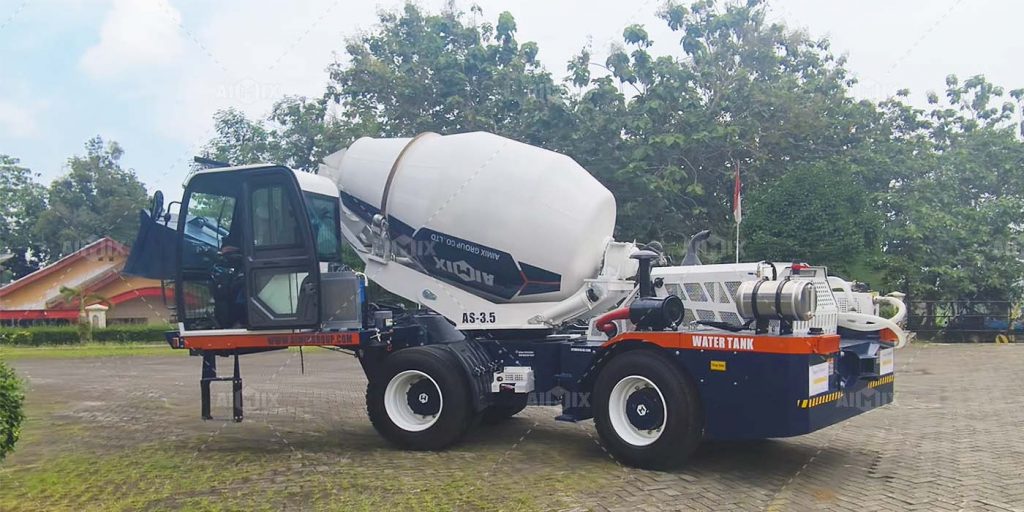
A 3.5 m³ self loading concrete mixer is not just a mixer. It combines loading, batching, mixing, transporting, and discharging into one machine. This integrated design directly solves many urban construction problems.
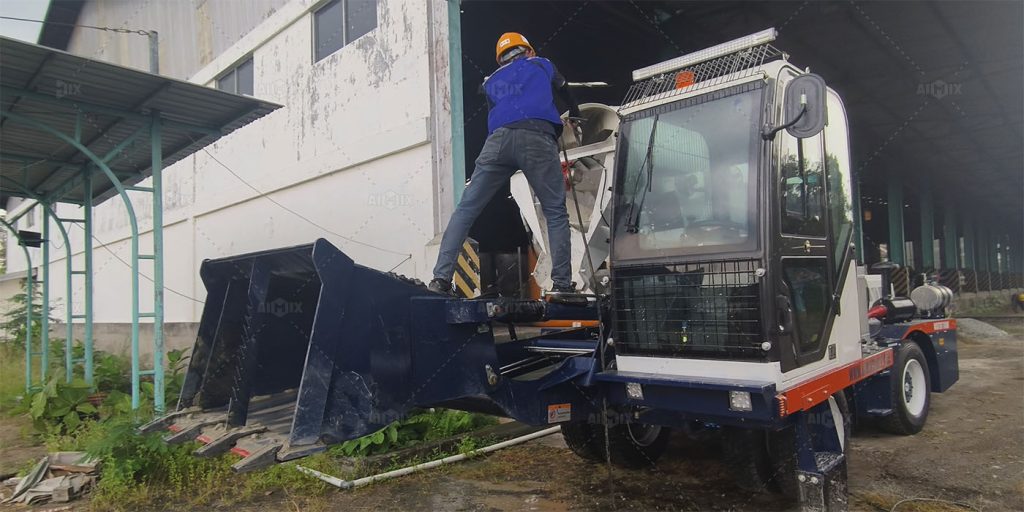
For example, the machine can load aggregates by itself. You do not need a wheel loader. In addition, it can measure water and materials automatically. This ensures consistent concrete quality.
In terms of productivity, one batch produces 3.5 m³ of concrete. Based on the standard calculation, it can deliver about 14 m³ per hour (3.5 m³ per batch × 4). This output fits well with small to medium urban projects.
Now that we understand its basic functions, let’s evaluate its performance in tight spaces.
How Does It Perform In Limited Space?
When space is limited, maneuverability becomes the key factor. Fortunately, the 3.5 m³ self loading mixer is designed for flexibility.
Compact Design And High Mobility
The machine has a relatively compact body. It can move easily through narrow roads and crowded sites. In addition, the articulated steering system allows a small turning radius. Therefore, operators can handle tight corners without difficulty.
All-In-One Operation Reduces Equipment Needs
Because it integrates multiple functions, you do not need extra machines. This saves space on site. For example, you do not need a separate loader or mixer. As a result, the working area stays organized and efficient.
On-Site Concrete Production
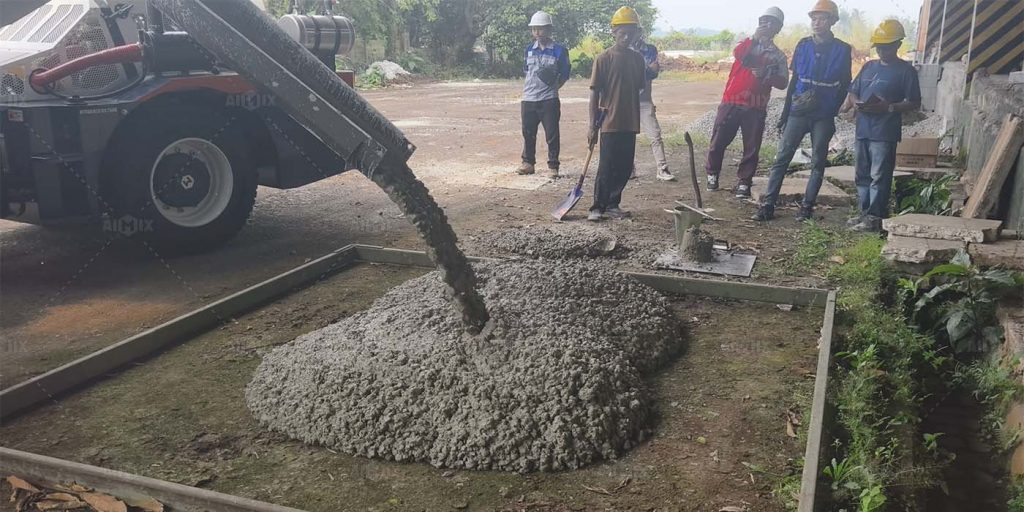
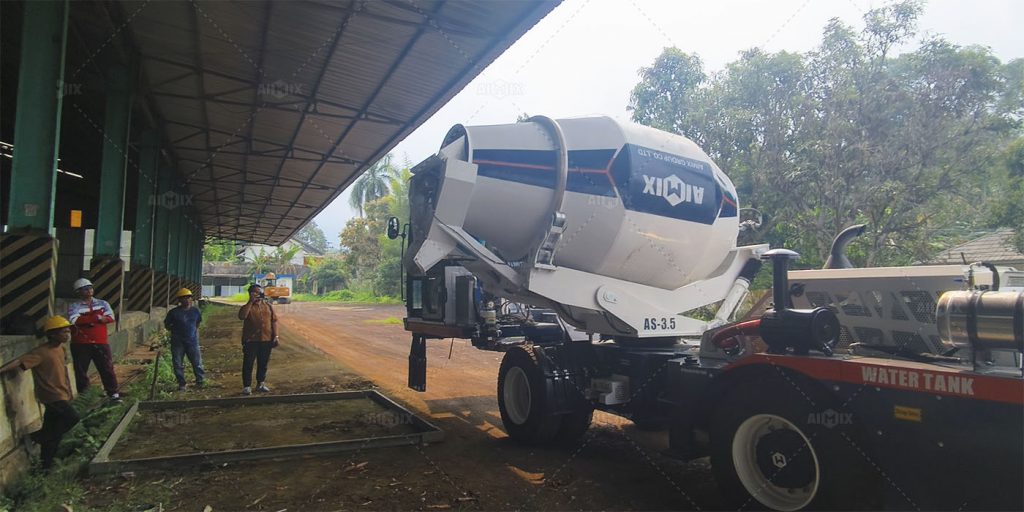
Instead of waiting for ready-mix trucks, you can produce concrete directly on site. This reduces dependence on external supply. It also avoids delays caused by traffic, which is very common in Indonesian cities.
Clearly, these advantages make the machine highly suitable for restricted environments. However, performance is not only about space. Let’s also consider efficiency and cost.
Can It Improve Efficiency And Reduce Costs?
For contractors, equipment must deliver real value. Efficiency and cost control always come first.
First of all, the machine reduces labor requirements. One operator can handle the entire process. This lowers labor costs significantly.
Secondly, fuel consumption is optimized. Instead of running multiple machines, you operate just one unit. Therefore, overall fuel expenses decrease.
In addition, the consistent mixing quality reduces material waste. Each batch meets your requirements. This helps avoid rework and saves cement and aggregates.
Furthermore, faster production leads to shorter project timelines. Completing projects earlier means you can take on more jobs and increase your revenue.
Given these benefits, the 3.5 m³ model becomes a strong option for urban contractors. However, you should still consider specific project conditions.
When Is A 3.5 M³ Mixer The Best Choice?
Although the machine is versatile, it performs best in certain scenarios.
It is ideal for low- to mid-rise building construction, road repairs, and small infrastructure projects. It also works well in residential developments where access is limited.
However, for very large-scale projects with high continuous demand, a stationary batching plant may be more suitable. Therefore, you should match the equipment with your project scale.
In most urban projects in Indonesia, the demand often falls within a moderate range. That is why the 3.5 m³ self loading mixer becomes a practical and balanced solution.
Conclusion: A Smart Solution For Urban Construction In Indonesia
In summary, a 3.5 m³ self loading concrete mixer offers strong advantages for tight urban construction sites. It combines compact design, flexible movement, and efficient production. More importantly, it helps you overcome common challenges such as limited space, traffic delays, and rising labor costs.
If you are looking for a reliable and cost-effective solution for your next project, this machine is worth serious consideration. It not only improves your workflow but also gives you more control over your construction process.
Contact us today to get professional recommendations and customized solutions for your projects in Indonesia. Let AIMIX help you achieve higher efficiency and better results on every job site. Learn about the harga self loading concrete mixer at right!
No responses yet