
Concrete delivery delays can quickly turn into construction delays on Indonesian road projects. A paving team may be ready, formwork may already be in place, and workers may be waiting, yet concrete trucks can still arrive late because of traffic, long transport distances, limited ready-mix supply, or changing site conditions. For contractors working outside major cities, the problem can become even more serious.
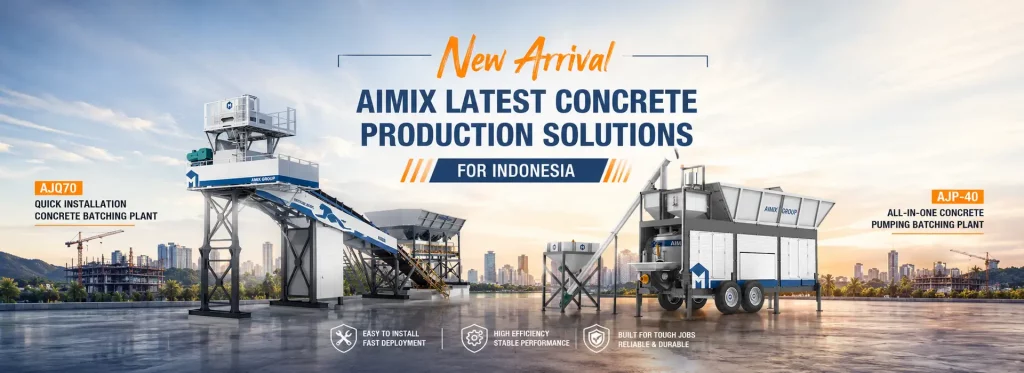
For these projects, producing concrete closer to the construction site can provide a more practical solution. A 70 m³/h fast installation concrete batching plant machine can supply concrete continuously while reducing dependence on external ready-mix deliveries. More importantly, fast installation allows contractors to start production sooner and move the concrete plant when the project location changes. This article explains how this capacity and installation approach can help Indonesian road contractors improve concrete supply and keep projects moving.
Why Do Concrete Delivery Delays Affect Indonesian Road Projects?
Road construction depends heavily on a stable concrete supply. When concrete does not arrive on time, the problem rarely affects only one activity. Instead, it can interrupt several operations at once.
Long Transport Routes Increase Delivery Risk
Many Indonesian road projects are located outside major urban centers. A contractor may need to transport concrete from a commercial batching plant several kilometers away. On island projects or in developing areas, the distance can be even greater.
As a result, transport time becomes a major part of the concrete supply process. Traffic congestion, road restrictions, ferry schedules, rain, and poor road conditions can all affect truck arrival times.
External Ready-Mix Supply Limits Site Control
Buying ready-mix concrete allows a contractor to avoid operating a batching plant. However, it also means that concrete production depends on another supplier’s schedule.
If several projects require concrete at the same time, the supplier may have difficulty maintaining the required delivery frequency. This becomes especially challenging when a road project needs a large volume within a short pouring window.
Therefore, contractors should consider not only the price per cubic meter. They should also consider how much control they have over concrete production and delivery.
How Can a 70 m³/h Batching Plant Improve Concrete Supply?
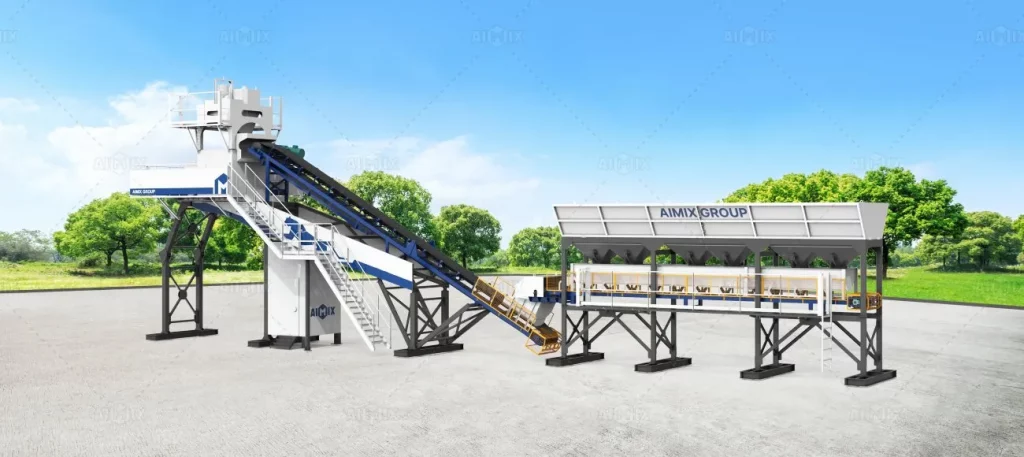
A 70 m³/h batching plant gives a road contractor an important advantage: concrete production takes place at or near the project site. Instead of waiting for every truck to travel from an external supplier, the contractor can organize aggregate, cement, water, and admixture supply around its own production schedule.
At a nominal capacity of 70 m³/h, the mobile concrete batching plant for sale can theoretically produce about 560 m³ during an eight-hour production period. Actual output will depend on concrete mix design, loading efficiency, aggregate supply, truck availability, site conditions, and operating time.
This distinction matters. Contractors should use 70 m³/h as a plant capacity reference rather than assuming that the plant will produce exactly 70 m³ every hour throughout the entire project.
Shorter Concrete Travel Distance
When the batching plant is close to the work area, concrete trucks spend less time traveling between the production point and the paving site.
This can reduce the risk of trucks arriving outside the required pouring sequence. It also gives the site team more flexibility when weather, traffic, or construction conditions change.
Better Control Over Pouring Schedules
Road projects often involve planned concrete placement. For example, a contractor may need to complete a specific road section before moving equipment to the next section.
With its own batching plant, the contractor can coordinate concrete production with paving, pumping, placing, and finishing operations. Consequently, the team can adjust production according to the actual progress of the site rather than relying entirely on an external supplier.
Reduced Dependence on Ready-Mix Suppliers
Owning a batching plant does not eliminate the need for transportation. However, it changes the transportation problem.
Instead of transporting finished concrete over a long distance, the contractor can transport raw materials to a centralized production point near the project. This approach can make supply planning easier, particularly when aggregate and cement can be sourced locally.
Why Does Fast Installation Matter for Road Contractors?
Production capacity is only one part of the decision. Installation time also affects the commercial value of a batching plant.
Road projects often operate under tight schedules. Contractors may not have the time to spend several months preparing a permanent concrete production facility. A fast installation batching plant can shorten the period between equipment arrival and concrete production.
Start Concrete Production Earlier
A faster installation process can help contractors bring concrete production online sooner. This is particularly useful when the road construction schedule already has fixed paving or pouring dates.
However, fast installation does not mean skipping preparation. The contractor still needs to confirm the site layout, foundation or support requirements, electrical supply, water supply, aggregate storage, cement storage, access roads, and safety arrangements.
In other words, the goal is not simply to install equipment quickly. The goal is to shorten the overall preparation period without compromising commissioning and safe operation.
Move the Plant When the Project Moves
Road construction is different from a permanent concrete production business. The work area can extend for many kilometers, and different sections may enter construction at different times.
For this reason, plant mobility and relocation can become important factors. A fast-installation design can make it easier to adapt the concrete production point as the project progresses, depending on the specific plant configuration and site requirements.
When Is 70 m³/h a Practical Capacity for an Indonesian Road Project?
The right capacity depends on the project’s concrete demand rather than the equipment number alone. A contractor should first estimate the required concrete volume, daily pouring window, and expected peak demand.
Example: Estimating Daily Concrete Demand
Suppose a road contractor needs approximately 350 m³ of concrete in one working day. If the plant operates efficiently for several hours, a 70 m³/h plant ready mix provides enough nominal capacity to cover this volume.
For example:
- Required daily concrete: 350 m³
- Plant nominal capacity: 70 m³/h
- Theoretical production time: about 5 hours
The contractor should still allow additional time for truck loading, aggregate handling, mix changes, equipment checks, and site interruptions. Therefore, actual scheduling should include a practical operating margin.
This calculation also shows why capacity should be matched with the project’s peak requirement. A plant that looks sufficient based only on average demand may become a bottleneck during intensive pouring periods.
What Other Factors Should Contractors Check Before Choosing the Plant?
A 70 m³/h capacity can be suitable, but capacity alone should not determine the purchase. Indonesian road projects have different site conditions, material sources, and logistical constraints.
Check Aggregate Supply
The batching plant can only maintain production if aggregate supply keeps pace with concrete demand. Contractors should check the availability, quality, moisture content, and transport distance of sand and coarse aggregate.
Check Water and Power Availability
Reliable water and electrical supply are also essential. Remote projects may require additional planning for generators, water storage, pumps, and distribution systems.
Check Concrete Truck Circulation
The plant should have enough space for concrete mixer trucks to enter, load, turn, and leave without creating unnecessary congestion. A poorly planned site can reduce the practical output of an otherwise high-capacity plant.
Check Installation and Technical Support
Contractors should also ask how installation, commissioning, operator training, spare parts, and after-sales support will be handled. These services can directly affect how quickly the plant reaches stable production.
70 m³/h Batching Plant vs. Buying Ready-Mix Concrete
The better choice depends on the project structure. Buying ready-mix may work well when a reliable supplier operates close to the project and delivery routes remain predictable.
However, a batching plant becomes more attractive when the project requires a large and consistent concrete volume, the site is far from commercial suppliers, or delivery reliability is a major concern.
There is also a strategic difference. Ready-mix purchasing mainly gives the contractor access to concrete. A batching plant gives the contractor greater control over when and where concrete is produced.
Therefore, contractors should compare the total cost and project risk, including concrete purchase prices, transportation, waiting time, truck utilization, potential pouring delays, plant investment, installation, labor, maintenance, and relocation requirements.
How Can Contractors Reduce Concrete Delivery Delays Further?
Installing a batching plant is only one part of the solution. The best results come from coordinating the entire concrete supply chain.
First, contractors should maintain sufficient aggregate and cement inventory before major pours. Second, they should schedule mixer trucks according to the actual plant output and pouring rate. Third, operators should monitor moisture and mix consistency to avoid unnecessary production interruptions.
In addition, preventive maintenance can reduce unexpected downtime. The site team should inspect key components before intensive production periods and keep commonly needed spare parts available.
Most importantly, production planning should follow the construction schedule. When batching, transportation, pumping, paving, and finishing teams work from the same schedule, the risk of concrete waiting time can fall significantly.
Is a Fast Installation 70 m³/h Concrete Plant Worth Considering?
For Indonesian road contractors, the main value of a 70 m³/h fast installation concrete batching plant is not simply its stated production capacity. Its value comes from combining adequate concrete output with shorter supply distances, faster site preparation, and greater control over production.
This can be particularly useful for road projects located away from major ready-mix suppliers. It can also support contractors that need to manage changing work areas and demanding concrete schedules.
Still, the right solution should start with the project rather than the machine. Concrete volume, daily demand, site location, aggregate availability, transport distance, installation conditions, power supply, and project duration should all be evaluated before selecting the final configuration.
Plan Your Concrete Supply Around the Project
If concrete delivery delays are affecting your Indonesian road project, producing concrete closer to the work area may provide a more controllable solution. A 70 m³/h fast installation batching plant can offer the production capacity needed for many medium-scale road applications while helping contractors reduce dependence on long-distance ready-mix deliveries.
The next step is to calculate your actual concrete demand and site conditions. Share your expected daily concrete volume, project location, required production period, and preferred installation arrangement with AIMIX. Our team can then help evaluate whether a 70 m³/h solution fits your project and recommend a suitable concrete production setup.
No responses yet