
For a road project in Bali, processing 500 mm river stone into usable road aggregate requires more than simply choosing a 100 TPH crusher. The crusher plant must handle the large feed size, reduce rounded river stone efficiently, control the final particle size, and produce consistent 0–5 mm and 5–20 mm aggregates.
A practical solution is a 100 TPH crushing and screening plant with primary jaw crushing, secondary cone or impact crushing, and multi-deck screening. The exact configuration depends on the hardness of the river stone, feed gradation, moisture, and the required final aggregate quality. For a typical Bali road project, this crushing plant equipment can provide a balanced combination of capacity, particle-size control, and site flexibility.
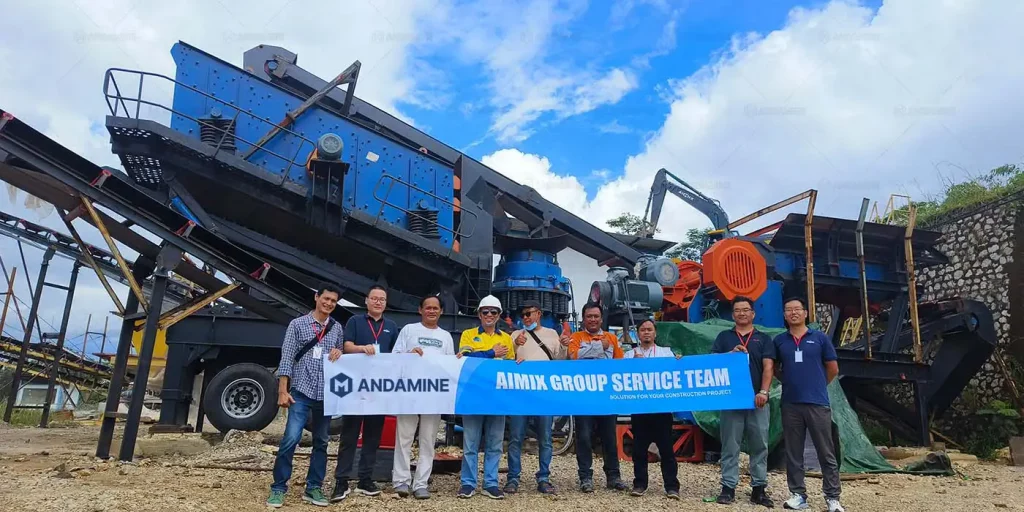
What Crushing Plant Is Suitable For 500 Mm River Stone?
When the maximum river stone size reaches 500 mm, the first priority is the feed opening of the primary crusher. The primary crusher must accept the largest stones without frequent manual breaking. At the same time, the plant should reduce the material enough for the secondary crusher to work efficiently.
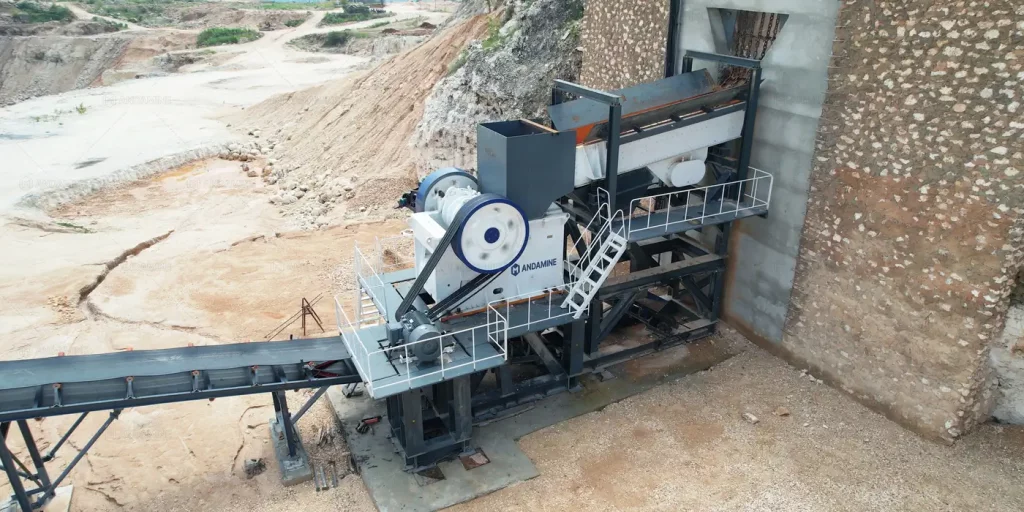
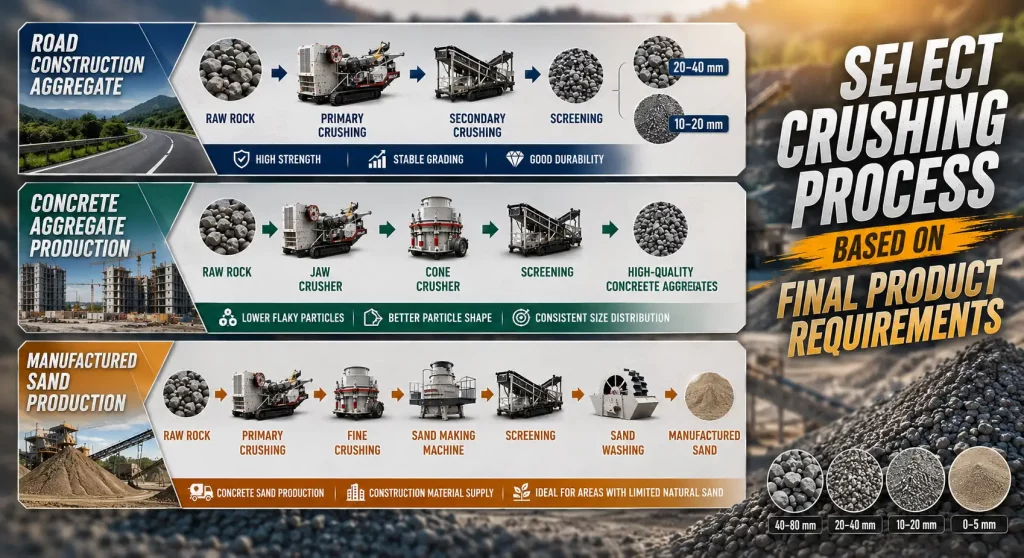
For this reason, a common 100 TPH configuration uses a jaw crusher as the primary crusher. The jaw crusher handles the 500 mm feed and produces a smaller, more manageable material size. Then, a secondary crusher further reduces the material before screening.
Because river stone is naturally rounded, the crushing process also needs to consider particle shape. Therefore, the choice between a cone crusher and an impact crusher should depend on the rock properties and the road project’s aggregate requirements.
Recommended 100 TPH Process
A typical process can follow this sequence:
500 mm river stone → vibrating feeder → jaw crusher → secondary crusher → vibrating screen → 0–5 mm + 5–20 mm aggregate
Oversize material from the screen can return to the secondary crushing stage. As a result, the plant can maintain a closed crushing circuit and improve control over the final product sizes.
Why Is A Jaw Crusher Needed For 500 Mm River Stone?
The 500 mm feed size is one of the most important factors in this project. A small secondary crusher cannot normally receive this material directly. Therefore, the primary crushing stage must reduce the large river stones first.
A jaw crusher is suitable for this duty because it is designed for primary size reduction. It can accept large rocks and create a more uniform feed for the next stage.
For a 100 TPH road aggregate plant, the primary stage should also match the actual feed conditions. If the river contains many stones close to 500 mm, the operator needs enough feed opening and crushing capacity. If most stones are much smaller, the plant may have more flexibility.
In addition, a vibrating feeder can help regulate the material entering the jaw crusher. This matters because uneven feeding can reduce actual plant output even when the crusher itself has a nominal capacity of 100 TPH.
How Can The Crusher Plant Produce Both 0–5 Mm And 5–20 Mm Aggregate?
After primary and secondary crushing, the material still contains different particle sizes. Therefore, crushing alone cannot guarantee the two final products required for the Bali road project. Screening is the key step that separates the material according to size.
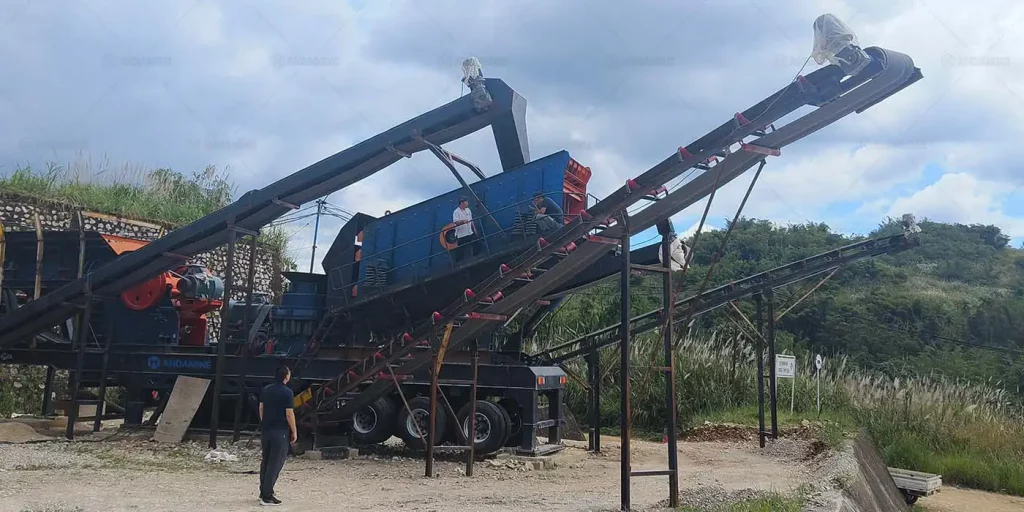
A multi-deck vibrating screen can separate the crushed river stone into different fractions. For this application, the screen needs to control the 5 mm and 20 mm cut points.
0–5 Mm Aggregate
The 0–5 mm fraction contains fine aggregate. Depending on the crushing process and material characteristics, it may include crushed fines and manufactured sand-sized particles.
This material can be useful for applications where a finer aggregate fraction is required. However, the exact use should follow the project’s road construction specification and local material requirements.
5–20 Mm Aggregate
The 5–20 mm fraction is a more typical coarse aggregate range for many road and concrete-related applications. The final quality depends on the rock type, crusher configuration, screening efficiency, and the required grading specification.
Because the project needs two specific products, the screen should be selected together with the crushers rather than treated as a separate piece of equipment.
What Does A 100 TPH Crushing Plant Configuration Look Like?
For a Bali road project using 500 mm river stone, a practical plant can be organized around four main stages. Each stage has a specific role, so the complete system works as one production line.
| Stage | Main Equipment | Purpose |
|---|---|---|
| Feeding | Vibrating Feeder | Controls and distributes 500 mm river stone into the crusher |
| Primary Crushing | Jaw Crusher | Reduces large river stone to a suitable secondary-crushing feed size |
| Secondary Crushing | Cone Crusher Or Impact Crusher | Further reduces material and helps achieve the required aggregate grading |
| Screening | Multi-Deck Vibrating Screen | Separates 0–5 mm and 5–20 mm products and returns oversize material |
This configuration is only a starting point. The final equipment selection should use the actual river stone test results, feed size distribution, moisture condition, and required product grading.
Should You Choose A Cone Crusher Or Impact Crusher?
The secondary crusher is an important decision because river stone can behave differently depending on its hardness and abrasiveness. Therefore, the best option should not be selected from capacity alone.
When A Cone Crusher Can Be Considered
A cone crusher can be considered when the river stone is relatively hard and abrasive. It is suitable for continuous secondary crushing and can work well in a closed circuit with a vibrating screen.
It can also provide good control over the crushing process when the project requires a stable feed for screening. However, the final configuration must account for the desired 0–5 mm fraction because producing a high proportion of fines may require additional crushing or shaping equipment.
When An Impact Crusher Can Be Considered
An impact crusher machine can be useful when aggregate shape is an important consideration and the material properties are suitable. Its crushing action can help produce more cubical particles.
However, wear cost can become an important consideration when processing highly abrasive river stone. Therefore, a material test is useful before choosing between impact and cone crushing.
Can A 100 TPH Plant Really Produce 100 Tons Per Hour?
A plant rated at 100 TPH does not automatically produce exactly 100 tons of finished 0–5 mm and 5–20 mm aggregate every operating hour. Actual production depends on several factors.
First, the feed gradation affects the amount of material that needs secondary crushing. Second, rock hardness and abrasiveness affect crushing efficiency and wear. Third, moisture can influence feeding and screening. Finally, the required product ratio affects how much material must pass through the crushing circuit again.
For example, if a project requires a relatively high proportion of 0–5 mm material, the crusher may need to work harder than when most of the final product is 5–20 mm. Consequently, the plant should be sized around the required finished-product output, not simply the maximum theoretical crusher capacity.
What Should Bali Road Contractors Check Before Buying?
Equipment selection should start with the road project’s actual production target. A contractor should first calculate how much aggregate is needed per day and how many working days are available.
For example, a 100 TPH plant operating for eight effective production hours could theoretically process around 800 tons of feed per day. However, loading, maintenance, screen cleaning, material changes, and other downtime can reduce the actual daily output.
Therefore, the project schedule should include a realistic operating factor rather than assuming continuous operation at the nameplate capacity.
Check The Feed Material
Confirm the maximum stone size, average feed size, hardness, abrasiveness, and moisture. A 500 mm maximum feed size is especially important for primary crusher selection.
Check The Required Products
Confirm whether the project needs only 0–5 mm and 5–20 mm aggregates or additional fractions. If another product is required later, a three-deck screen may provide more flexibility than a simpler screen.
Check The Site Conditions
Bali projects can involve limited working areas, difficult access, wet conditions, and changing project locations. Therefore, the layout should consider truck access, stockpile space, drainage, electrical supply, maintenance access, and material flow.
How Does The Crushing Plant Layout Affect Road Project Costs?
The crusher price is only one part of the investment. A poorly planned layout can increase loading distance, fuel consumption, labor requirements, and material handling time.
For example, the finished 0–5 mm and 5–20 mm aggregates should have clear discharge and stockpile areas. This prevents loaders from repeatedly crossing the production area. Likewise, the raw river stone should have a short and safe route from the feeding area to the primary crusher.
Moreover, the plant should leave enough space for maintenance. Easy access to crusher wear parts, screen panels, belts, and lubrication points can reduce unnecessary downtime during the road project.
Is A Mobile Or Stationary Crushing Plant Better For Bali?
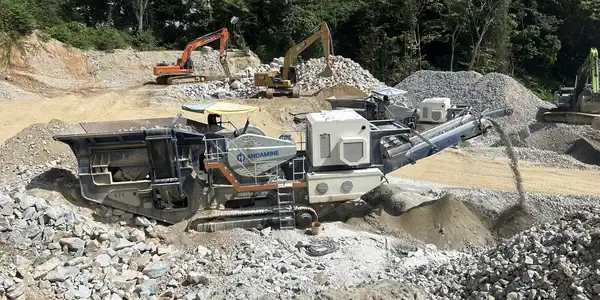
The answer depends mainly on the project duration and material source. If the road project remains in one location for a long period, a stationary crushing plant can provide a stable production base. If the contractor needs to move between several sections or material sources, a mobile crushing plant solution can reduce relocation work.
For a Bali road project, transportation conditions also deserve attention. Moving large quantities of raw river stone over long distances can increase logistics costs. In some cases, producing aggregate closer to the project can reduce material transportation distance.
Therefore, contractors should compare the cost of crushing on site with the delivered cost of purchased aggregate. The calculation should include material price, trucking, loading, unloading, fuel, labor, plant operation, maintenance, and project duration.
What Information Is Needed To Design The 100 TPH Plant?
A supplier can prepare a more accurate crushing solution when the contractor provides several basic project details. These details also help avoid selecting a plant that is too small or unnecessarily large.
| Project Information | Recommended Details |
|---|---|
| Raw Material | River stone, hardness, abrasiveness, moisture |
| Maximum Feed Size | Up to 500 mm |
| Required Capacity | Approximately 100 TPH finished aggregate |
| Final Products | 0–5 mm and 5–20 mm |
| Project Location | Bali, Indonesia |
| Operating Schedule | Daily production hours and project duration |
With this information, the crushing plant can be designed around the actual road construction requirement rather than a generic 100 TPH equipment list.
Why Consider A Complete Crushing And Screening Solution?
For contractors, the main objective is not simply to purchase a jaw crusher, cone crusher, or screen. The objective is to produce the required aggregate continuously and meet the project schedule.
A complete crushing and screening solution connects feeding, crushing, screening, conveying, and stockpiling into one production process. As a result, the contractor can manage the entire aggregate flow from 500 mm river stone to the required 0–5 mm and 5–20 mm products.
For a 100 TPH road project in Bali, this approach also makes it easier to evaluate the complete investment. Instead of comparing individual machine prices, the contractor can compare total production capacity, expected operating costs, maintenance requirements, installation conditions, and aggregate quality.
Final Takeaway For A Bali Road Project
If you need to process up to 500 mm river stone for a Bali road project and produce 0–5 mm and 5–20 mm aggregate at around 100 TPH, a jaw crusher + secondary crusher + multi-deck vibrating screen + return conveyor is a practical starting configuration.
The jaw crusher handles the large 500 mm feed. The secondary crusher provides further size reduction. The vibrating screen separates the final aggregate sizes, while the return circuit sends oversize material back for additional crushing.
However, the exact crusher type and equipment models should be selected after checking the river stone’s hardness, abrasiveness, feed gradation, required product ratio, and project conditions in Bali.
If you are planning this type of road aggregate project in Indonesia, AIMIX can help evaluate the 100 TPH crushing and screening configuration based on your actual 500 mm river stone feed and required 0–5 mm and 5–20 mm products. Send us the project location, required daily output, raw material photos or test information, and project schedule. We can then work out a practical crushing process and equipment combination for your site.
No responses yet