
Jakarta’s high-rise construction market is growing rapidly. More residential towers, commercial buildings, and infrastructure projects require reliable concrete supply every day. However, for contractors, concrete production is not only about volume. It is also about delivery speed, quality control, cost management, and keeping the project schedule on track.
For a high-rise building project requiring around 10,000 m³ of concrete, many contractors ask an important question: Can a 90 m³/h concrete batching plant handle this production target efficiently? The answer depends on project planning, working hours, material supply, and equipment performance. With the right configuration, a 90 m³/h batching plant can become a practical solution for medium and large-scale construction projects in Jakarta.
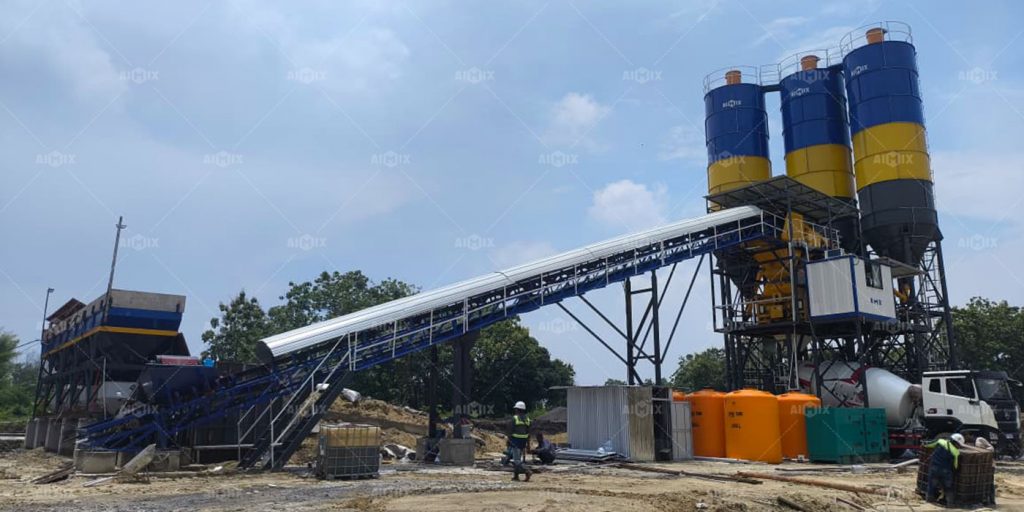
Why Jakarta High-Rise Projects Need Reliable Concrete Production?
High-rise construction has strict requirements for concrete supply. Unlike small buildings, tower projects need continuous concrete pouring for foundations, columns, slabs, and structural components. Any delay in concrete production can directly affect construction progress and increase labor costs.
Moreover, Jakarta’s urban construction environment creates additional challenges. Limited site space, busy transportation conditions, and strict project deadlines require contractors to control every step of concrete production.
Therefore, many professional contractors prefer an on-site concrete batching plant. It helps reduce dependence on external concrete suppliers. At the same time, it provides better control over concrete quality, production planning, and project costs.
How Can a 90 m³/h Batching Plant Complete 10,000 m³ Concrete Production?
To understand whether a 90 m³/h compact concrete batching plant can complete a 10,000 m³ concrete requirement, contractors need to calculate production capacity based on actual working conditions.
Production Calculation Based on Real Construction Conditions
A 90 m³/h batching plant theoretically produces 90 cubic meters of concrete per hour. However, real projects consider mixing cycles, material loading, equipment adjustment, and daily working schedules.
For example, if the batching plant operates 8 hours per day, the daily production capacity can reach:
90 m³/h × 8 hours = 720 m³/day
Under this production condition, completing 10,000 m³ of concrete requires approximately:
10,000 m³ ÷ 720 m³/day ≈ 14 working days
Of course, actual project duration may change because of weather conditions, concrete pouring plans, transportation arrangements, and site management. However, this calculation shows that a 90 m³/h batching plant has enough capacity for many Jakarta high-rise projects.
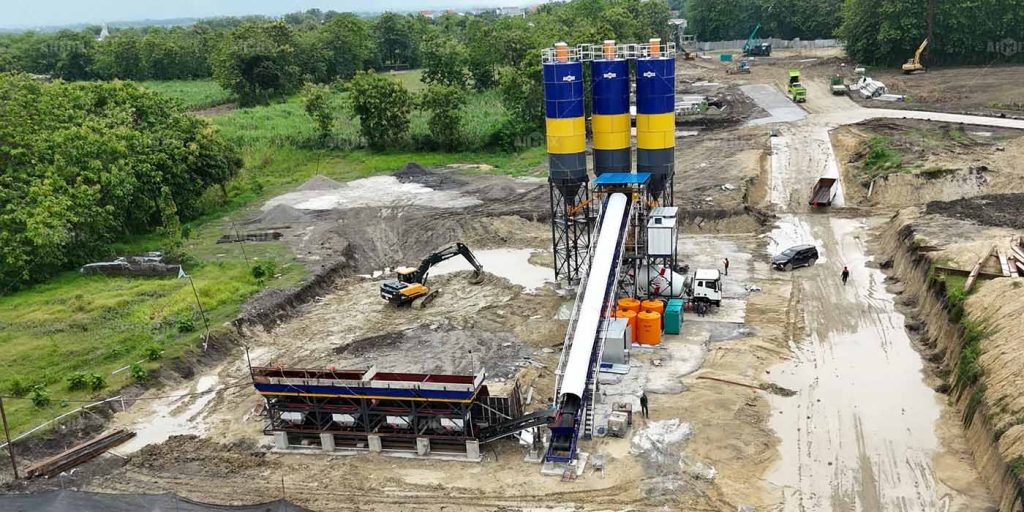
Key Advantages of Using a 90 m³/h Batching Plant for High-Rise Construction
Capacity is important. However, contractors also focus on operational efficiency and long-term project benefits. A suitable batching plant should help reduce risks and improve overall construction performance.
1. Stable Concrete Supply for Continuous Pouring
High-rise projects often require large amounts of concrete within a short period. A 90 m³/h batching plant provides stable production and supports continuous concrete delivery.
As a result, contractors can better organize foundation pouring, basement construction, and structural work. This reduces waiting time and improves construction efficiency.
2. Better Concrete Quality Control
Concrete quality directly affects building safety. With an independent batching plant, contractors can manage aggregate, cement, water, and additives more accurately.
Furthermore, modern batching systems use automatic control technology. The system can improve weighing accuracy and reduce human operation errors. Therefore, every batch can maintain more consistent quality.
3. Lower Concrete Supply Costs
For a 10,000 m³ concrete project, purchasing ready-mixed concrete from suppliers may create high transportation and service costs. An on-site concrete batching plant can reduce these expenses.
In addition, contractors can adjust production according to construction progress. This flexibility helps avoid unnecessary concrete waste and improves cost control.
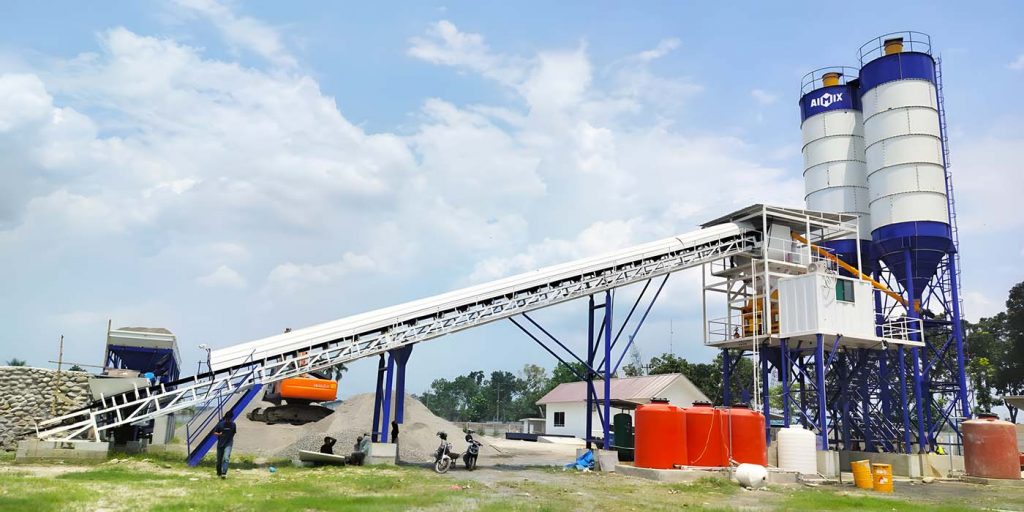
What Factors Should Jakarta Contractors Consider Before Choosing?
Although a 90 m³/h batching plant can meet many high-rise construction requirements, choosing the correct equipment configuration is equally important. Every project has different conditions and production goals.
Project Schedule and Daily Concrete Demand
Contractors should first analyze the concrete demand during peak construction periods. If the project requires large-scale continuous pouring, the batching plant should provide enough capacity without frequent downtime.
Site Space and Installation Conditions
Jakarta construction sites often have limited space. Therefore, contractors need to consider plant layout, aggregate storage, cement silo placement, and truck movement routes.
A compact and efficient batching plant layout can improve site management and reduce installation difficulties.
After-Sales Support and Spare Parts Availability
Equipment reliability depends not only on the machine itself but also on technical support. For long-term construction projects, fast service response and spare parts supply are important factors.
Therefore, contractors should select suppliers that provide installation guidance, operator training, maintenance support, and professional technical assistance.
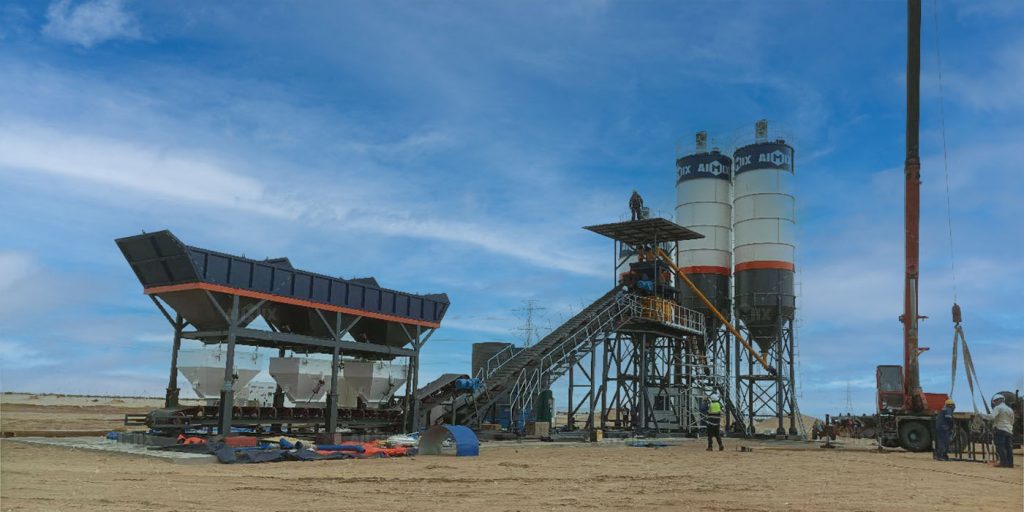
Is a 90 m³/h Batching Plant the Right Choice for Your Jakarta Project?
For a high-rise building project requiring around 10,000 m³ concrete production, a 90 m³/h batching plant di Indonesia can provide an efficient balance between capacity, investment, and operational flexibility.
It is especially suitable for contractors who need reliable concrete production, better quality management, and more control over construction schedules. However, the final solution should consider project size, concrete demand, site conditions, and future development plans.
Build Your Jakarta High-Rise Project with a Reliable Concrete Solution
Choosing the right batching plant is not only an equipment decision. It is a strategy for controlling project progress, reducing costs, and improving construction efficiency.
If you are planning a high-rise building project in Jakarta or other Indonesian cities, our team can help you evaluate your concrete demand and recommend a suitable 90 m³/h batching plant configuration. Contact us today for a customized concrete production solution and professional support.
No responses yet