
In large residential estate development, concrete supply directly determines project speed, cost control, and construction stability. When a project in Surabaya faces a daily demand of 500 m³, the contractor must choose a system that ensures continuous output, flexible deployment, and stable quality. At the same time, the solution must adapt to local logistics, weather conditions, and urban construction constraints in Indonesia. Therefore, selecting the right customized concrete production setup becomes a critical decision for both cost efficiency and project success.
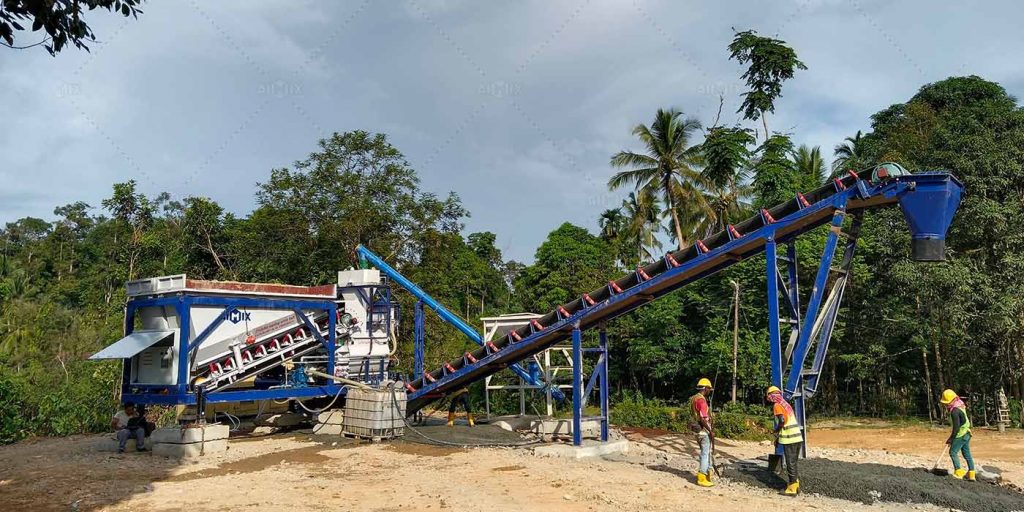
Understanding the 500 m³ Daily Demand Challenge in Surabaya Residential Projects
A 500 m³ daily concrete requirement may seem moderate, but in practice it creates a constant production pressure. Residential estates often involve multiple building zones at the same time, such as foundations, slabs, roads, and drainage systems. As a result, demand does not come evenly. It peaks during structural phases and drops during finishing stages.
In Surabaya, traffic congestion and distributed construction zones further increase delivery complexity. If supply delays occur, multiple working teams may stop simultaneously. This leads to idle labor costs and delayed milestones. Therefore, the core challenge is not only producing concrete, but also ensuring continuous, well-timed supply across different construction areas.
To solve this, contractors need a system that combines stable batching capacity, fast relocation ability, and efficient on-site pumping support. This naturally leads to a modular and mobile concrete production approach.
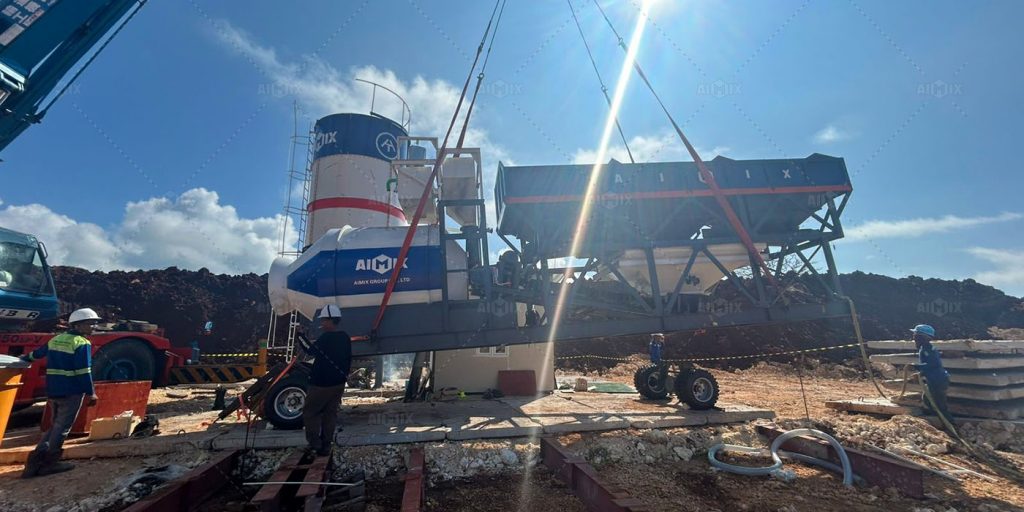
Recommended Customized Concrete Solution for Continuous 500 m³ Output
To meet this demand efficiently, a combined solution based on a mobile batching plant, concrete mixer trucks, and trailer pump support offers the best balance. This system ensures production stability while maintaining flexibility for multi-zone residential construction.
More importantly, this configuration avoids over-investment while still guaranteeing uninterrupted supply. Let’s break down the optimized setup for this type of project.
1. Mobile Concrete Batching Plant (AJY Series)
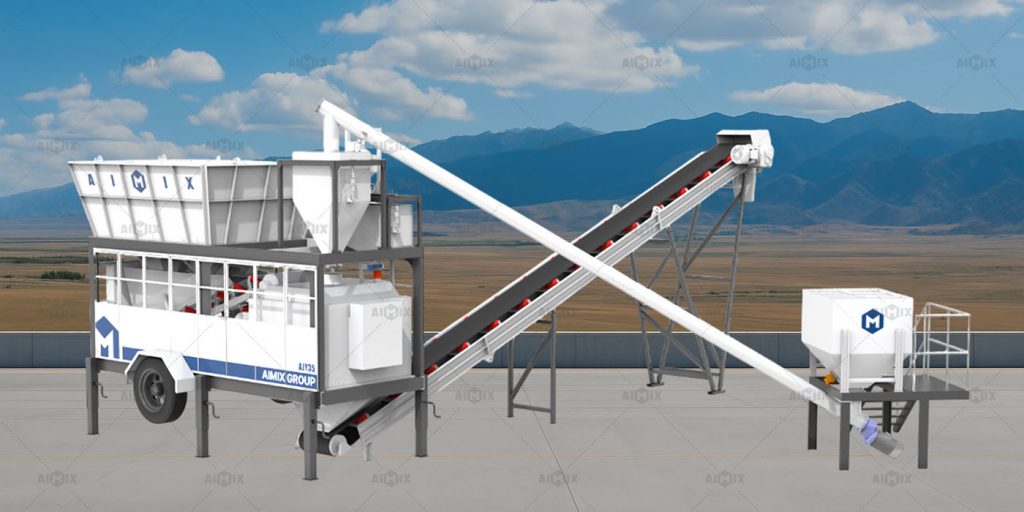
A mobile concrete batching plant for sale such as the AJY series becomes the core production unit. A model with 25–60 m³/h output capacity can easily cover the daily requirement when operated in 8–10 hour shifts.
Since residential estates often expand in phases, mobility becomes a major advantage. The plant can move closer to new construction zones, reducing transport distance and improving delivery speed. This directly reduces logistics cost and improves concrete freshness.
2. Concrete Mixer Trucks for Stable Delivery Flow
To maintain continuous pouring, concrete mixer trucks act as the buffer between production and site demand. With proper scheduling, they ensure that no pouring team waits for material. This also reduces slump loss and improves final concrete quality.
In dense urban areas like Surabaya, truck routing optimization becomes essential. Short travel cycles help maintain a stable daily 500 m³ output without bottlenecks.
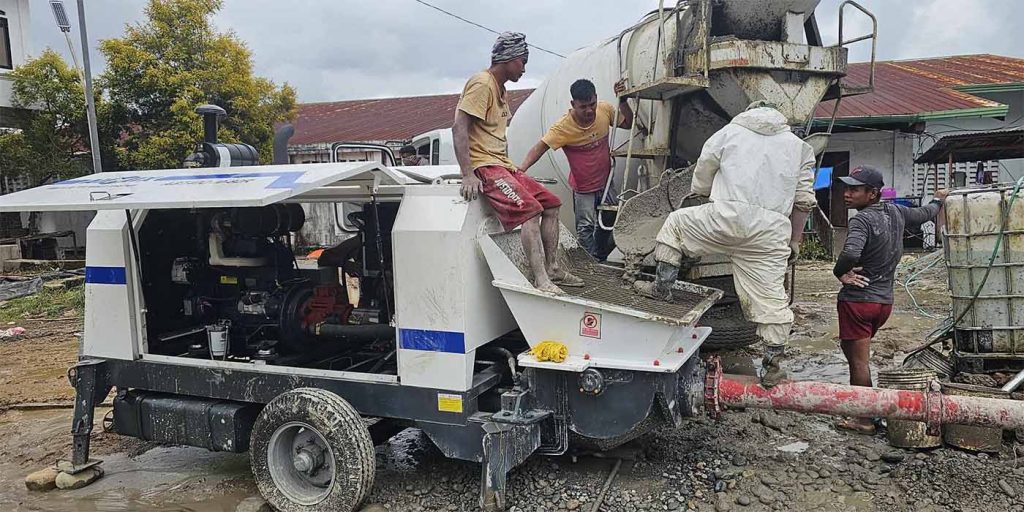
3. Trailer Pump or Concrete Pump System for Site Distribution
Residential estates usually involve multi-story buildings and limited access zones. Therefore, trailer pump concrete or concrete pump systems ensure that concrete reaches every working point efficiently.
This system reduces manual handling and increases pouring accuracy. As a result, construction teams can complete slabs, beams, and foundations faster and with fewer interruptions.
Why This System Works for Residential Estates in Surabaya
Once the equipment configuration is clear, the next step is understanding why this solution performs well in real construction environments. The key advantage lies in synchronization.
First, the mobile batching plant ensures on-demand production. Second, mixer trucks maintain continuous flow. Third, pumping systems deliver directly to the working point. Together, they create a seamless production chain.
In addition, the system adapts well to space limitations in urban construction areas. Residential estates often have restricted storage zones, so compact and mobile equipment reduces site congestion. This becomes especially important in fast-growing cities like Surabaya.
Production Workflow for 500 m³ Daily Output
A well-structured workflow ensures that the system runs efficiently throughout the day. The process begins with raw material feeding into the batching unit, followed by precise mixing based on mix design requirements.
Next, concrete is loaded into mixer trucks in a continuous cycle. Trucks then deliver directly to different construction zones within the estate. At the same time, pumping equipment distributes concrete to high-rise or hard-to-reach structures.
This loop repeats throughout the working day. Because each stage is synchronized, the system avoids downtime and maintains stable production close to 500 m³ per day.
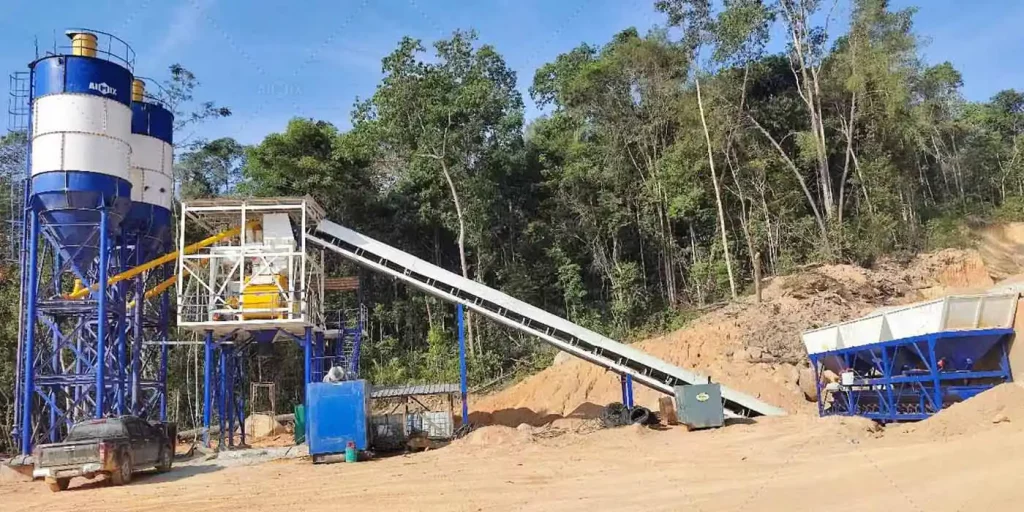
Cost Efficiency and Risk Control in Real Construction Conditions
From a contractor’s perspective, cost control is as important as production capacity. A customized system reduces unnecessary fixed investment in oversized stationary plants. Instead, it focuses on scalable output.
At the same time, operational risks decrease significantly. If one construction zone slows down, the mobile system can redirect supply to another active area. This flexibility prevents material waste and idle production time.
In addition, equipment mobility reduces long-distance transport costs. This becomes a major advantage in large residential estates where construction zones shift over time.
Implementation Strategy for Surabaya Residential Projects
In Surabaya, weather conditions such as high humidity and sudden rainfall can affect concrete performance. Therefore, timing and protection measures become essential. Contractors should schedule pouring during stable weather windows whenever possible.
Moreover, urban traffic requires smart logistics planning. Early dispatch schedules and decentralized staging areas help maintain steady delivery flow. By combining these strategies with a mobile production system, contractors can ensure stable progress throughout the project lifecycle.
Conclusion and Call to Action
A 500 m³ daily concrete demand for residential estates requires more than just equipment capacity. It demands a fully integrated and flexible system that adapts to real construction conditions in Indonesia. A mobile batching plant combined with coordinated delivery and pumping solutions provides the most practical and cost-effective approach.
If you are planning a residential estate project in Surabaya or surrounding regions, choosing the right customized concrete solution will directly impact your construction speed and profitability. Contact us to design a tailored system that matches your project scale, timeline, and site conditions. A well-optimized setup today will ensure smoother construction and stronger returns tomorrow.
No responses yet