
In Indonesia, especially in Sulawesi, nickel smelter development is growing fast. Many investors and EPC contractors now face a key question: can a 400 TPH stone crushing production line efficiently process laterite nickel ore into below 50 mm material for smelting requirements?
This question is not only about equipment capacity. It is also about ore characteristics, process stability, and final product consistency. Therefore, understanding the real production logic behind a crushing system becomes very important before making investment decisions.
In this article, we will explore how a 400 TPH plant crusher machine performs in laterite nickel ore processing, what challenges may appear, and how to optimize the system for smelter-grade feed material in Sulawesi projects.
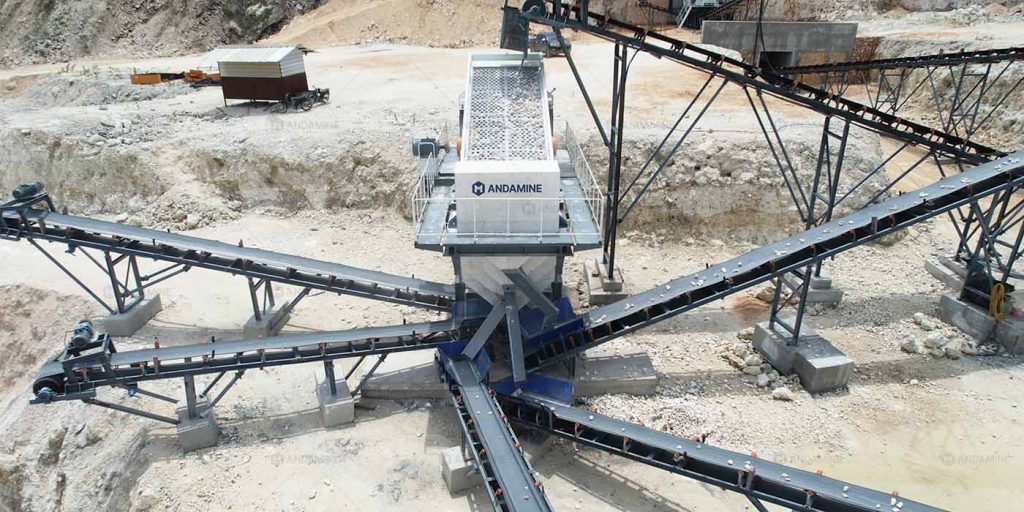
Understanding Laterite Nickel Ore Characteristics In Sulawesi
To begin with, laterite nickel ore in Sulawesi presents unique physical and chemical properties. It often contains high moisture, mixed clay content, and variable hardness layers. As a result, the crushing process becomes more complex compared with standard hard rock.
Moreover, the ore structure can shift between soft clay zones and semi-hard limonite or saprolite layers. This variation directly impacts crushing efficiency and particle size control. So, any production line must adapt to unstable feed conditions rather than assuming uniform material behavior.
Why Ore Size Below 50 Mm Matters For Smelters
Smelter operations typically require controlled feed size to ensure stable thermal processing and efficient metal recovery. When ore size exceeds 50 mm, several issues may appear, such as uneven heating, reduced reduction efficiency, and increased energy consumption.
Therefore, achieving a consistent output below 50 mm is not just a crushing target. It directly affects downstream smelting performance, cost control, and overall project profitability.
With this in mind, we can now evaluate whether a 400 TPH production line can realistically meet these requirements.
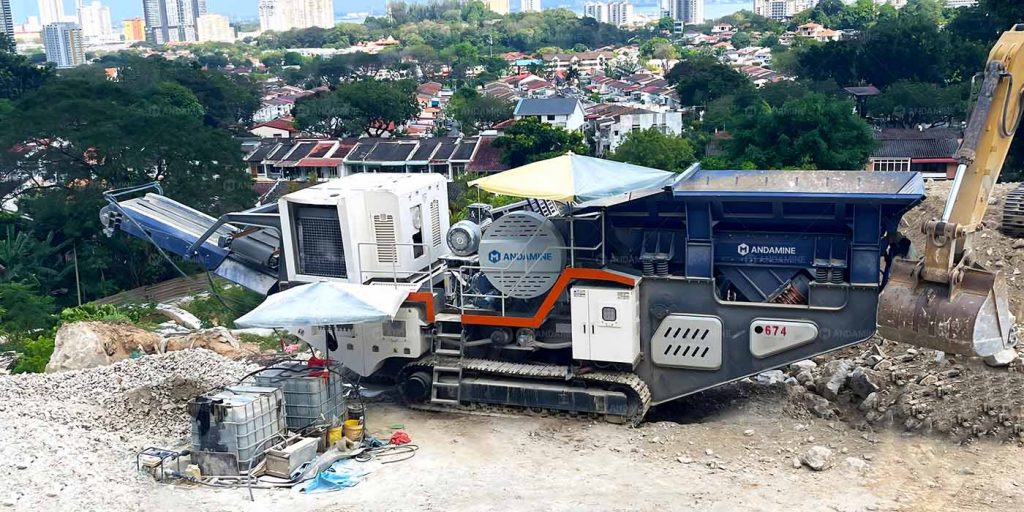
Can A 400 Tph Crushing Line Handle This Demand?
A 400 TPH stone crushing production line can process laterite nickel ore below 50 mm, but only under proper system design and process control. Capacity alone does not guarantee stable output. Instead, the entire crushing configuration determines success or failure.
For example, if the mesin pemecah batu uses only primary crushing, the output size will remain inconsistent. However, when combining primary, secondary, and screening stages, the line can gradually achieve controlled reduction below 50 mm.
In addition, feed preparation plays a critical role. If raw ore enters the system without pre-screening, clay clogging may reduce efficiency. Therefore, a well-designed pre-screening stage becomes essential for Sulawesi nickel ore conditions.
Key Configuration Strategy For Stable Output
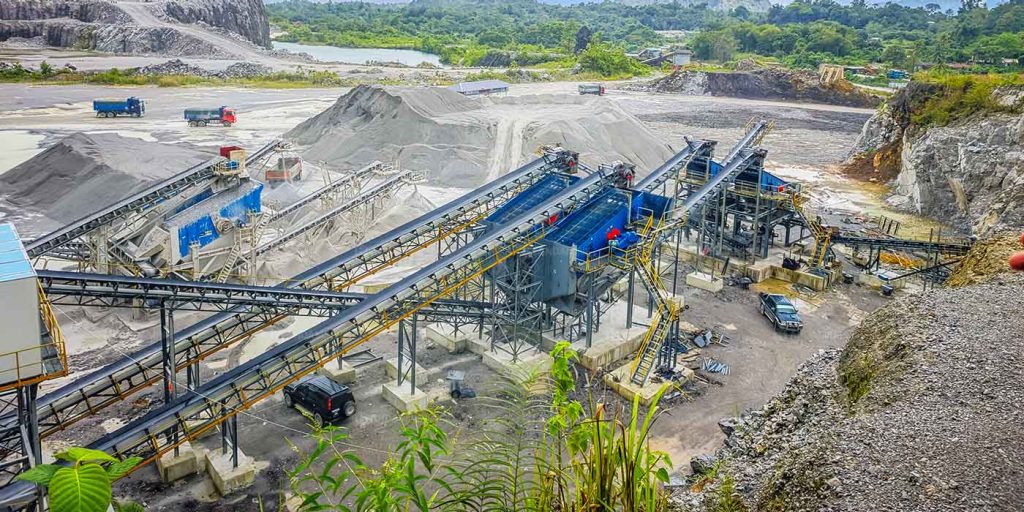
To reach stable 400 TPH production, the system should include a structured crushing flow. First, a heavy-duty jaw crusher handles large raw ore. Then, a cone crusher or impact crusher refines the material. Finally, a multi-layer vibrating screen ensures accurate classification.
At the same time, operators must control moisture content. When ore contains too much water, material sticking and blockage may reduce throughput. As a result, some projects add stockpile drying time or use blending strategies to stabilize feed conditions.
Therefore, success depends not only on machine selection but also on process discipline and site management.
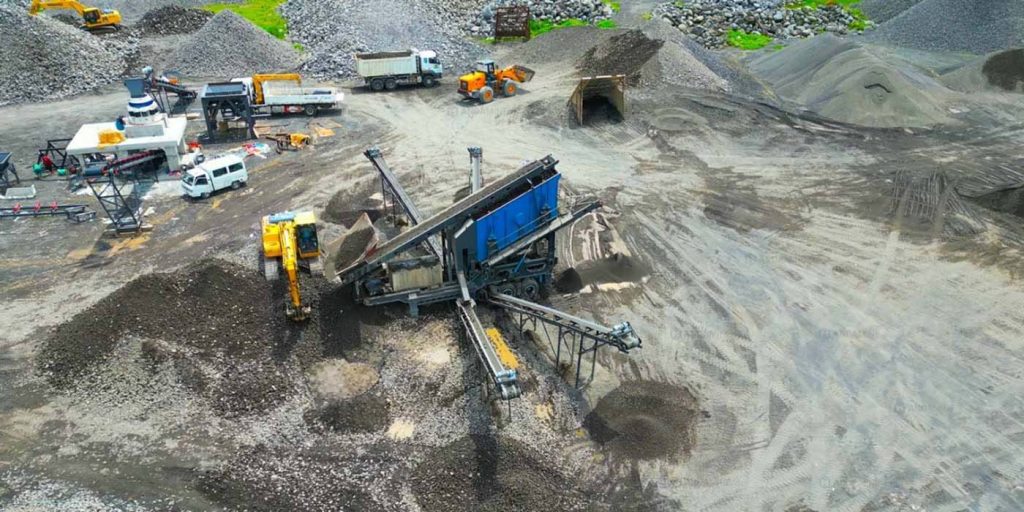
Challenges In Processing Laterite Nickel Ore At High Capacity
Although 400 TPH sounds powerful, real-world mining conditions in Sulawesi often introduce operational challenges. These challenges can affect output stability if not properly managed.
One major issue is clay adhesion. When wet clay enters the crusher, it can stick to chamber walls and reduce crushing efficiency. Over time, this leads to lower output and increased downtime.
Another challenge comes from uneven ore hardness. When soft and hard materials mix, the crushing force becomes unstable. This can increase wear on wear parts and reduce equipment lifespan.
However, these challenges do not make 400 TPH systems unsuitable. Instead, they highlight the importance of intelligent process design and proper equipment matching.
How Operators Improve Stability In Real Projects
In real mining operations, experienced contractors use several methods to improve stability. For instance, they often install pre-screening systems to remove fine clay before crushing begins. This simple step significantly reduces clogging risk.
In addition, operators adjust crusher settings based on ore conditions. When hardness increases, they reduce feed rate to maintain stable output quality. Conversely, when ore becomes softer, they increase throughput to maintain efficiency.
Therefore, flexibility becomes a key factor in achieving consistent performance in Sulawesi nickel projects.
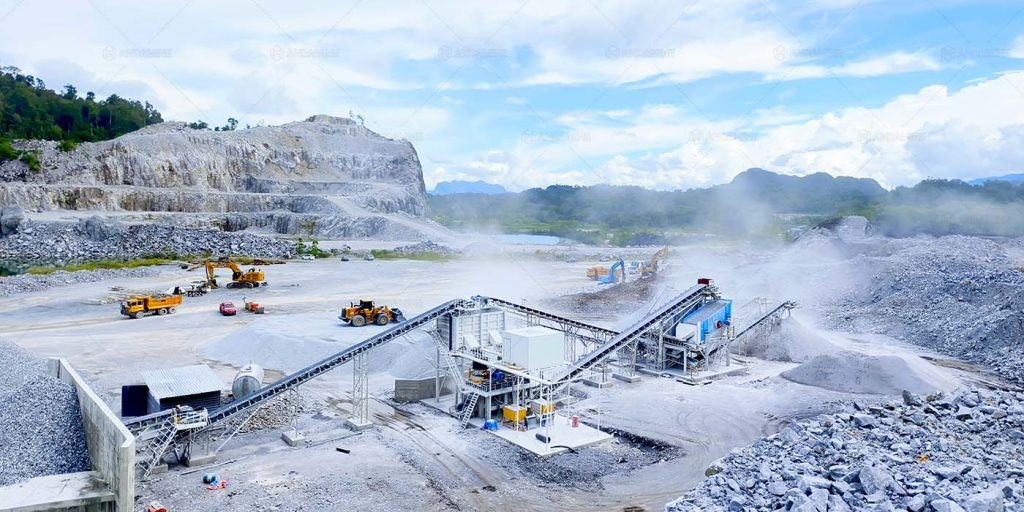
Why 400 Tph Capacity Fits Smelter Supply Chains
A 400 TPH mobile crushing solution offers a strong balance between investment cost and output efficiency. For medium to large smelter projects, this capacity can support continuous feed supply without excessive oversizing.
Furthermore, it allows contractors to scale production gradually. Instead of building an oversized system from the start, they can optimize each stage based on real demand and site conditions.
In addition, maintenance becomes more manageable compared with ultra-large systems. This reduces downtime risk and improves long-term operational stability, especially in remote mining areas like Sulawesi.
Logistics And Continuous Feeding Advantage
Smelter projects require continuous ore feeding. Any interruption can affect furnace stability and production efficiency. A properly designed 400 TPH line helps maintain steady material flow into the downstream system.
At the same time, stockpile management becomes easier. Operators can store processed material and regulate supply based on smelter demand, which improves overall coordination between mining and processing stages.
Conclusion And Engineering Insight
In conclusion, a 400 TPH stone crushing production line can process laterite nickel ore below 50 mm for smelter projects in Sulawesi. However, success depends on system design, ore preparation, and operational control rather than capacity alone.
When engineers design the system correctly, including pre-screening, multi-stage crushing, and moisture management, the production line can deliver stable and efficient output. As a result, smelter operations gain consistent feed quality and improved energy efficiency.
Therefore, investors and contractors should focus not only on equipment size but also on process integration. This approach ensures long-term reliability and better return on investment in Indonesia’s growing nickel industry.
Call To Action
If you are planning a nickel ore crushing project in Sulawesi or other mining regions in Indonesia, selecting the right configuration is critical. A well-designed 400 TPH crushing system can significantly improve your smelter supply chain efficiency.
Contact us to discuss your ore conditions, project capacity, and site requirements. We can help you design a customized crushing solution that matches your real production goals and ensures stable long-term operation.
No responses yet