
For a residential project in Indonesia, concrete supply can quickly become a critical construction issue. A housing development may need around 400 m³ of concrete per day during foundation, structural, road, and drainage works. At first glance, a 60 m³/h ready mix concrete batching plant seems more than sufficient. However, plant capacity alone does not determine whether it can meet the daily target. Working hours, truck cycles, aggregate supply, site distance, maintenance, and concrete placement speed all matter.
Therefore, contractors should look beyond the rated 60 m³/h capacity. The better question is whether the plant can maintain a practical daily output under real Indonesian project conditions. This article explains the calculation and key factors that can help contractors make a more reliable equipment decision.
Can a 60 m³/h Concrete Batching Plant Produce 400 m³ per Day?
Yes, a 60 m³/h plant can potentially support 400 m³ of daily concrete demand. The key is the actual operating time.
Simple Capacity Calculation
If the plant runs continuously at its rated capacity, the calculation is straightforward:
60 m³/h × 7 hours = 420 m³/day
In theory, seven hours of effective production can cover a 400 m³ daily requirement. However, real construction sites rarely achieve 100% rated output throughout the working day.
Operators need time for loading aggregates, batching, truck positioning, mix changes, routine checks, and short interruptions. Consequently, contractors should keep a practical production margin instead of planning exactly around 400 m³.
Why Rated Capacity Is Not Actual Daily Output
A 60 m³/h rating represents the plant’s designed production capacity under suitable operating conditions. It does not mean the plant will continuously produce 60 m³ every hour.
For example, if the plant achieves an effective output of 45–50 m³/h, it may need about 8–9 working hours to produce 400 m³. That difference becomes important when the project has strict concrete pouring schedules.
Therefore, a 60 m³/h plant is more suitable when the contractor has enough operating hours and good material logistics.
How Should Indonesian Contractors Plan for 400 m³ of Daily Concrete?
Once the basic capacity works, the next step is to examine the complete concrete supply chain. A batching plant cannot work alone. Its performance depends on how materials and concrete move around the project.
1. Check the Required Pouring Hours
First, determine how many hours the project can realistically produce and pour concrete each day.
If the project operates for 10 hours, a 60 m³/h plant has enough nominal capacity. Even with production interruptions, the contractor has more flexibility.
However, if concrete pouring can only continue for six or seven hours, the margin becomes much smaller. In that situation, contractors should consider a larger plant or improve the overall logistics system.
2. Match Truck Capacity With Plant Output
Concrete mixer trucks must keep up with batching plant production. Otherwise, trucks become the bottleneck.
For example, a concrete processing plant producing 60 m³/h needs a steady truck supply. If each mixer truck carries 8 m³, the plant theoretically needs about 7.5 truckloads per hour.
That means truck availability and travel time directly affect the practical output.
3. Consider the Distance Between Plant and Housing Project
Distance is particularly important for residential projects in Indonesia. Traffic conditions can vary greatly between Jakarta, Java’s secondary cities, Sumatra, Kalimantan, and other regions.
A short delivery route allows trucks to return quickly. Therefore, the batching plant can maintain a more stable production rhythm.
By contrast, long routes can increase truck cycle times. As a result, the contractor may need additional mixer trucks even when the batching plant has sufficient capacity.
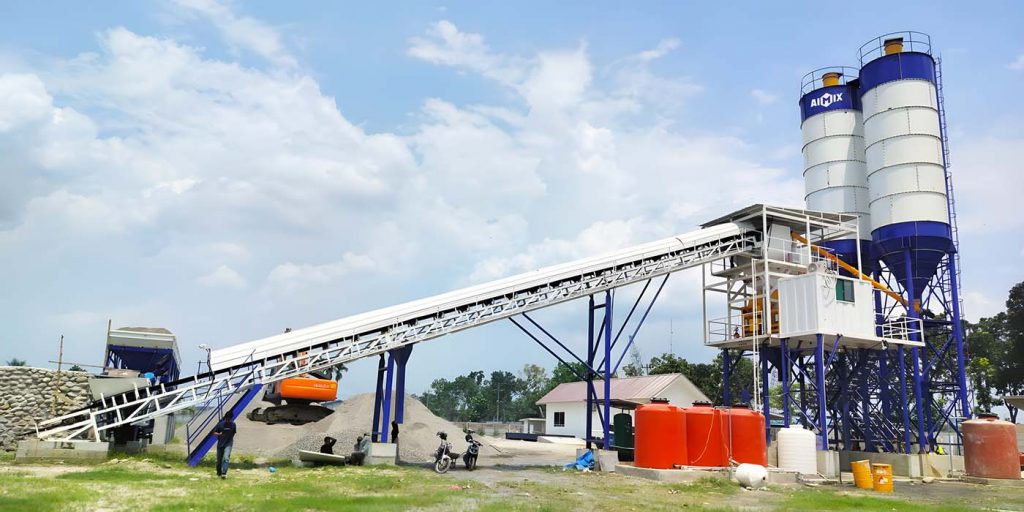
What Makes a 60 m³/h Concrete Plant Practical for Indonesian Residential Projects?
Capacity is only one part of the decision. Contractors should also consider the project scale, site conditions, concrete demand pattern, and future work.
Residential Developments With Repeated Concrete Demand
A 60 m³/h ready mix concrete batching plant can work well for housing developments with repeated concrete requirements.
Typical applications include house foundations, columns, beams, slabs, internal roads, drainage systems, retaining structures, and other concrete works.
Because residential construction often progresses by zones or blocks, contractors can schedule concrete production according to the construction sequence. This approach can reduce idle time and improve plant utilization.
Projects With Peak Pouring Days
Not every project needs 400 m³ every day. Some days may require only 150–250 m³, while major slab or foundation pours may require 400 m³ or more.
In this situation, the contractor should focus on peak demand rather than average demand.
A 60 m³/h plant can handle a 400 m³ day when the project provides enough operating time. However, the contractor should prepare sufficient trucks, aggregates, cement, water, and manpower before a major pour.
What Should Contractors Check Before Buying the Plant?
After confirming the theoretical capacity, contractors should evaluate several practical factors. These factors can determine whether the plant delivers stable production after installation.
Material Storage
The plant needs sufficient aggregate and cement storage to support continuous production.
If aggregates run out during a concrete pour, production stops even when the batching plant itself works properly. Therefore, material storage should match the planned daily consumption.
Concrete Mix Requirements
Residential projects may require several concrete grades. Foundation work, structural members, floor slabs, and other applications can use different mix designs.
The batching system should provide accurate weighing and reliable control. This helps contractors maintain consistent concrete quality while changing between mix designs.
Site Conditions
Indonesia has diverse construction environments. Urban housing projects may face limited space and traffic restrictions. Remote projects may face difficult roads and longer material transport distances.
Consequently, the plant layout should match the available site area and logistics conditions. A compact layout can be valuable when land is limited.
Future Project Demand
Contractors should also consider whether 400 m³/day represents today’s demand or the company’s future workload.
If several housing projects are expected in the same area, a 60 m³/h plant may provide a useful production base. If demand could rise substantially, a larger capacity plant may provide better long-term flexibility.
Is 60 m³/h Enough, or Should You Choose a Larger Plant?
The answer depends on the relationship between daily demand and available production hours.
For a 400 m³ daily target, a 60 m³/h plant has enough nominal capacity. However, the contractor should avoid operating too close to the theoretical limit every day.
If the project requires 400 m³ regularly, maintaining a production margin can reduce schedule pressure. For example, a contractor may prefer a higher-capacity plant if daily demand is expected to increase or if pouring hours are restricted.
On the other hand, choosing a much larger plant does not automatically improve project performance. If truck numbers, aggregate supply, or concrete placement capacity remain limited, excess plant capacity may simply remain unused.
Therefore, the best solution balances plant capacity, truck fleet, working hours, material storage, and concrete placement speed.
How Can Contractors Improve 400 m³ Daily Concrete Production?
Even with a 60 m³/h plant, good project coordination can make a major difference. Contractors can improve productivity through several practical measures.
Coordinate Trucks Before Concrete Production
Prepare a truck dispatch schedule based on plant output and travel distance. Keep enough trucks circulating between the plant and construction site.
Prepare Materials in Advance
Stock aggregates, cement, water, and admixtures before major pouring operations. This reduces unnecessary production interruptions.
Use a Clear Pouring Sequence
Coordinate the batching plant with pumps, workers, and site supervisors. A steady concrete flow helps prevent trucks from waiting at the construction site.
Plan Maintenance Outside Peak Production
Routine inspections and maintenance should not interrupt critical concrete pours. Proper planning can help maintain stable daily production.
What Is the Best Approach for a 400 m³/Day Residential Project?
For an Indonesian residential project requiring around 400 m³ of concrete per day, a 60 m³/h ready mix concrete batching plant can be a practical choice.
The basic calculation supports the decision. Seven hours at the rated capacity can theoretically produce about 420 m³. However, contractors should allow additional working time or production margin because actual output depends on site conditions.
More importantly, the plant should work as part of a complete concrete supply system. Mixer trucks, material storage, transport distance, concrete pumps, labor, and pouring schedules all influence the final daily output.
Therefore, contractors should not select a batching plant based on the m³/h figure alone. A project-based calculation can provide a much more reliable equipment choice.
Need a Concrete Batching Solution for Your Indonesian Project?
If your residential project targets around 400 m³ of concrete per day, the next step is to calculate the complete production plan. Consider your pouring hours, truck capacity, delivery distance, concrete grades, and future demand before confirming the plant model.
A properly matched 60 m³/h ready mix concrete batching plant can provide a strong balance between production capacity and project requirements. With the right logistics plan, it can help contractors maintain a steady concrete supply and reduce costly pouring delays.
Share your daily concrete demand, project location, working hours, and delivery distance with AIMIX. We can help you evaluate the required plant capacity, mixer truck quantity, and concrete production layout for your Indonesian residential project.
No responses yet